 Call
Call Patient Reports
Best Hospital for Tracheal Y Airway Stenting Procedure by Expert Pulmonologists
Tracheal Y Airway Stenting at Medicover Hospitals involves an endoscopic approach by skilled pulmonologists with qualifications like MD and DM. This procedure addresses airway obstructions effectively. Patients benefit from shorter hospital stays and quicker recovery times, enhancing overall treatment efficiency.
Expert Specialists
Yearly Procedures
Patient Satisfaction
What is Tracheal Y Airway Stenting?
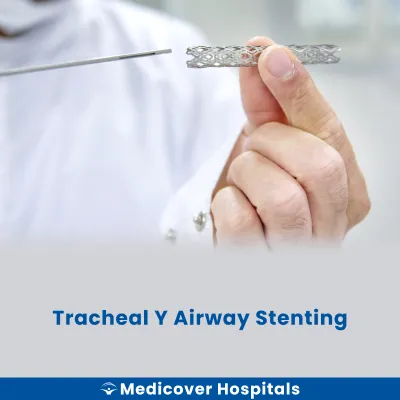
Tracheal Y Airway Stenting is a procedure involving the placement of a Y-shaped stent in the trachea (windpipe). This stent helps keep the airway open. It is used when there is a narrowing or obstruction in the trachea or bronchi (large air passages to the lungs). The stent supports the airway, allowing for better airflow and breathing.
This procedure is needed for conditions like tracheal stenosis (narrowing of the trachea), tracheomalacia (softening of the tracheal walls), or tumours. If untreated, these conditions can lead to severe breathing difficulties or respiratory failure. Modern surgical approaches include endoscopic stenting, which is minimally invasive. This allows for quicker recovery and fewer complications.
Tracheal Y Airway Stenting Doctors Near You
Find expert pulmonologists for tracheal Y airway stenting at Medicover Hospitals across India. Choose your city and book a consultation to explore effective treatment options tailored to your needs.
Why Choose Medicover Hospitals for Tracheal Y Airway Stenting?
Get a second opinion from trusted experts and makeconfident, informed decisions.
 Get Second Opinion
Complete Guide To Tracheal Y Airway Stenting
Everything you need to know about the procedure, preparation, and recovery
Tracheal Y Airway Stenting Procedure Indications
Doctors recommend the Tracheal Y Airway Stenting procedure when patients experience significant airway obstruction. This intervention helps restore normal breathing when other treatments are ineffective.
Tracheal Stenosis
Patients may experience difficulty breathing, wheezing, or a persistent cough. Imaging tests often reveal narrowing of the trachea. When medications or less invasive procedures fail, stenting becomes necessary.
Tracheomalacia
Symptoms include noisy breathing and frequent respiratory infections. Doctors find a collapse of the tracheal walls during bronchoscopy. If conservative measures like CPAP do not improve symptoms, stenting is considered.
Tracheobronchial Tumours
Patients may report breathlessness and coughing up blood. Imaging and biopsies show tumours obstructing the airway. When surgery or radiation is not viable, stenting provides relief.
Post-Intubation Injury
After prolonged intubation, patients might experience stridor and breathing difficulties. Bronchoscopy reveals tracheal damage or scarring. Stenting is chosen when other treatments do not resolve the obstruction.
Tracheoesophageal Fistula
Symptoms include coughing after swallowing and recurrent pneumonia. Imaging confirms an abnormal connection between the trachea and oesophagus. Stenting is used when surgical repair is not immediately possible.
How to Prepare for Tracheal Y Airway Stenting?
Proper preparation is crucial for a successful Tracheal Y Airway Stenting procedure. It ensures safety and optimises outcomes. Follow these steps to get ready for your procedure.
- Medication Review: Stop NSAIDs, anticoagulants, and herbal supplements as advised by your doctor to reduce bleeding risks.
- Fasting: Do not eat or drink anything for at least 6-8 hours before the procedure, as general anaesthesia is typically used.
- Health Assessment: Inform your doctor about any respiratory infections or recent illnesses for appropriate management.
- Clothing: Wear loose, comfortable clothing on the day of the procedure for easy movement post-surgery.
- Transportation: Arrange for someone to drive you home after the procedure, as you may feel drowsy from anaesthesia.
- Medication List: Bring a list of all medications you are taking, including dosages, to share with your healthcare team.
- Smoking: Avoid smoking before the procedure to enhance lung function and recovery.
- Pre-Procedure Instructions: Follow any additional instructions provided by your healthcare team for specific needs.
Tracheal Y Airway Stenting Procedure (Step-by-Step)
Tracheal Y airway stenting is performed by experienced specialists from the Pulmonology department. The procedure typically takes 1-2 hours and is carried out under general anaesthesia to ensure patient comfort and safety.
- Preparation: The patient is positioned comfortably on the operating table. General anaesthesia is administered to ensure they are asleep and pain-free.
- Accessing the Airway: A bronchoscope is gently inserted through the mouth or nose to reach the trachea. This instrument allows the doctor to view the airway clearly.
- Placement of the Stent: Using a guidewire, the Y-shaped stent is carefully positioned in the trachea and main bronchi. The stent is expanded to support the airway.
- Securing the Stent: The stent is adjusted to ensure it fits snugly and securely. This helps maintain the airway open and allows for proper breathing.
- Verification: The bronchoscope is used again to check the stent's position and ensure it is correctly placed. Adjustments are made if necessary.
- Recovery: The bronchoscope is removed, and the patient is gradually awakened from anaesthesia. They are monitored in a recovery area to ensure stable breathing.
Who Performs Tracheal Y Airway Stenting procedure?
This procedure is performed by respiratory physicians, who are specialists in respiratory system conditions. They are trained in using bronchoscopes and placing airway stents to manage airway obstructions effectively. Pulmonologists ensure the procedure is done safely and efficiently.
Recovery After Tracheal Y Airway Stenting Procedure
Recovery from a Tracheal Y Airway Stenting procedure involves careful monitoring and gradual return to normal activities. Patients may experience some discomfort and need to follow specific dietary and activity guidelines to ensure optimal healing.
Day 1-3:
- Expect mild throat discomfort and hoarseness. Rest your voice as much as possible.
- Stick to a soft diet. Include foods like curd, dal-rice, and soups to avoid irritation.
- Avoid strenuous activities. Rest is essential during these initial days.
Day 4-7:
- Gradually increase activity levels, but avoid heavy lifting or intense exercise.
- Continue with a soft diet. Khichdi and moong dal are good options.
- Monitor for any unusual symptoms such as difficulty breathing or persistent cough.
Week 2-4:
- Most patients can return to work or school, depending on their comfort and doctor's advice.
- Introduce regular foods slowly, ensuring they are easy to swallow and not too spicy.
- Continue avoiding smoking and exposure to irritants.
When to Seek Urgent Help
- Seek immediate medical attention if experiencing severe difficulty breathing, chest pain, or a high fever.
- Persistent coughing or bleeding should also be promptly evaluated by a healthcare professional.
Benefits of Tracheal Y Airway Stenting procedure
Tracheal Y airway stenting is a procedure designed to improve breathing by keeping the airways open. It offers several benefits for patients with airway obstructions.
- Improved Breathing: Helps maintain an open airway, enhancing airflow and easing breathing difficulties.
- Non-invasive Alternative: Provides a less invasive option compared to surgical interventions for airway management.
- Quick Recovery: Typically allows for a faster recovery time compared to more invasive procedures.
- Symptom Relief: Alleviates symptoms such as wheezing and shortness of breath.
Risks and Complications of Tracheal Y Airway Stenting procedure
While the procedure is generally safe, there are potential risks and complications that patients should be aware of.
- Common: Stent migration, which may require repositioning or replacement.
- Common: Infection at the site, necessitating medical treatment.
- Rare: Bleeding during or after the procedure.
- Rare: Granulation tissue formation, potentially obstructing the airway.
- Rare: Tracheal perforation, a serious complication requiring immediate attention.
Cost of Tracheal Y Airway Stenting procedure
The cost of the Tracheal Y Airway Stenting procedure at Medicover Hospitals ranges from Rs. 11,000 to Rs. 21000, depending on the ward category. The pricing is transparent, and we offer support for insurance and TPA, including CGHS, ESI, and major TPAs. A cashless facility is also available for your convenience. Please contact the hospital for the latest insurance panel details as these may change periodically.
Frequently Asked Questions
1. How much does Tracheal Y Airway Stenting cost?
The Tracheal Y Airway Stenting procedure costs between Rs. 11,000 and Rs. 21,000 across Medicover Hospitals, depending on the type of care.
2. Is Tracheal Y Airway Stenting covered by insurance?
Tracheal Y Airway Stenting may be covered by CGHS, ESI, and major TPAs. Please contact the hospital for current panel details.
3. Will my breathing improve immediately after stenting?
Breathing may improve shortly after the procedure as the stent helps keep the airway open. However, full recovery varies among patients.
4. Can I speak normally after Tracheal Y Stenting?
Some patients may experience temporary voice changes after the procedure. Speech usually improves as the airway heals.
5. What foods should I avoid after Tracheal Y Stenting?
Avoid spicy and hard foods that may irritate the airway. Opt for soft foods like curd, dal-rice, and khichdi during recovery.
6. Will I need follow-up care after the procedure?
Regular follow-up visits are essential to monitor the stent and airway condition. Your doctor will advise on the frequency of these visits.
7. Can the stent move or cause discomfort?
Though rare, stent migration can occur and may cause discomfort. Contact your doctor if you experience any unusual symptoms.
8. How risky is it to remove an airway stent?
Removal of an airway (tracheal) stent is generally safe when performed by experienced specialists, but it does carry some risks. Possible complications include bleeding, airway injury, infection, or temporary breathing difficulty, though serious complications are uncommon.
9. What is the success rate of a tracheal stent?
Tracheal stenting has a high success rate (around 80% to 90%) in relieving airway obstruction and improving breathing, especially in selected patients.
10. How long is bed rest after a stent?
Bed rest is usually minimal. Most patients can start sitting up and moving within a few hours to a day, depending on their condition and procedure type.


