 Call
Call Patient Reports
Best Hospital for Trabeculectomy with Mitomycin C with Advanced Ophthalmology Care
Trabeculectomy with Mitomycin C at Medicover Hospitals is performed using an open surgical approach by skilled ophthalmologists with qualifications like MS and DNB. This procedure helps manage intraocular pressure effectively, often resulting in a shorter hospital stay for patients across India.
Expert Surgeons
Yearly Surgeries
Patient Satisfaction
What is Trabeculectomy With Mitomycin C?
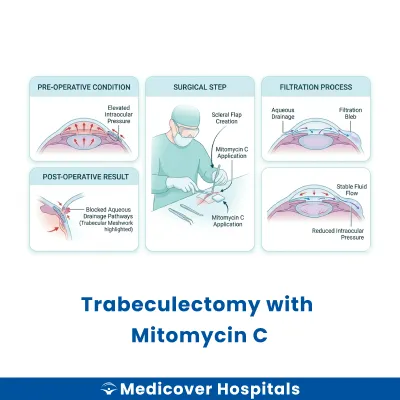
Trabeculectomy with Mitomycin C is a surgical procedure aimed at treating glaucoma. It involves creating a small drainage hole in the eye (ocular) to relieve intraocular pressure. Mitomycin C, a type of medication, is applied during the surgery to prevent scarring and ensure the drainage pathway remains open.
This surgery is necessary for patients with glaucoma when other treatments fail to control eye pressure. Glaucoma can lead to optic nerve damage and vision loss if untreated. Trabeculectomy with Mitomycin C helps prevent these complications. Modern surgical approaches include minimally invasive techniques and the use of advanced surgical tools to enhance precision and outcomes.
Trabeculectomy With Mitomycin c Doctors Near You
Discover skilled ophthalmologists for trabeculectomy with Mitomycin C at Medicover Hospitals across India. Choose your city and book a consultation to explore treatment options tailored to your needs.
Why Choose Medicover Hospitals for Trabeculectomy With Mitomycin c?
Get a second opinion from trusted experts and makeconfident, informed decisions.
 Get Second Opinion
Complete Guide To Trabeculectomy With Mitomycin C
Everything you need to know about the procedure, preparation, and recovery
Trabeculectomy with Mitomycin c Surgery Indications
Trabeculectomy with Mitomycin c is recommended when intraocular pressure (IOP) cannot be controlled with medications or laser treatments. This procedure helps prevent further optic nerve damage and vision loss.
Uncontrolled Intraocular Pressure
Patients may experience blurred vision or eye pain due to high IOP. Doctors find elevated IOP despite maximum tolerated medical therapy. Surgery is considered when medications and laser treatments fail to lower IOP adequately.
Progressive Optic Nerve Damage
Patients might notice worsening peripheral vision. Eye exams reveal progressive optic nerve cupping or visual field loss. Surgery is advised when optic nerve damage progresses despite optimal medical management.
Advanced Glaucoma
Patients with advanced glaucoma may suffer significant vision loss. Eye examinations show severe optic nerve damage and high IOP. When vision continues to decline despite treatment, surgery becomes necessary.
Intolerance to Medications
Some patients experience side effects like eye irritation or systemic issues from glaucoma medications. Doctors may find that patients cannot tolerate these medications. Surgery is an option when medication intolerance prevents effective IOP control.
Congenital Glaucoma
In children, symptoms like excessive tearing or light sensitivity may occur. Examination shows elevated IOP and corneal changes. Surgery is often needed when medications do not adequately control IOP in congenital cases.
Failed Previous Glaucoma Surgery
Patients may experience persistent high IOP after prior glaucoma surgery. Doctors find inadequate IOP reduction or scarring at the surgical site. Trabeculectomy with Mitomycin c is considered when previous surgeries do not achieve desired results.
How to Prepare for Trabeculectomy with Mitomycin C?
Proper preparation for Trabeculectomy with Mitomycin c is crucial to ensure a smooth surgery and recovery. Following the guidelines helps minimise complications and enhances the effectiveness of the procedure.
- Medication Review: Stop NSAIDs, anticoagulants, and herbal supplements at least 7 days before surgery.
- Fasting Guidelines: Do not eat or drink anything for at least 6 hours before the procedure due to anaesthesia requirements.
- Eye Drops: Use prescribed eye drops as directed by your doctor to prepare the eye.
- Clothing: Wear loose, comfortable clothing on the day of the surgery for ease and comfort.
- Transportation: Arrange for someone to drive you home post-surgery as you may feel drowsy.
- Medication List: Bring a list of all medications with dosages to the hospital for reference.
- Contact Lenses: Do not wear contact lenses on the day of the surgery.
- Smoking and Alcohol: Avoid smoking and alcohol at least 24 hours before the surgery to aid recovery.
Trabeculectomy with Mitomycin C Surgery (Step-by-Step)
This surgery is performed by ophthalmologists. It typically lasts 1-2 hours. Local anaesthesia is commonly used.
- Preparation: The patient is positioned comfortably. Local anaesthesia is administered to numb the eye area.
- Conjunctival Incision: A small incision, about 1-2 cm, is made in the conjunctiva using surgical scissors. This exposes the sclera.
- Scleral Flap Creation: A partial-thickness flap is created in the sclera using a surgical blade. This helps in controlling fluid drainage.
- Application of Mitomycin C: Mitomycin C is applied to the surgical area using soaked sponges. This reduces scarring and improves surgery success.
- Trabeculectomy: A small piece of trabecular meshwork is removed using a punch or blade. This creates a new drainage pathway for fluid.
- Closure: The scleral flap is sutured back in place. The conjunctiva is also sutured to cover the flap. This ensures proper healing.
- Post-Procedure Care: The eye is covered with a patch. The patient may feel mild discomfort or pressure as the anaesthesia wears off.
Who Performs Trabeculectomy with Mitomycin c Surgery?
This surgery is performed by ophthalmologists who specialise in glaucoma treatment. They have expertise in managing intraocular pressure and preserving vision.
Recovery After Trabeculectomy with Mitomycin C Surgery
Recovery from Trabeculectomy with Mitomycin c surgery involves careful monitoring and adherence to post-operative instructions. Expect some discomfort and blurred vision initially, which should gradually improve.
Day 1-3:
- Rest your eyes and avoid any strenuous activities.
- Use prescribed eye drops to prevent infection and control inflammation.
- Stick to a light diet with easily digestible foods like curd, dal-rice, and khichdi.
Day 4-7:
- Continue using eye drops as advised by your doctor.
- Begin gentle activities but avoid bending, lifting heavy objects, or straining.
- Include moong dal and soups in your meals for nutrition and hydration.
Week 2-4:
- Vision may start stabilising, but full recovery can take longer.
- Gradually resume work or school, depending on your comfort and doctor's advice.
- Avoid swimming and dusty environments to prevent infections.
When to Seek Urgent Help:
- Severe eye pain or redness.
- Sudden vision loss or significant blurring.
- Excessive tearing or discharge from the eye.
Always follow your doctor's instructions and attend follow-up appointments for optimal recovery. Please contact the hospital for current details as insurance panels may change.
Benefits of Trabeculectomy with Mitomycin C Surgery
Trabeculectomy with Mitomycin c is a surgical procedure aimed at reducing intraocular pressure in patients with glaucoma.
- Effective Pressure Reduction: Helps lower eye pressure, reducing the risk of optic nerve damage.
- Long-term Solution: Provides sustained pressure control, potentially reducing the need for medications.
- Improved Vision Preservation: Aims to prevent further vision loss associated with glaucoma.
- Adjunctive Use of Mitomycin c: Enhances the success rate by preventing scarring at the surgical site.
Risks and Complications of Trabeculectomy with Mitomycin c Surgery
While this procedure can be beneficial, it carries certain risks and complications that patients should be aware of.
- Bleeding in the eye during or after surgery.
- Infection, which may require additional treatment.
- Vision loss due to complications.
- Hypotony, or excessively low eye pressure.
- Cataract formation post-surgery.
- Scarring that may lead to failure of the surgery.
What is the Cost of Trabeculectomy with Mitomycin C Surgery?
The cost of Trabeculectomy with Mitomycin c Surgery at Medicover Hospitals varies depending on the ward category chosen. Prices range from Rs. 30,000 to Rs. 100,000 across different ward types. The cost may differ based on the specific facilities and services provided.
We offer transparent pricing and support for insurance and TPA services, including CGHS, ESI, and major TPAs. Cashless facilities are available for your convenience. Please contact the hospital for the latest insurance panel details as these may change periodically.
Frequently Asked Questions
1. How much does Trabeculectomy with Mitomycin c surgery cost at Medicover Hospitals?
The cost of Trabeculectomy with Mitomycin c surgery at Medicover Hospitals ranges from Rs. 30,000 to Rs. 100,000, depending on the specific package chosen.
2. Is Trabeculectomy with Mitomycin c surgery covered under health insurance at Medicover?
Trabeculectomy with Mitomycin c surgery may be covered by CGHS, ESI, and major TPAs. Please contact the hospital for current panel details.
3. Will I experience vision changes after trabeculectomy?
Some patients may experience temporary vision changes after trabeculectomy. It is important to follow up with your doctor to monitor recovery.
4. Can I drive after trabeculectomy surgery?
Driving is not recommended immediately after trabeculectomy surgery. Wait until your doctor confirms your vision is stable and safe for driving.
5. What foods help in recovery after trabeculectomy?
Consume a balanced diet with foods like curd, dal-rice, and khichdi. These can support healing and maintain overall health during recovery.
6. Is eye redness normal after trabeculectomy?
Eye redness is a common occurrence after trabeculectomy and usually subsides with time. Consult your doctor if redness persists or worsens.
7. Can trabeculectomy affect my daily activities?
You may need to limit strenuous activities for a few weeks post-surgery. Follow your doctor's advice to ensure a smooth recovery.


