 Call
Call Patient Reports
Best Hospital for Total Shoulder Arthroplasty with Advanced Orthopedic Care
At Medicover Hospitals, Total Shoulder Arthroplasty is performed using the open surgical approach by a team of skilled orthopedic surgeons with qualifications like MS and DNB. This procedure aims to restore shoulder function, often resulting in smaller incisions and reduced blood loss.
Expert Surgeons
Yearly Surgeries
Patient Satisfaction
What is Total Shoulder Arthroplasty Surgery?
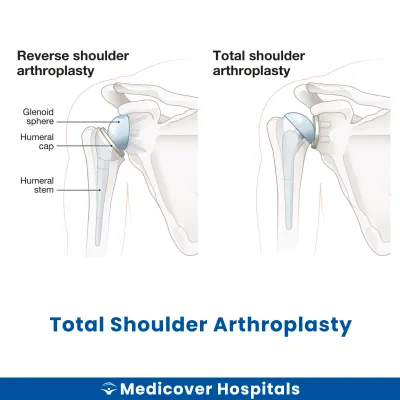
Total Shoulder Arthroplasty is a surgical procedure to replace the shoulder joint. It involves replacing the damaged parts of the shoulder (glenohumeral joint) with artificial components. This surgery helps restore function and relieve pain in the shoulder.
This surgery is often needed for conditions like severe arthritis, rotator cuff tears, or fractures. If left untreated, these conditions can lead to chronic pain and limited mobility. Modern surgical approaches include traditional open surgery and minimally invasive techniques. These methods aim to improve recovery time and outcomes.
Total Shoulder Arthroplasty Doctors Near You
Discover expert orthopedics for total shoulder arthroplasty at Medicover Hospitals across India. Choose your city and book a consultation to explore effective treatment options tailored to your needs.
Why Choose Medicover Hospitals for Total Shoulder Arthroplasty?
Get a second opinion from trusted experts and makeconfident, informed decisions.
 Get Second Opinion
Complete Guide To Total Shoulder Arthroplasty
Everything you need to know about the procedure, preparation, and recovery
Total Shoulder Arthroplasty Surgery Indications
Total Shoulder Arthroplasty is recommended when shoulder joint issues severely affect daily life. It is considered when pain and dysfunction persist despite non-surgical treatments.
Severe Osteoarthritis
Patients experience chronic shoulder pain and stiffness, limiting movement. X-rays show joint space narrowing and bone spurs. Surgery is advised when medications and physical therapy no longer provide relief.
Rheumatoid Arthritis
Inflammation causes pain, swelling, and joint deformity. Blood tests reveal elevated inflammatory markers. When disease-modifying drugs and injections fail, surgery may be necessary.
Post-Traumatic Arthritis
Following a shoulder injury, patients may have persistent pain and reduced range of motion. Imaging shows joint damage or deformity. Surgery is considered when rehabilitation and medications are ineffective.
Rotator Cuff Tear Arthropathy
Patients suffer from pain and weakness due to a massive rotator cuff tear. MRI or ultrasound confirms tendon damage. When conservative treatments do not restore function, surgery is an option.
Avascular Necrosis
Blood supply loss to the shoulder leads to joint pain and collapse. MRI shows bone death. Surgery is recommended when core decompression and other treatments fail.
Failed Previous Shoulder Surgery
Patients may have ongoing pain and dysfunction after prior shoulder procedures. Imaging reveals persistent joint issues. Revision surgery is considered when symptoms persist despite rehabilitation.
How to Prepare for Total Shoulder Arthroplasty?
Proper preparation for Total Shoulder Arthroplasty ensures a smoother surgery and recovery. It helps in reducing complications and aids in faster healing.
- Medication Review: Stop NSAIDs, anticoagulants, and herbal supplements as advised by your doctor.
- Fasting Instructions: Do not eat or drink anything for at least 8 hours before the surgery.
- Pre-Surgery Exercises: Perform prescribed shoulder exercises to improve flexibility and strength.
- Clothing: Wear loose, comfortable clothing that is easy to put on and take off.
- Transport Arrangement: Arrange for someone to drive you home after the surgery.
- Medication List: Bring a list of your current medications with dosages for hospital records.
- Home Preparation: Set up a comfortable recovery area at home with essentials within reach.
- Health Check: Complete any required pre-operative tests or health assessments as scheduled.
Total Shoulder Arthroplasty Surgery (Step-by-Step)
Total Shoulder Arthroplasty is performed by orthopedic surgeons. The surgery typically lasts 2-3 hours. It is usually done under general anaesthesia.
- Incision: A 10-15 cm incision is made over the shoulder joint. The surgeon carefully exposes the joint.
- Joint Exposure: The surgeon uses retractors and a curette to access the shoulder joint. The damaged cartilage and bone are removed.
- Implant Preparation: The humeral head is prepared using a reamer. The glenoid cavity is shaped to fit the new implant.
- Implant Placement: The new metal and plastic components are placed. A harmonic scalpel may be used to ensure precision.
- Stabilisation: The components are secured with bone cement or screws. The surgeon checks the joint's range of motion.
- Closure: The incision is closed with sutures or staples. A sterile dressing is applied to the wound.
- Recovery: The patient is moved to the recovery room. Pain management begins as anaesthesia wears off.
Who Performs Total Shoulder Arthroplasty Surgery?
An orthopedic surgeon performs Total Shoulder Arthroplasty. They specialise in joint surgeries and have expertise in shoulder anatomy and function. Their training ensures they can handle complex procedures and provide post-operative care.
Recovery After Total Shoulder Arthroplasty Surgery
Recovery from total shoulder arthroplasty surgery involves a gradual return to daily activities. Understanding the recovery timeline can help set realistic expectations and ensure a smooth healing process.
Day 1-3:
- Rest and keep the shoulder immobilised in a sling.
- Begin gentle finger and wrist movements to maintain circulation.
- Consume light meals like curd, dal-rice, and soups to aid digestion and provide nutrition.
Day 4-7:
- Continue using the sling. Start passive shoulder exercises as advised by your physiotherapist.
- Gradually increase your intake of soft foods like khichdi and moong dal for energy.
- Avoid lifting heavy objects or using the operated arm for any strenuous activity.
Week 2-4:
- Engage in more active-assisted exercises to improve range of motion.
- Incorporate more variety in your diet, focusing on protein-rich foods to support healing.
- Most patients can resume desk work or school activities by the end of this phase, but avoid any heavy lifting.
Month 1-3:
- Progress to active exercises under guidance to strengthen the shoulder.
- Gradually return to normal diet, ensuring balanced nutrition for overall health.
- Driving and light household tasks may be resumed after consulting your doctor.
When to Seek Urgent Help:
- Severe pain not relieved by medication.
- Signs of infection like redness, swelling, or discharge at the incision site.
- Sudden loss of movement or feeling in the arm.
Please contact the hospital for current details as insurance panels may change.
Benefits of Total Shoulder Arthroplasty Surgery
Total Shoulder Arthroplasty can significantly improve the quality of life for individuals with severe shoulder issues.
- Pain Relief: Reduces or eliminates shoulder pain, enhancing daily comfort.
- Improved Mobility: Restores shoulder movement, allowing for better arm function.
- Enhanced Strength: Increases shoulder strength, aiding in lifting and carrying tasks.
- Better Quality of Life: Enables participation in activities that were previously difficult.
Risks and Complications of Total Shoulder Arthroplasty Surgery
While the surgery can be beneficial, it carries certain risks and potential complications.
- Infection: Risk of infection at the surgical site.
- Blood Clots: Potential for clots forming in the veins.
- Nerve Damage: Possible injury to surrounding nerves.
- Implant Loosening: Over time, the implant may loosen, requiring further intervention.
- Fracture: Risk of bone fracture during or after the procedure.
- Allergic Reaction: Reaction to the materials used in the implant.
What is the Cost of Total Shoulder Arthroplasty Surgery?
The cost of Total Shoulder Arthroplasty Surgery at Medicover Hospitals varies depending on the ward category chosen. Prices range from Rs. 1,50,000 to Rs. 5,00,000. This ensures that patients can select an option that suits their budget and preferences.
We offer transparent pricing and support for insurance and TPA, including CGHS, ESI, and major TPAs. A cashless facility is also available for added convenience. Please contact the hospital for the latest insurance panel details as these may change periodically.
Frequently Asked Questions
1. How much does Total Shoulder Arthroplasty cost?
The cost of Total Shoulder Arthroplasty at Medicover Hospitals ranges from Rs. Rs. 1,50,000 to Rs. Rs. 5,00,000, depending on the type of room chosen.
2. Is Total Shoulder Arthroplasty covered by insurance?
Total Shoulder Arthroplasty may be covered by CGHS, ESI, and major TPAs. Please contact the hospital for current panel details.
3. Can I lift weights after shoulder arthroplasty?
You should avoid lifting heavy weights for at least 3 months after surgery. Consult your doctor for a personalised recovery plan.
4. Will I regain full shoulder movement?
Most patients regain significant shoulder movement post-surgery. However, complete mobility depends on individual recovery and adherence to physiotherapy.
5. What foods aid recovery after shoulder surgery?
Consume protein-rich foods like dal, eggs, and curd to aid recovery. Include fruits and vegetables for essential vitamins and minerals.
6. Is shoulder pain normal after arthroplasty?
Mild to moderate pain is normal in the initial weeks after surgery. Pain usually subsides with medication and physiotherapy.
7. Can shoulder arthroplasty affect daily activities?
Post-surgery, you may need to modify certain activities. Most patients return to routine tasks within 3-6 months with proper rehabilitation.


