 Call
Call Patient Reports
Best Hospital for Total Parotidectomy Surgery with Advanced ENT & Head Neck Care
At Medicover Hospitals, total parotidectomy is performed using the open surgical approach by skilled ENT surgeons with qualifications such as MS and DNB. This procedure effectively removes the parotid gland, often resulting in reduced blood loss and a shorter hospital stay for patients.
Expert Surgeons
Yearly Surgeries
Patient Satisfaction
What is Total Parotidectomy?
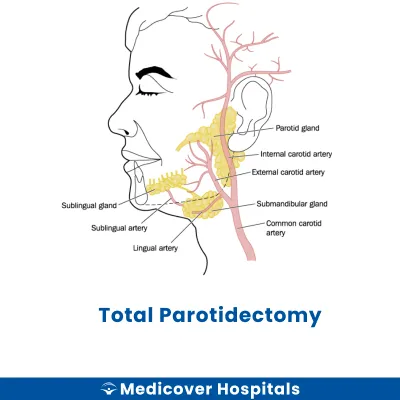
Total parotidectomy is a surgical procedure involving the complete removal of the parotid gland. The parotid gland is a major salivary gland located near the ear. It plays a crucial role in saliva production, which aids in digestion and oral health. This surgery is performed when the entire gland needs to be removed due to various medical conditions.
Total parotidectomy is often required for conditions such as benign or malignant tumors, chronic infections, or inflammatory diseases affecting the parotid gland. If these conditions are left untreated, they can lead to complications like facial nerve damage or spread of cancer disease. Modern surgical approaches for total parotidectomy include minimally invasive techniques and robotic-assisted surgery, which aim to reduce recovery time and improve outcomes.
Total Parotidectomy Doctors Near You
Find experienced ENT specialists for total parotidectomy at Medicover Hospitals across India. Choose your city and book a consultation to discuss your treatment options with our skilled professionals.
Why Choose Medicover Hospitals for Total Parotidectomy?
Get a second opinion from trusted experts and makeconfident, informed decisions.
 Get Second Opinion
Complete Guide To Total Parotidectomy
Everything you need to know about the procedure, preparation, and recovery
Total parotidectomy Surgery Indications
Total parotidectomy is recommended when conditions affecting the parotid gland require complete removal. This surgery is often considered when conservative treatments are ineffective or when specific diagnostic findings are present.
Parotid Tumours
Patients may experience a noticeable lump or swelling near the jaw or ear. Imaging tests like MRI or CT scans reveal masses in the parotid gland. Surgery is advised when the tumour is malignant or growing rapidly.
Chronic Parotitis
Persistent pain and swelling in the parotid region are common symptoms. Repeated infections or inflammation are observed despite antibiotics. Surgery is considered when medical management fails to control symptoms.
Recurrent Parotid Abscess
Patients suffer from repeated episodes of painful swelling and pus discharge. Ultrasound or CT scans show abscess formation. Surgery is needed when drainage and antibiotics do not prevent recurrence.
Salivary Gland Stones
Symptoms include pain and swelling, especially during meals. Imaging may reveal stones blocking the salivary duct. Surgery is necessary when stones cause repeated infections or obstruction.
Facial Nerve Involvement
Patients may experience facial weakness or paralysis. Examination shows nerve involvement due to a tumour or other lesion. Surgery is required to relieve pressure on the nerve.
How to Prepare for Total parotidectomy?
Preparing for a total parotidectomy is crucial to ensure a smooth surgery and recovery. Proper preparation helps reduce risks and enhances the effectiveness of the procedure.
- Medication Review: Stop NSAIDs, anticoagulants, and herbal supplements 7-10 days before surgery.
- Fasting Guidelines: Do not eat or drink anything for at least 8 hours before the surgery.
- Pre-Surgery Tests: Complete any required blood tests or imaging studies as advised by your doctor.
- Personal Items: Wear loose, comfortable clothing on the day of surgery.
- Transportation: Arrange for someone to drive you home after the procedure.
- Medication List: Bring a list of all medications you take, including dosages.
- Smoking and Alcohol: Avoid smoking and alcohol for at least 48 hours before surgery.
- Hygiene: Bathe and wash your hair the night before or the morning of surgery.
Total Parotidectomy Surgery (Step-by-Step)
Overview: Total parotidectomy is performed by ENT specialists. The surgery typically lasts 3 to 5 hours. It is done under general anaesthesia.
- Preparation: The patient is positioned on the operating table. General anaesthesia is administered to ensure the patient is asleep and pain-free.
- Incision: A curved incision, usually about 5-7 cm, is made in front of the ear extending to the neck. This provides access to the parotid gland.
- Exposure: Skin and tissue layers are carefully retracted using retractors. The surgeon identifies and preserves the facial nerve using a nerve monitor.
- Gland Removal: The parotid gland is dissected using instruments like the harmonic scalpel or bipolar cautery. The surgeon carefully separates the gland from surrounding tissues.
- Hemostasis: Bleeding is controlled using bipolar cautery. This ensures a clear surgical field and reduces blood loss.
- Closure: The incision is closed in layers using sutures. A small drain may be placed to prevent fluid accumulation.
- Recovery: The patient is moved to the recovery room. They are monitored as they wake up from anaesthesia, experiencing some swelling and discomfort.
Who Performs Total parotidectomy Surgery?
Total parotidectomy is performed by ENT surgeons. These specialists are trained in surgeries involving the ear, nose, throat, and related structures. They have expertise in managing conditions affecting the parotid gland.
Recovery After Total Parotidectomy Surgery
Recovery from a total parotidectomy involves gradual healing and adapting to changes post-surgery. Patients can expect some swelling and discomfort initially, but these typically improve over time. It's important to follow your surgeon's advice for a smooth recovery.
Day 1-3:
- Rest is crucial. Avoid any strenuous activities.
- Swelling and bruising around the surgical site are common. Use prescribed pain relief as needed.
- Stick to a soft diet. Include foods like curd, dal-rice, and soups to avoid strain on the jaw.
Day 4-7:
- Continue with light activities. Avoid bending or lifting heavy objects.
- Keep the surgical area clean and dry. Follow wound care instructions provided by your doctor.
- Gradually introduce foods like khichdi and moong dal, ensuring they are soft and easy to chew.
Day 8-14:
- Most patients can resume work or school, depending on their comfort and the nature of their job.
- Continue to avoid strenuous activities and heavy lifting.
- Maintain a balanced diet to support healing. Include plenty of fluids and soft, nutritious foods.
Phase 3 (Week 3-4):
- Gradually return to normal activities, but listen to your body and rest as needed.
- Regular follow-up appointments are important to monitor healing progress.
When to Seek Urgent Help:
- Sudden increase in swelling or severe pain at the surgical site.
- Signs of infection like fever, redness, or pus discharge.
- Difficulty breathing or swallowing.
Benefits of Total parotidectomy Surgery
Total parotidectomy is a surgical procedure aimed at removing the parotid gland, often to treat tumors or chronic infections.
- Effective Tumor Removal: Helps in the complete removal of benign or malignant tumors.
- Symptom Relief: Alleviates symptoms like pain and swelling associated with parotid gland issues.
- Prevention of Recurrence: Reduces the risk of tumor recurrence by removing the entire gland.
- Improved Quality of Life: Addresses chronic infections, leading to better overall health.
Risks and Complications of Total parotidectomy Surgery
While total parotidectomy can be beneficial, it carries certain risks and potential complications.
- Common: Facial nerve injury, which may cause temporary or permanent facial weakness.
- Common: Frey's syndrome, leading to sweating in the cheek area during eating.
- Rare: Infection at the surgical site, requiring further treatment.
- Rare: Hematoma or bleeding, which may need additional intervention.
- Rare: Salivary fistula, resulting in saliva leakage from the wound.
- Rare: Scarring, which may affect the cosmetic appearance.
Cost of Total Parotidectomy Surgery
The cost of Total Parotidectomy Surgery at Medicover Hospitals ranges from Rs. 43,000 to Rs. 137,000. The price varies based on the ward category chosen, such as day care, general, or suite options.
Medicover Hospitals ensures transparent pricing and offers insurance and TPA support, including CGHS, ESI, and major TPAs. A cashless facility is also available for added convenience. Please contact the hospital for the latest insurance panel details as these may change periodically.
Frequently Asked Questions
1. How much does Total parotidectomy surgery cost at Medicover Hospitals?
The cost for Total parotidectomy surgery at Medicover Hospitals ranges from Rs. 43,000 to Rs. 137,000, depending on the type of room and care required.
2. Is Total parotidectomy surgery covered under health insurance at Medicover?
Total parotidectomy surgery may be covered by CGHS, ESI, and major TPAs, offering cashless options. Please contact the hospital for current panel details.
3. Will my facial nerve be affected after surgery?
There is a risk of facial nerve injury during Total parotidectomy. Discuss with your surgeon about measures to protect the nerve.
4. Can I chew normally after Total parotidectomy?
Chewing may be difficult initially due to swelling and discomfort. Soft foods like dal-rice and khichdi are recommended during the recovery phase.
5. Will I experience dry mouth after surgery?
Dry mouth can occur if salivary gland function is affected. Staying hydrated and using oral moisturizers can help manage this condition.
6. How soon can I return to work after Total parotidectomy?
Most patients can return to work within 2-4 weeks, depending on recovery. Consult your doctor for personalized advice based on your progress.
7. Is there a risk of Frey's syndrome after surgery?
Frey's syndrome, causing sweating while eating, can occur post-surgery. Discuss preventive measures and treatment options with your healthcare provider.
8. Is a parotidectomy considered major surgery?
Yes, a parotidectomy is considered a major surgery, as it involves removal of part or all of the parotid gland near the facial nerve. It requires careful surgical precision to avoid nerve damage.
9. What happens after a total parotidectomy?
After a total parotidectomy, patients may experience swelling, mild pain, numbness, or temporary facial weakness. A drain may be placed for a short time, and recovery usually involves wound care, medications, and follow-up. Most symptoms improve over time.
10. How successful is a parotidectomy?
Parotidectomy has a high success rate, especially for benign tumors and early-stage cancers. Outcomes are generally good when performed by experienced surgeons, with low recurrence rates.
11. What foods should be avoided after parotidectomy?
After surgery, it is advisable to avoid hard, spicy, acidic, or very hot foods, as they may cause discomfort or stimulate saliva production. Soft, bland foods are recommended during the initial recovery period.


