 Call
Call Patient Reports
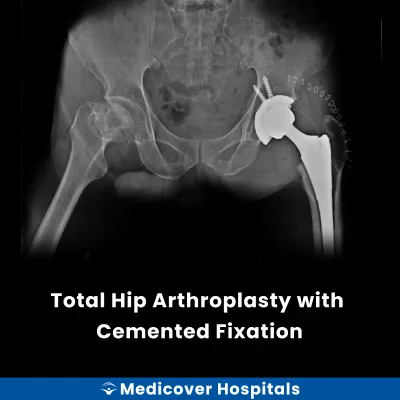
Total Hip Arthroplasty with Cemented Fixation Surgery by Expert Orthopedics
Total Hip Arthroplasty with Cemented Fixation at Medicover Hospitals is performed using the open surgical approach. Our team, with qualifications like MS and DNB, specialises in joint replacement surgeries. This procedure often results in reduced blood loss, enhancing recovery for patients across India.
Expert Surgeons
Yearly Surgeries
Patient Satisfaction
What is Total Hip Arthroplasty With Cemented Fixation?
Total Hip Arthroplasty with Cemented Fixation is a surgical procedure to replace a damaged hip joint. The hip joint (where the thigh bone meets the pelvis) is replaced with artificial components. In this method, bone cement is used to secure the prosthetic parts to the bone. This helps in providing stability and support to the new joint.
This surgery is often needed for severe arthritis or hip fractures. These conditions can cause pain and limit mobility. If untreated, they may lead to further joint damage and disability. Modern surgical approaches for this procedure include the posterior, lateral, and anterior approaches. These techniques help in accessing the hip joint effectively.
Total Hip Arthroplasty With Cemented Fixation Doctors Near You
Discover skilled orthopedics for total hip arthroplasty with cemented fixation at Medicover Hospitals across India. Choose your city and book a consultation to explore your treatment options today.
Why Choose Medicover Hospitals for Total Hip Arthroplasty With Cemented Fixation?
Get a second opinion from trusted experts and makeconfident, informed decisions.
 Get Second Opinion
Complete Guide To Total Hip Arthroplasty With Cemented Fixation
Everything you need to know about the procedure, preparation, and recovery
Total Hip Arthroplasty with Cemented Fixation Surgery Indications
Total Hip Arthroplasty with Cemented Fixation is recommended when hip joint damage severely affects daily life. Doctors suggest this procedure when other treatments fail to relieve symptoms.
Severe Osteoarthritis
Patients experience intense hip pain and stiffness, limiting movement. X-rays show joint space narrowing and bone spurs. When pain persists despite medication and therapy, surgery is advised.
Rheumatoid Arthritis
Chronic inflammation causes joint pain and swelling. Blood tests reveal elevated inflammatory markers. When medications and lifestyle changes do not control symptoms, surgery becomes necessary.
Hip Fractures
Patients suffer sudden, severe hip pain after a fall. X-rays confirm fractures. If the fracture does not heal with conservative methods, surgery is considered to restore mobility.
Avascular Necrosis
Patients report hip pain that worsens with weight-bearing. MRI scans show reduced blood supply to the femoral head. Surgery is recommended when the condition progresses despite non-surgical treatments.
Developmental Dysplasia of the Hip (DDH)
Patients have hip pain and limping due to abnormal joint development. Imaging reveals misalignment. When bracing and physical therapy fail, surgery is suggested to correct the joint.
How to Prepare for Total Hip Arthroplasty with Cemented Fixation?
Preparation is crucial for a smooth surgery and recovery. It helps minimise risks and ensures the best possible outcome.
- Medication Review: Stop NSAIDs, anticoagulants, and herbal supplements as advised by your doctor.
- Fasting: Do not eat or drink anything for at least 8 hours before the surgery.
- Pre-Surgery Exercises: Engage in pelvic floor exercises to strengthen muscles around the hip.
- Clothing: Wear loose, comfortable clothing on the day of surgery for easy movement.
- Transport: Arrange for someone to drive you home post-surgery, as you will not be able to drive.
- Medication List: Bring a list of all medications you are taking, including dosages.
- Home Preparation: Ensure your home is ready for your return, with essentials within easy reach.
- Consultation: Discuss any allergies or medical conditions with your healthcare provider.
Total Hip Arthroplasty with Cemented Fixation Surgery (Step-by-Step)
Overview: This procedure is performed by orthopaedic surgeons. It typically lasts 1.5 to 2 hours. General or regional anaesthesia is used to ensure the patient feels no pain during the surgery.
- Preparation: The patient is positioned on the operating table. Anaesthesia is administered. The surgical area is cleaned and sterilized.
- Incision: A 10-15 cm incision is made over the hip joint. This allows access to the hip joint for the surgery.
- Joint Exposure: The surgeon uses retractors to hold back tissues. Instruments like a curette may be used to remove damaged cartilage and bone.
- Femoral Preparation: The femoral head is removed. The femur is prepared using a rasp to shape it for the implant.
- Implant Insertion: Bone cement is applied to the femoral canal. The femoral stem and head are inserted. The acetabular component is also cemented into place.
- Closure: The surgeon closes the incision with sutures or staples. A dressing is applied to protect the area.
- Recovery: The patient is moved to a recovery room. Vital signs are monitored as the anaesthesia wears off.
Who Performs Total Hip Arthroplasty with Cemented Fixation Surgery?
Orthopaedic surgeons perform this surgery. They specialise in treating conditions affecting bones and joints. Their expertise ensures the procedure is done with precision and care.
Recovery After Total Hip Arthroplasty with Cemented Fixation Surgery
Recovery from Total Hip Arthroplasty with Cemented Fixation involves gradual healing and rehabilitation. Expect some discomfort initially, but it will improve with time. Follow your surgeon's advice for a smooth recovery.
Day 1-3:
- Hospital stay for monitoring and pain management.
- Begin gentle physiotherapy to improve mobility.
- Start with a soft diet including curd, dal-rice, and soups.
Day 4-7:
- Continue physiotherapy exercises as advised.
- Increase activity gradually; use a walker for support.
- Include light meals like khichdi and moong dal.
Day 8-14:
- Focus on strengthening exercises.
- Begin walking short distances without assistance.
- Maintain a balanced diet with adequate hydration.
Phase 3-6 Weeks:
- Increase walking distance and reduce support.
- Resume light activities; avoid bending or twisting the hip.
- Return to work/school may be possible, depending on recovery.
Phase 6-12 Weeks:
- Engage in more vigorous activities as tolerated.
- Continue physiotherapy to enhance joint function.
- Follow a nutritious diet to support healing.
When to Seek Urgent Help:
- Severe pain or swelling in the hip.
- Fever or signs of infection at the surgical site.
- Sudden inability to move the operated leg.
Benefits of Total Hip Arthroplasty with Cemented Fixation Surgery
Total Hip Arthroplasty with cemented fixation offers several advantages for patients needing hip replacement.
- Immediate Stability: Cemented fixation provides immediate stability to the joint, aiding in early mobility.
- Reduced Pain: Patients often experience significant pain relief following the procedure.
- Improved Function: Many patients regain better hip function, enhancing their quality of life.
- Suitable for Osteoporotic Bones: This method is beneficial for patients with weaker bones.
Risks and Complications of Total Hip Arthroplasty with Cemented Fixation Surgery
While generally safe, Total Hip Arthroplasty with cemented fixation carries some risks and complications.
Common Risks
- Infection at the surgical site can occur, requiring further treatment.
- Blood clots may form in the legs, necessitating preventive measures.
Rare Risks
- Cement-related complications, such as bone cement implantation syndrome, may arise.
- Dislocation of the hip joint can happen, potentially needing additional intervention.
- Allergic reactions to the materials used in the cement may occur in some patients.
Cost of Total Hip Arthroplasty with Cemented Fixation Surgery
The cost of Total Hip Arthroplasty with Cemented Fixation Surgery at Medicover Hospitals varies based on the ward category chosen. Prices range from ₹1,40,000 to ₹3,50,000 per hip across different ward types. Our transparent pricing ensures clarity, and we offer insurance and TPA support, including CGHS, ESI, and major TPAs. A cashless facility is also available for your convenience. Please contact the hospital for the latest insurance panel details as these may change periodically.
Frequently Asked Questions
1. How much does Total Hip Arthroplasty with Cemented Fixation surgery cost at Medicover Hospitals?
The cost for Total Hip Arthroplasty with Cemented Fixation surgery at Medicover Hospitals ranges from ₹1,40,000 to ₹3,50,000 per hip, depending on the facility and services.
2. Is Total Hip Arthroplasty with Cemented Fixation surgery covered under health insurance at Medicover?
Yes, it is often covered under CGHS, ESI, and major TPAs with cashless options. Please contact the hospital for current panel details.
3. Will I need a walker after hip arthroplasty?
Yes, using a walker is common for initial support after hip arthroplasty. It helps in maintaining balance and reducing stress on the new joint.
4. Can I sit cross-legged after hip arthroplasty?
Sitting cross-legged is usually discouraged after hip arthroplasty. It can put undue stress on the new joint and affect recovery.
5. Is there a risk of dislocation after surgery?
Yes, there is a risk of hip dislocation if precautions are not followed. Avoid bending the hip beyond 90 degrees during recovery.
6. How soon can I drive after hip arthroplasty?
Driving is generally not recommended for 6 to 8 weeks post-surgery. Consult your doctor for personalized advice based on your recovery.
7. What foods aid recovery after hip arthroplasty?
Consume protein-rich foods like dal-rice and curd to aid recovery. These help in tissue repair and provide necessary nutrients for healing.


