 Call
Call Patient Reports
Best Tibial Angioplasty for Critical Limb Ischemia Procedure Hospital with Experet Care
At Medicover Hospitals, Tibial Angioplasty for Critical Limb Ischemia is performed using endoscopic techniques by our expert team of interventional radiologists and cardiologists with MD, DNB, and DM qualifications. This approach often results in smaller incisions and reduced recovery time for patients.
Expert Specialists
Yearly Procedures
Patient Satisfaction
What is Tibial Angioplasty for Critical Limb Ischemia?
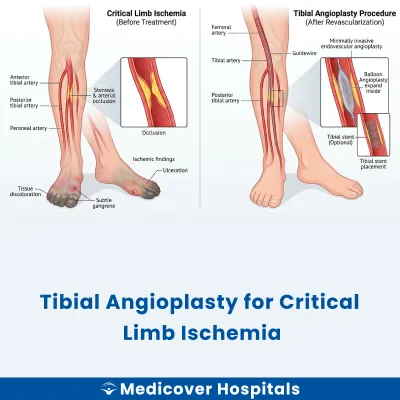
Tibial Angioplasty for Critical Limb Ischemia is a medical procedure to restore blood flow in the lower leg. It involves the tibial arteries, which supply blood to the lower leg and foot. During the procedure, a small balloon is inserted and inflated to open up narrowed or blocked arteries. This helps improve blood circulation to the affected limb.
This surgery is needed when there is severe blockage in the arteries, leading to Critical Limb Ischemia. Conditions like diabetes and peripheral artery disease can cause such blockages. If untreated, it can lead to severe pain, ulcers, or even amputation. Modern approaches include minimally invasive techniques, such as balloon angioplasty and stenting, to effectively treat the condition.
Tibial Angioplasty for Critical Limb Ischemia Doctors Near You
Discover experienced interventional-radiology specialists for tibial angioplasty at Medicover Hospitals across India. Choose your city and book a consultation to address critical limb ischemia effectively.
Why Choose Medicover Hospitals for Tibial Angioplasty for Critical Limb Ischemia?
Get a second opinion from trusted experts and makeconfident, informed decisions.
 Get Second Opinion
Complete Guide To Tibial Angioplasty For Critical Limb Ischemia
Everything you need to know about the procedure, preparation, and recovery
Tibial Angioplasty for Critical Limb Ischemia Procedure Indications
Tibial angioplasty is recommended when blood flow to the lower limbs is severely reduced, causing pain and potential tissue damage. This procedure helps restore circulation, especially when other treatments have not been effective.
Severe Rest Pain
Patients often experience persistent pain in the feet or toes, even at rest. This pain is usually worse at night. Doctors may find reduced blood flow in imaging tests. When pain relief medications and lifestyle changes do not help, angioplasty is considered.
Non-Healing Ulcers
Chronic wounds or ulcers on the feet or lower legs that do not heal are common signs. Examination may reveal poor blood supply. If wound care and medications fail to improve healing, angioplasty may be needed.
Gangrene
Blackened or dead tissue on the toes or foot indicates gangrene(Necrosis). This is confirmed through physical examination and imaging. When tissue death progresses despite antibiotics and wound care, angioplasty can help restore blood flow.
Intermittent Claudication
Patients may feel cramping or pain in the legs during walking, which eases with rest. Tests often show narrowed arteries. When exercise and medications do not alleviate symptoms, angioplasty might be the next step.
Critical Limb Ischemia Diagnosis
Severe blockage in the arteries of the lower limbs is diagnosed through imaging. Symptoms include pain, ulcers, or gangrene. When these symptoms persist despite conservative management, angioplasty is recommended.
How to Prepare for Tibial Angioplasty for Critical Limb Ischemia?
Proper preparation for tibial angioplasty is crucial to ensure a smooth procedure and recovery. It helps minimise risks and enhances the effectiveness of the treatment.
- Medication Review: Stop NSAIDs, anticoagulants, and herbal supplements as advised by your doctor to reduce bleeding risk.
- Fasting Guidelines: Fast for at least 6-8 hours before the procedure, as general anaesthesia may be used.
- Hydration: Drink clear fluids up to 2 hours before the procedure unless instructed otherwise.
- Clothing: Wear loose, comfortable clothing on the day of the procedure for ease of movement post-surgery.
- Transportation: Arrange for someone to drive you home after the procedure, as you may feel drowsy.
- Medication List: Bring a list of your current medications, including dosages, for the medical team.
- Pre-Procedure Tests: Complete any required blood tests or imaging studies as instructed by your healthcare provider.
- Personal Items: Leave valuables at home and bring only essential items to the hospital.
Tibial Angioplasty for Critical Limb Ischemia Procedure (Step-by-Step)
Tibial angioplasty is performed by interventional radiologists. The procedure typically lasts 1-2 hours. It is usually done under local anaesthesia.
- Preparation: The patient is positioned comfortably. Local anaesthesia is administered to numb the area.
- Access: A small incision, about 1-2 cm, is made near the groin. A catheter is inserted into the femoral artery using a guidewire.
- Navigation: The catheter is carefully guided through the blood vessels to the affected tibial artery. Imaging techniques like fluoroscopy are used for precision.
- Balloon Angioplasty: A balloon catheter is positioned at the site of the blockage. The balloon is inflated to widen the artery, improving blood flow.
- Stent Placement (if needed): If necessary, a stent may be placed to keep the artery open. The stent is delivered via the catheter and expanded at the blockage site.
- Closure: The catheter and guidewire are removed. The incision is closed with a small bandage. The patient is monitored for a short period.
- Recovery: The patient may feel some discomfort at the incision site. They are advised to rest and avoid strenuous activities for a few days.
Who Performs Tibial Angioplasty for Critical Limb Ischemia Procedure?
The procedure is performed by interventional radiologists. These specialists are trained in minimally invasive techniques using imaging guidance. They use instruments like catheters and guidewires to treat vascular conditions.
Recovery After Tibial Angioplasty for Critical Limb Ischemia Procedure
Recovery from tibial angioplasty for critical limb ischemia involves gradual healing and lifestyle adjustments. Patients can expect a phased recovery with specific dietary and activity guidelines to ensure optimal healing.
Day 1-3:
- Rest is crucial. Keep the leg elevated to reduce swelling.
- Consume light meals. Include curd, dal-rice, and soups for easy digestion.
- Avoid strenuous activities. Short walks around the house are acceptable.
Day 4-7:
- Gradually increase walking, but avoid long distances.
- Continue with a balanced diet. Add khichdi and moong dal for protein.
- Monitor the incision site for any signs of infection.
Day 8-14:
- Resume light activities. Avoid lifting heavy objects.
- Return to work or school if it involves minimal physical strain.
- Maintain a heart-healthy diet. Include fruits and vegetables.
Phase 3 (Week 3-4):
- Increase activity levels gradually. Gentle exercises like yoga can be introduced.
- Regular follow-up appointments to monitor progress.
- Continue dietary habits that support vascular health.
When to Seek Urgent Help
- Severe pain or swelling in the leg.
- Signs of infection such as redness, warmth, or pus at the incision site.
- Sudden shortness of breath or chest pain.
- Loss of sensation or movement in the leg.
Benefits of Tibial Angioplasty for Critical Limb Ischemia Procedure
Tibial angioplasty is a minimally invasive procedure aimed at improving blood flow to the lower limbs. It offers several benefits for patients with critical limb ischemia.
- Improved Blood Flow: Helps restore adequate blood circulation to the affected limb.
- Pain Relief: Reduces pain associated with poor blood supply.
- Wound Healing: Enhances the healing of ulcers and sores on the foot or leg.
- Mobility Improvement: Aids in regaining better mobility and function of the limb.
- Reduced Amputation Risk: Lowers the likelihood of needing an amputation.
Risks and Complications of Tibial Angioplasty for Critical Limb Ischemia Procedure
While tibial angioplasty is generally safe, it carries certain risks and potential complications.
- Common: Bruising or bleeding at the catheter insertion site.
- Common: Re-narrowing of the artery over time (restenosis).
- Rare: Infection at the site of the procedure.
- Rare: Blood vessel damage during the procedure.
- Rare: Allergic reaction to the contrast dye used.
- Rare: Blood clots forming in the treated artery.
Cost of Tibial Angioplasty for Critical Limb Ischemia Procedure
The cost of Tibial Angioplasty for Critical Limb Ischemia at Medicover Hospitals varies depending on the ward category chosen. Prices range from Rs.10,500 to Rs.90,000 across different branches. The cost is influenced by the type of accommodation and facilities provided.
We offer transparent pricing and support for insurance and TPA, including CGHS, ESI, and major TPAs. A cashless facility is also available for your convenience. Please contact the hospital for the latest insurance panel details as these may change periodically.
Frequently Asked Questions
1. How much does Tibial Angioplasty cost?
The cost for Tibial Angioplasty for Critical Limb Ischemia at Medicover Hospitals ranges from Rs.10500 to Rs.90000, depending on the facility and care level.
2. Is Tibial Angioplasty covered under insurance?
Tibial Angioplasty for Critical Limb Ischemia may be covered under CGHS, ESI, and major TPAs. Please contact the hospital for current panel details.
3. What is the recovery time for Tibial Angioplasty?
Recovery from Tibial Angioplasty for Critical Limb Ischemia typically takes a few weeks. Patients might need to avoid strenuous activities initially.
4. Will I need lifestyle changes after Tibial Angioplasty?
Yes, lifestyle changes like quitting smoking and regular exercise are recommended. These changes help improve blood flow and prevent complications.
5. Can I walk immediately after Tibial Angioplasty?
Walking is usually encouraged soon after the procedure. However, follow your doctor's advice on the intensity and duration of walking.
6. Are there dietary restrictions post-Tibial Angioplasty?
A balanced diet with foods like dal-rice and curd is recommended. Avoid high-fat and high-sugar foods to aid recovery.
7. What complications can occur after Tibial Angioplasty?
Possible complications include re-narrowing of the artery and infection. Regular follow-ups with your doctor can help manage these risks.


