 Call
Call Patient Reports
Best Hospital for Thulium Fiber Laser Enucleation Procedure
Thulium Fiber Laser Enucleation at Medicover Hospitals is an advanced endoscopic procedure performed by skilled urologists with qualifications like MS, DNB, and MCh. This technique ensures reduced blood loss and shorter hospital stays, enhancing patient recovery across India.
Expert Surgeons
Yearly Surgeries
Patient Satisfaction
What is Thulium Fiber Laser Enucleation?
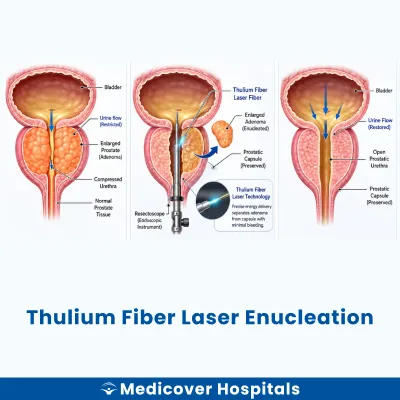
Thulium Fiber Laser Enucleation is a medical procedure used to treat conditions affecting the prostate gland. It involves the use of a thulium fiber laser to remove excess prostate tissue. This helps in relieving urinary symptoms caused by an enlarged prostate, medically known as benign prostatic hyperplasia (BPH). The laser precisely targets and enucleates (removes) the obstructive tissue, allowing for improved urine flow.
This surgery is needed when BPH causes significant urinary problems such as difficulty in urination, frequent urination, or urinary retention. If left untreated, BPH can lead to bladder damage or kidney problems. Modern surgical approaches for this procedure include Thulium Fiber Laser Enucleation and other laser-based techniques. These methods are minimally invasive, offering quicker recovery and reduced risk of complications.
Thulium Fiber Laser Enucleation Doctors Near You
Discover skilled urologists for Thulium Fiber Laser Enucleation at Medicover Hospitals across India. Choose your city and book a consultation to explore advanced treatment options near you.
Why Choose Medicover Hospitals for Thulium Fiber Laser Enucleation?
Get a second opinion from trusted experts and makeconfident, informed decisions.
 Get Second Opinion
Complete Guide To Thulium Fiber Laser Enucleation
Everything you need to know about the procedure, preparation, and recovery
Thulium Fiber Laser Enucleation Procedure Indications
Doctors recommend Thulium Fiber Laser Enucleation when patients experience significant urinary symptoms due to an enlarged prostate. This procedure is often suggested when conservative treatments have not provided relief.
Severe Lower Urinary Tract Symptoms (LUTS)
Patients may experience frequent urination, urgency, or weak urine flow. On examination, doctors find an enlarged prostate obstructing the urinary tract. When medications fail to improve symptoms, surgery is considered.
Acute Urinary Retention
Patients may suddenly be unable to urinate, causing discomfort and bladder distension. Tests reveal a blockage due to prostate enlargement. If catheterisation and medication do not resolve the issue, surgical intervention is necessary.
Recurrent Urinary Tract Infections (UTIs)
Patients suffer from repeated UTIs, with symptoms like burning sensation and frequent urination. Lab tests show infection linked to incomplete bladder emptying caused by an enlarged prostate. Surgery is advised when antibiotics and other treatments are ineffective.
Bladder Stones
Patients may experience pain, blood in urine, or frequent urination. Imaging tests reveal stones formed due to urine retention from prostate enlargement. When non-surgical methods fail, enucleation is recommended.
Renal Insufficiency
Patients may show signs of kidney function decline, such as fatigue or swelling. Tests indicate back pressure on kidneys due to urinary obstruction. Surgery is considered when conservative measures do not improve kidney function.
How to Prepare for Thulium Fiber Laser Enucleation?
Proper preparation is crucial for Thulium Fiber Laser Enucleation to ensure a smooth procedure and recovery. Following the guidelines helps minimise risks and enhance outcomes.
- Medication Management: Stop NSAIDs, anticoagulants, and herbal supplements 7-10 days before surgery.
- Fasting Instructions: Fast for at least 6 hours before the procedure if general anaesthesia is used.
- Pre-Surgery Tests: Complete all blood tests and imaging studies as advised by your doctor.
- Clothing: Wear loose, comfortable clothing on the day of the surgery for ease of changing and comfort.
- Transport Arrangements: Arrange for someone to drive you home post-procedure, as you may feel drowsy.
- Medication List: Bring a list of all medications you are currently taking, including dosages, for reference.
- Hydration: Stay well-hydrated the day before surgery, unless instructed otherwise.
- Personal Items: Leave valuables at home and bring only essentials to the hospital.
Thulium Fiber Laser Enucleation Procedure (Step-by-Step)
This procedure is performed by urinary system experts. It typically lasts between 60 to 120 minutes. General or spinal anaesthesia is commonly used.
- Preparation: The patient is positioned on the surgical table. Anaesthesia is administered to ensure comfort and pain-free experience.
- Access: A resectoscope is inserted through the urethra. No external incision is needed, minimizing visible scarring.
- Tissue Enucleation: The thulium fiber laser is used to carefully separate and remove the enlarged prostate tissue. The laser provides precision, reducing bleeding.
- Tissue Morcellation: A morcellator is employed to break down the removed tissue into smaller fragments. These fragments are then extracted through the resectoscope.
- Haemostasis: The laser also helps in sealing blood vessels. This reduces the risk of bleeding and promotes quicker recovery.
- Completion: The resectoscope is withdrawn. A catheter may be placed temporarily to aid in urine drainage.
- Recovery: The patient is moved to a recovery area. Monitoring continues until the effects of anaesthesia wear off.
Who Performs Thulium Fiber Laser Enucleation Procedure?
The procedure is performed by urologists. These specialists are trained in managing conditions of the urinary tract and male reproductive organs. They use advanced tools like the thulium fiber laser to treat prostate enlargement effectively.
Recovery After Thulium Fiber Laser Enucleation Procedure
Recovery after Thulium Fiber Laser Enucleation is generally smooth, with most patients experiencing relief from symptoms soon after the procedure. However, it's important to follow post-operative guidelines to ensure a quick and safe recovery.
Day 1-3:
- Rest is crucial. Avoid strenuous activities.
- Expect mild discomfort or burning during urination.
- Stay hydrated. Drink plenty of water to flush the bladder.
- Consume a soft diet. Opt for curd, dal-rice, and soups.
Day 4-7:
- Gradually increase light activities like walking.
- Continue with a balanced diet. Include khichdi and moong dal.
- Avoid lifting heavy objects or engaging in vigorous exercise.
Week 2:
- Most patients can resume work or school, depending on their comfort and energy levels.
- Maintain a healthy diet and stay hydrated.
- Monitor for any unusual symptoms.
Phase 3: Beyond Week 2:
- Gradually return to normal activities, including exercise, as advised by your doctor.
- Continue to avoid heavy lifting for at least a month.
- Regular follow-up appointments are essential for monitoring recovery.
When to Seek Urgent Help
- Severe pain or persistent burning during urination.
- Heavy bleeding or blood clots in urine.
- Fever or chills indicating possible infection.
- Inability to urinate or severe urinary retention.
Benefits of Thulium Fiber Laser Enucleation Procedure
Thulium Fiber Laser Enucleation is a modern technique for treating prostate enlargement. It offers several advantages over traditional methods.
- Precision: The laser allows for precise removal of prostate tissue, reducing damage to surrounding areas.
- Reduced Bleeding: The laser's ability to coagulate blood vessels minimizes bleeding during the procedure.
- Shorter Hospital Stay: Patients often experience quicker recovery and shorter hospital stays.
- Faster Recovery: Many patients return to normal activities sooner compared to other surgical options.
- Effective for Large Prostates: This technique is effective even for significantly enlarged prostates.
Risks and Complications of Thulium Fiber Laser Enucleation Procedure
While generally safe, Thulium Fiber Laser Enucleation does carry some risks and potential complications.
Common Risks:
- Temporary urinary incontinence may occur post-surgery.
- Urinary tract infections can develop after the procedure.
Rare Complications:
- Injury to surrounding tissues is possible, though uncommon.
- Narrowing of the urethra, known as urethral stricture, may occur.
- Erectile dysfunction, although infrequent, can be a concern.
- Blood clots may form, requiring further medical attention.
Cost of Thulium Fiber Laser Enucleation Procedure
The cost of the Thulium Fiber Laser Enucleation procedure at Medicover Hospitals ranges from Rs.150,000 to Rs.225,000. The price varies depending on the ward category chosen, such as general, twin sharing, private, or deluxe. We offer transparent pricing to ensure clarity for our patients.
Insurance and TPA support are available, with acceptance of CGHS, ESI, and major TPAs. A cashless facility is also offered for convenience. Please contact the hospital for the latest insurance panel details as these may change periodically.
Frequently Asked Questions
1. How much does Thulium Fiber Laser Enucleation cost?
The Thulium Fiber Laser Enucleation procedure costs between Rs. 150,000 and Rs. 2,25,000 at Medicover Hospitals, depending on the room type.
2. Is Thulium Fiber Laser Enucleation covered by insurance?
Thulium Fiber Laser Enucleation may be covered by CGHS, ESI, and major TPAs. Please contact the hospital for current panel details.
3. Will I need a catheter after Thulium Enucleation?
Yes, a catheter is usually required for a short period after the procedure. Your doctor will advise when it can be safely removed.
4. What organ is treated with Thulium Enucleation?
Thulium Fiber Laser Enucleation is primarily used to treat conditions of the prostate gland. It is effective in managing symptoms of benign prostatic hyperplasia (BPH).
5. Can I resume normal activities after Thulium Enucleation?
Most patients can return to normal activities within a week. Avoid heavy lifting and strenuous exercise during the initial recovery period.
6. What dietary changes are needed after Thulium Enucleation?
Consume light meals like curd, dal-rice, and khichdi post-procedure. Avoid spicy foods and caffeine to aid recovery.
7. Are there complications specific to Thulium Enucleation?
Common concerns include urinary incontinence and erectile dysfunction. Discuss these potential complications with your doctor before the procedure.


