 Call
Call Patient Reports
Best Tension Band Wiring Surgery Hospital with orthopedic Care
Tension Band Wiring is an open surgical technique used to treat fractures, especially around the knee and elbow. At Medicover Hospitals, our orthopaedic surgeons with qualifications like MS and DNB perform this procedure. Patients often experience shorter hospital stays due to effective fracture stabilization.
Expert Surgeons
Yearly Surgeries
Patient Satisfaction
What is Tension Band Wiring?
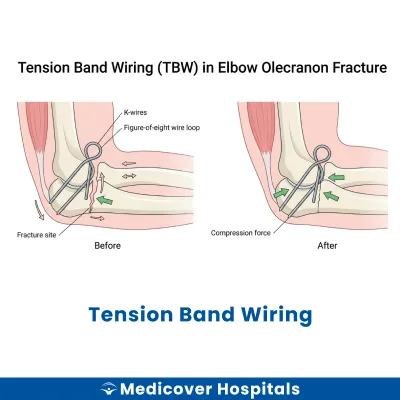
Tension Band Wiring is a surgical technique used to treat fractures in bones, particularly the patella (kneecap) and olecranon (elbow). It involves using wires and pins to hold the broken bone fragments together. This method converts tensile forces into compressive forces, promoting better healing. It is commonly used for fractures where the bone is under tension, ensuring proper alignment and stability during recovery.
This surgery is necessary for fractures that are displaced or unstable. Conditions like patellar fractures or olecranon fractures often require Tension Band Wiring. If left untreated, these fractures can lead to improper healing, reduced mobility, and chronic pain. Modern surgical approaches for Tension Band Wiring include minimally invasive techniques, which aim to reduce recovery time and improve outcomes.
Tension Band Wiring Doctors Near You
Discover skilled orthopedics for tension band wiring at Medicover Hospitals across India. Choose your city and book a consultation to address your orthopedic needs with expert care.
Why Choose Medicover Hospitals for Tension Band Wiring?
Get a second opinion from trusted experts and makeconfident, informed decisions.
 Get Second Opinion
Complete Guide To Tension Band Wiring
Everything you need to know about the procedure, preparation, and recovery
Tension Band Wiring Surgery Indications
Tension Band Wiring is often recommended by doctors for specific types of fractures. This procedure is typically considered when conservative treatments do not provide adequate healing or stability.
Olecranon Fractures
Patients may experience pain and swelling in the elbow, with difficulty in extending the arm. X-rays often reveal a displaced fracture of the olecranon. When immobilisation fails to maintain alignment, surgery is considered.
Patellar Fractures
Individuals often report knee pain and inability to straighten the leg. Imaging shows a fracture in the kneecap with separation of bone fragments. Surgery is advised when non-surgical methods do not restore function.
Medial Malleolus Fractures
Patients may have ankle pain and swelling, with difficulty bearing weight. X-rays typically show a fracture at the inner ankle bone. If the fracture is unstable or misaligned, surgery becomes necessary.
Greater Trochanter Fractures
Hip pain and limping are common symptoms. Imaging reveals a fracture at the upper part of the femur. When conservative treatment does not provide stability, surgical intervention is required.
Radial Head Fractures
Pain and limited motion in the elbow are common complaints. X-rays show a fracture in the radial head. Surgery is considered when the fracture is displaced or does not heal with immobilisation.
How to Prepare for Tension Band Wiring?
Proper preparation is crucial for a successful tension band wiring procedure. It helps minimise complications and ensures a smooth recovery.
- Medication Adjustment: Stop NSAIDs, anticoagulants, and herbal supplements at least a week before surgery, as advised by your doctor.
- Fasting Requirement: Fast for at least 8 hours before the procedure if general anaesthesia is used.
- Pre-Surgery Assessment: Attend all pre-surgery assessments to evaluate your overall health and readiness for the procedure.
- Clothing Choice: Wear loose, comfortable clothing on the day of surgery to avoid discomfort and ease dressing post-procedure.
- Transportation: Arrange for someone to drive you home after the surgery, as you will not be able to drive yourself.
- Medication List: Bring a list of all medications you are currently taking, including dosages, to share with your healthcare team.
- Pre-Op Instructions: Follow any specific instructions given by your surgeon, such as skin preparation or avoiding certain foods.
- Home Preparation: Prepare your home for post-surgery needs, such as setting up a comfortable resting area.
Tension Band Wiring Surgery (Step-by-Step)
Overview: Tension Band Wiring is performed by orthopaedic surgeons. The procedure typically lasts 1-2 hours and is done under general anaesthesia.
- Preparation: The patient is positioned appropriately on the operating table. Anaesthesia is administered to ensure comfort and pain-free surgery.
- Incision: A small incision of about 1-2 cm is made over the fracture site. The area is carefully exposed using surgical instruments like retractors.
- Fracture Alignment: The surgeon uses a curette to clean the fracture site. The bone fragments are aligned correctly to restore normal anatomy.
- Drilling: Holes are drilled into the bone using a surgical drill. This allows for the placement of Kirschner wires (K-wires) to stabilise the fracture.
- Wire Placement: The K-wires are inserted through the drilled holes. A tension band wire is then looped around the K-wires and tightened to compress the fracture.
- Closure: The incision is closed with sutures or staples. A sterile dressing is applied to protect the wound.
- Recovery: The patient is moved to the recovery area. Monitoring continues as the anaesthesia wears off. Pain management is provided as needed.
Who Performs Tension Band Wiring Surgery?
Orthopedic surgeons perform Tension Band Wiring. They specialise in diagnosing and treating musculoskeletal injuries. Their expertise ensures proper alignment and healing of fractured bones.
Recovery After Tension Band Wiring Surgery
Recovery from tension band wiring surgery involves gradual healing and rehabilitation. This procedure is typically used for fractures, and recovery varies based on the fracture's location and severity. Patients can expect a structured recovery process to regain mobility and strength.
Day 1-3:
- Rest is crucial. Keep the affected limb elevated to reduce swelling.
- Pain management with prescribed medications is important.
- Start with a soft diet. Include curd, dal-rice, and soups to maintain nutrition.
Day 4-7:
- Gradually increase movement as advised by your doctor.
- Continue with a balanced diet. Add moong dal and khichdi for protein and energy.
- Attend follow-up appointments to monitor healing.
Day 8-14:
- Physical therapy may begin to restore mobility.
- Light activities can be resumed, but avoid strenuous tasks.
- Maintain a nutritious diet to support bone healing.
Phase 3-6 Weeks:
- Increase physical therapy sessions to improve strength and flexibility.
- Return to work or school may be possible, depending on the job and doctor's advice.
- Continue dietary focus on calcium and protein-rich foods.
When to Seek Urgent Help:
- Severe pain not relieved by medication.
- Signs of infection such as redness, warmth, or discharge at the surgical site.
- Numbness or tingling in the affected limb.
- Sudden swelling or inability to move the limb.
Benefits of Tension Band Wiring Surgery
Tension Band Wiring is a surgical technique used to treat fractures, especially around the elbow and knee. It offers several benefits for patients.
- Effective Stabilization: Provides stable fixation for fractures, promoting proper bone healing.
- Minimal Invasiveness: Involves a less invasive approach compared to other surgical methods.
- Early Mobilization: Allows for quicker rehabilitation and return to daily activities.
- Cost-Effective: Generally more affordable than some other surgical options.
- Versatile Application: Suitable for various types of fractures, enhancing its utility.
Risks and Complications of Tension Band Wiring Surgery
While Tension Band Wiring is generally safe, like any surgery, it carries certain risks and potential complications.
- Common: Infection at the surgical site, which may require antibiotics.
- Common: Irritation from the hardware, sometimes necessitating removal.
- Rare: Non-union or delayed healing of the fracture.
- Rare: Nerve damage leading to temporary or permanent numbness.
- Rare: Blood clots, which can be serious if not addressed promptly.
- Rare: Allergic reaction to the materials used in the procedure.
Cost of Tension Band Wiring Surgery
The cost of Tension Band Wiring Surgery at Medicover Hospitals ranges from Rs. 12,299 to Rs. 39,589. The price varies based on the ward category chosen, such as outpatient, day care, general, or private rooms. We offer transparent pricing to ensure clarity for our patients.
Insurance and TPA support are available, with acceptance of CGHS, ESI, and major TPAs. A cashless facility is also offered for your convenience. Please contact the hospital for the latest insurance panel details as these may change periodically.
Frequently Asked Questions
1. How much does Tension Band Wiring surgery cost at Medicover Hospitals?
The cost of Tension Band Wiring surgery at Medicover Hospitals ranges from Rs. 12,299 to Rs. 39,589, depending on the specifics of the case.
2. Is Tension Band Wiring surgery covered under health insurance at Medicover?
Tension Band Wiring surgery is often covered by CGHS, ESI, and major TPAs, with cashless options available. Please contact the hospital for current panel details.
3. Will I need a sling after Tension Band Wiring?
Yes, you may need to use a sling for a few weeks to support the bone. This helps in proper healing and reduces discomfort.
4. Can I lift weights after Tension Band Wiring?
Lifting weights is usually restricted for several weeks post-surgery. Consult your doctor for a tailored exercise plan after recovery.
5. Will I have metal in my body after Tension Band Wiring?
Yes, metal wires are used to hold the bone in place. They are usually not removed unless they cause discomfort or complications.
6. Can I eat spicy food after Tension Band Wiring?
Spicy food can be consumed post-surgery, but it's advisable to start with soft foods like dal-rice or khichdi to ease digestion.
7. Is numbness common after Tension Band Wiring?
Some patients experience temporary numbness near the surgical site. This usually resolves over time as the nerves heal.


