 Call
Call Patient Reports
Tendon Transfer Surgery Hospital by Expert Orthopedics Care
At Medicover Hospitals, our orthopedic surgeons, with qualifications like MS and DNB, perform open tendon transfer surgeries. This procedure helps restore function in injured or paralysed muscles. Patients often experience shorter hospital stays and improved mobility post-surgery.
Expert Surgeons
Yearly Surgeries
Patient Satisfaction
What is Tendon Transfer?
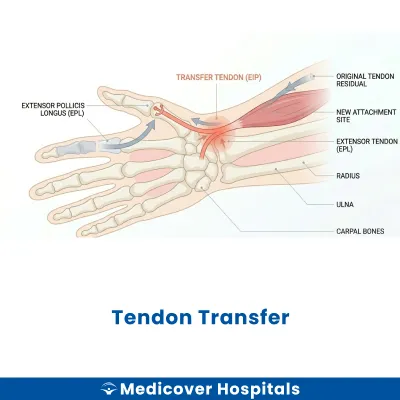
Tendon Transfer is a surgical procedure involving the relocation of a tendon from its original attachment to a new one. This is typically done in the limbs, such as the arms or legs. The goal is to restore function to a muscle that has lost its ability to move due to injury or disease. By rerouting the tendon, the muscle can regain movement and strength.
This surgery is often needed for conditions like nerve injuries, muscle paralysis, or congenital deformities. If untreated, these conditions can lead to significant functional impairment. Modern surgical approaches for Tendon Transfer include minimally invasive techniques and robotic-assisted surgery. These methods aim to improve recovery time and outcomes. Early intervention is crucial to prevent long-term disability.
Tendon Transfer Doctors Near You
Discover expert orthopedics for tendon transfer at Medicover Hospitals across India. Choose your city and book a consultation to explore treatment options tailored to your needs.
Why Choose Medicover Hospitals for Tendon Transfer?
Get a second opinion from trusted experts and makeconfident, informed decisions.
 Get Second Opinion
Complete Guide To Tendon Transfer
Everything you need to know about the procedure, preparation, and recovery
Tendon Transfer Surgery Indications
Tendon transfer surgery is recommended when a patient experiences muscle weakness or paralysis that affects limb function. This procedure helps restore movement by redirecting tendons from functioning muscles to those that are impaired.
Foot Drop
Patients with foot drop struggle to lift the front part of their foot, leading to difficulty walking. Doctors may observe a high-stepping gait or dragging of the foot. When braces and physical therapy fail to improve mobility, tendon transfer surgery is considered.
Wrist Drop
Wrist drop results in the inability to extend the wrist and fingers, often due to radial nerve injury. Patients may have difficulty gripping objects. If nerve repair or splinting does not restore function, surgery may be necessary.
Claw Hand Deformity
Claw hand causes fingers to curl into a claw-like position, making it hard to grasp items. Examination reveals muscle imbalance in the hand. Surgery is advised when splints and exercises do not correct the deformity.
Spinal Cord Injury
After a spinal cord injury, patients may lose muscle function in the limbs. Imaging may show nerve damage. If rehabilitation does not restore movement, tendon transfer can help regain some function.
Cerebral Palsy
In cerebral palsy, muscle spasticity can lead to joint deformities. Patients may have limited limb movement. When physical therapy and orthotics are insufficient, tendon transfer surgery may improve mobility.
How to Prepare for Tendon Transfer?
Proper preparation is crucial for a successful tendon transfer surgery. It helps minimise risks and ensures a smoother recovery.
- Medication Review: Stop NSAIDs, anticoagulants, and herbal supplements at least a week before surgery.
- Fasting Guidelines: Fast for 8 hours before the procedure if general anaesthesia is used.
- Pre-Surgery Exercises: Perform any recommended exercises to strengthen surrounding muscles.
- Clothing: Wear loose, comfortable clothing on the day of surgery for easy dressing post-procedure.
- Transport Arrangement: Arrange for someone to drive you home after the surgery.
- Medication List: Bring a list of all medications with dosages to the hospital.
- Pre-Op Instructions: Follow any specific instructions given by your surgeon or healthcare team.
- Home Preparation: Prepare your home for recovery, ensuring essentials are within easy reach.
Tendon Transfer Surgery (Step-by-Step)
Overview: Tendon transfer surgery is performed by orthopedic surgeons. It typically lasts 1-3 hours. The procedure is usually done under general anaesthesia, ensuring the patient is asleep and pain-free.
- Preparation: The patient is positioned comfortably on the operating table. The surgical area is cleaned and sterilised to prevent infection.
- Incision: A small incision, usually about 1-2 cm, is made over the affected area. This allows access to the tendon that needs to be transferred.
- Tendon Identification: The surgeon uses instruments like a scalpel and forceps to carefully identify and isolate the tendon. This step is crucial for ensuring the correct tendon is selected for transfer.
- Tendon Release: The identified tendon is detached from its original position using a scalpel or scissors. Care is taken to preserve the tendon's integrity.
- Tendon Transfer: The tendon is then repositioned to its new location. It is secured using sutures or other fixation devices. Instruments like a needle holder and suture scissors are used.
- Closure: The incision is closed with sutures or staples. A dressing is applied to protect the wound. The patient is monitored as they wake up from anaesthesia.
- Recovery: Post-surgery, the patient may experience some discomfort. Pain management and physiotherapy are planned to aid recovery and restore function.
Who Performs Tendon Transfer Surgery?
Orthopaedic surgeons perform tendon transfer surgeries. They specialise in musculoskeletal system procedures, ensuring proper function and mobility restoration. Their expertise is crucial for the success of such surgeries.
Recovery After Tendon Transfer Surgery
Recovery from tendon transfer surgery is a gradual process. It requires patience and adherence to your doctor's instructions. Expect some discomfort initially, but this will improve over time.
Day 1-3:
- Rest is crucial. Keep the affected limb elevated to reduce swelling.
- Apply ice packs as advised to manage pain and swelling.
- Stick to a light diet. Include curd, dal-rice, and soups to aid digestion.
Day 4-7:
- Continue with prescribed pain medications.
- Begin gentle movements of the limb as instructed by your physiotherapist.
- Include protein-rich foods like moong dal and khichdi to support healing.
Week 2-4:
- Gradually increase physical therapy exercises to regain strength.
- Avoid heavy lifting or strenuous activities.
- Return to work or school may be possible, depending on your job and recovery progress.
Month 1-3:
- Continue physiotherapy to improve flexibility and strength.
- Regular follow-up appointments to monitor progress.
- Resume normal activities as advised by your doctor.
When to Seek Urgent Help:
- Severe pain not relieved by medication.
- Signs of infection, such as increased redness, swelling, or discharge from the incision site.
- Sudden loss of movement or sensation in the limb.
Benefits of Tendon Transfer Surgery
Tendon transfer surgery can improve function and mobility in affected limbs.
- Improved Functionality: Helps restore movement in muscles that have lost function.
- Enhanced Mobility: Allows for better movement and use of the limb.
- Pain Reduction: Can alleviate discomfort associated with muscle imbalance.
- Increased Strength: Transfers stronger tendons to weaker areas, enhancing strength.
Risks and Complications of Tendon Transfer Surgery
While tendon transfer surgery is generally safe, it carries certain risks and complications.
- Common: Infection at the surgical site can occur.
- Common: There may be a risk of reduced range of motion post-surgery.
- Rare: Nerve damage leading to numbness or weakness.
- Rare: Tendon rupture or failure, requiring additional surgery.
- Rare: Blood clots may develop, posing further health risks.
Cost of Tendon Transfer Surgery
The cost of tendon transfer surgery at Medicover Hospitals varies depending on the ward category chosen. Prices range from Rs. 12,299 to Rs. 39,589. This ensures that patients can select a ward type that suits their budget and needs.
We offer transparent pricing and support for insurance and TPA, including CGHS, ESI, and major TPAs. A cashless facility is also available for added convenience. Please contact the hospital for the latest insurance panel details as these may change periodically.
Frequently Asked Questions
1. How much does Tendon Transfer surgery cost?
The cost of Tendon Transfer surgery at Medicover Hospitals ranges from Rs. 12,299 to Rs. 39,589, depending on the specifics of the procedure.
2. Is Tendon Transfer surgery covered under insurance?
Tendon Transfer surgery may be covered by CGHS, ESI, and major TPAs with cashless options. Please contact the hospital for current panel details.
3. Will I regain full hand function after surgery?
Full hand function may not be immediately restored after Tendon Transfer surgery. Physiotherapy is crucial for improving movement and strength over time.
4. Can I drive after Tendon Transfer surgery?
Driving is generally not advised immediately after Tendon Transfer surgery. It may take several weeks before you can safely operate a vehicle.
5. Will I need physiotherapy after Tendon Transfer?
Yes, physiotherapy is essential after Tendon Transfer surgery. It helps in regaining strength and improving the range of motion in the affected limb.
6. What foods aid recovery after Tendon Transfer?
Post-surgery, a diet rich in proteins like dal-rice and curd can aid recovery. Khichdi is also recommended for its easy digestibility and nutrition.
7. Can Tendon Transfer surgery cause nerve damage?
While rare, nerve damage is a potential complication of Tendon Transfer surgery. Discuss any concerns with your surgeon before the procedure.


