 Call
Call Patient Reports
Best Hospital for Temporary Pacemaker Implantation Procedure
Temporary Pacemaker Implantation at Medicover Hospitals is performed using the open surgical approach. Our team of cardiologists, with qualifications such as DM and DNB, manage conditions like coronary artery disease and heart rhythm disorders. This procedure often results in shorter hospital stays for patients.
Expert Specialists
Yearly Procedures
Patient Satisfaction
What is Temporary Pacemaker Implantation?
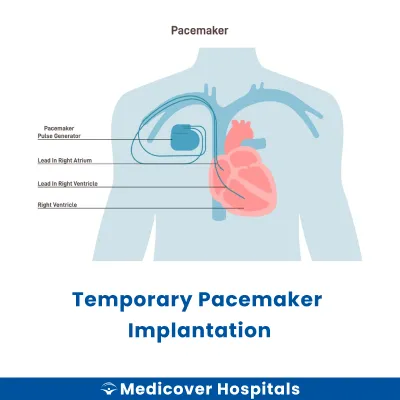
Temporary Pacemaker Implantation is a medical procedure involving the heart. It involves placing a temporary pacemaker (a small device) to regulate heartbeats. The pacemaker sends electrical impulses to the heart to maintain a normal rhythm. This is crucial when the heart's natural pacemaker (the sinoatrial node) is not functioning properly.
This procedure is often needed for conditions like bradycardia slow heart rate or heart block. If untreated, these conditions can lead to fatigue, dizziness, or even heart failure. Temporary pacemakers are usually implanted using minimally invasive techniques. These include transvenous (through a vein) or epicardial (on the heart's surface) approaches. These methods offer quicker recovery and less discomfort. Please consult with a healthcare provider for more details.
Temporary Pacemaker Implantation Doctors Near You
Discover skilled cardiologists for temporary pacemaker implantation at Medicover Hospitals across India. Choose your city and book a consultation to ensure timely and effective heart care.
Why Choose Medicover Hospitals for Temporary Pacemaker Implantation?
Get a second opinion from trusted experts and makeconfident, informed decisions.
 Get Second Opinion
Complete Guide To Temporary Pacemaker Implantation
Everything you need to know about the procedure, preparation, and recovery
Temporary Pacemaker Implantation Procedure Indications
Doctors recommend temporary pacemaker implantation when the heart's electrical system fails to maintain an adequate rhythm. This procedure is often a short-term solution to stabilize the heart rate until a permanent solution is found.
Bradycardia
Patients may experience dizziness, fatigue, or fainting due to a slow heart rate. An ECG may show a heart rate less than 60 beats per minute. If medications or other treatments do not improve symptoms, a temporary pacemaker may be necessary.
Heart Block
Symptoms like chest pain, shortness of breath, or palpitations can occur when electrical signals are blocked. An ECG often reveals delayed or missed heartbeats. When medication or lifestyle changes are ineffective, a temporary pacemaker can help restore normal rhythm.
Post-Heart Surgery
After cardiac surgery, some patients may experience irregular heartbeats. Monitoring may show unstable heart rhythms. If these do not resolve with medication, a temporary pacemaker can support heart function during recovery.
Myocardial Infarction
Chest pain and shortness of breath are common during a heart attack. ECG and blood tests may indicate heart muscle damage. If slow heart rate (bradycardia) or heart block occurs, a temporary pacemaker may stabilize the heart rate.
Drug-Induced Arrhythmias
Certain medications can cause irregular heartbeats, leading to symptoms like dizziness or palpitations. If stopping the drug does not resolve the issue, a temporary pacemaker may be used to manage the heart rhythm.
How to Prepare for Temporary Pacemaker Implantation?
Proper preparation is crucial for a smooth temporary pacemaker implantation. It helps reduce risks and ensures the procedure goes as planned.
- Medication Review: Consult your doctor about stopping NSAIDs, anticoagulants, and herbal supplements a few days before the procedure.
- Fasting Guidelines: Do not eat or drink anything for at least 6 hours before the procedure to prepare for anaesthesia.
- Medication List: Bring a list of all medications you are taking, including dosages, to the hospital.
- Clothing: Wear loose, comfortable clothing to the hospital for easy access and comfort post-procedure.
- Transportation: Arrange for someone to drive you home after the procedure, as you may feel drowsy from anaesthesia.
- Pre-Procedure Tests: Complete any required blood tests or imaging studies as advised by your healthcare provider.
- Personal Items: Leave valuables at home and bring only essential items to the hospital.
- Health Conditions: Inform your doctor of any recent illnesses or changes in your health status.
Temporary Pacemaker Implantation procedure (Step-by-Step)
This procedure is performed by cardiologists. It typically takes 30 minutes to 1 hour. Local anaesthesia is commonly used.
- Preparation: The patient is positioned comfortably. Local anaesthesia is administered to numb the area, usually near the collarbone.
- Incision: A small incision, about 1-2 cm, is made near the collarbone. The patient may feel slight pressure but no pain.
- Insertion of Sheath: A sheath is inserted into a vein. This acts as a guide for the pacemaker lead. The patient remains comfortable during this step.
- Lead Placement: Using fluoroscopy, the cardiologist guides the pacemaker lead through the sheath to the heart. The patient might feel a mild sensation as the lead is positioned.
- Connection and Testing: The lead is connected to the temporary pacemaker device. The device is tested to ensure it is functioning properly. The patient may feel their heart rate change temporarily.
- Securing the Device: Once confirmed, the device is secured externally. The incision is closed with sutures or adhesive strips. The patient is monitored for any immediate reactions.
- Post-Procedure Monitoring: The patient is observed for a short period to ensure stability. They may feel slight discomfort at the incision site.
Who Performs Temporary Pacemaker Implantation procedure?
This procedure is performed by expert cardiologists who specialise in heart rhythm disorders. They have expertise in managing cardiac devices and ensuring the heart functions optimally with the pacemaker.
Recovery After Temporary Pacemaker Implantation Procedure
Recovery from a temporary pacemaker implantation involves careful monitoring and gradual resumption of daily activities. Patients can expect some discomfort at the implantation site and should follow medical advice for a smooth recovery.
Day 1-3:
- Rest is crucial. Avoid any strenuous activities.
- Consume light meals such as dal-rice, khichdi, and moong dal to aid digestion.
- Keep the implantation site clean and dry. Follow any dressing change instructions provided by your doctor.
Day 4-7:
- Gradually increase light activities, such as walking around the house.
- Continue with a balanced diet. Include curd and soups to maintain energy levels.
- Avoid lifting heavy objects or raising the arm on the side of the implantation above shoulder level.
Day 8-14:
- Most patients can resume work or school, depending on their comfort and doctor's advice.
- Engage in light exercises, but avoid contact sports or activities that may impact the chest area.
- Maintain a nutritious diet to support healing.
Phase 3 (Week 3-4):
- Regular activities can be resumed, but continue to avoid heavy lifting and intense physical exertion.
- Monitor the implantation site for any signs of infection or unusual changes.
- Follow up with your doctor for a check-up to ensure the pacemaker is functioning correctly.
When to Seek Urgent Help:
- Severe chest pain or shortness of breath.
- Swelling, redness, or discharge at the implantation site.
- Dizziness or fainting spells.
- Persistent fever or chills.
Benefits of Temporary Pacemaker Implantation procedure
Temporary pacemaker implantation helps manage heart rhythm disorders effectively.
- Immediate Heart Rate Control: Quickly stabilises irregular heartbeats.
- Short-term Solution: Provides temporary support until a permanent solution is found.
- Diagnostic Aid: Helps in assessing the need for a permanent pacemaker.
- Emergency Use: Can be used in urgent situations to prevent complications.
Risks and Complications of Temporary Pacemaker Implantation procedure
While generally safe, temporary pacemaker implantation has potential risks.
- Common: Infection at the insertion site.
- Common: Bleeding or bruising where the pacemaker is placed.
- Rare: Lead displacement causing ineffective pacing.
- Rare: Allergic reaction to materials used in the device.
- Rare: Damage to blood vessels or heart tissue during insertion.
- Rare: Electrical interference affecting pacemaker function.
Cost of Temporary Pacemaker Implantation procedure
The cost of a Temporary Pacemaker Implantation procedure at Medicover Hospitals ranges from Rs. 23,070 to Rs. 32,790. The price varies based on the ward category chosen, such as outpatient, day care, general, and private options.
We offer transparent pricing and support for insurance and TPA services, including CGHS, ESI, and major TPAs. A cashless facility is also available for your convenience. Please contact the hospital for the latest insurance panel details as these may change periodically.
Frequently Asked Questions
1. How much does Temporary Pacemaker Implantation cost?
The cost of a Temporary Pacemaker Implantation at Medicover Hospitals ranges from Rs. 23070 to Rs. 32790, depending on the room type.
2. Is Temporary Pacemaker Implantation covered under insurance?
Temporary Pacemaker Implantation may be covered by CGHS, ESI, and major TPAs, offering cashless options. Please contact the hospital for current panel details.
3. Can I feel the pacemaker inside my chest?
You might feel the temporary pacemaker under your skin. However, it should not cause significant discomfort during normal activities.
4. How soon can I return to normal activities?
Most patients can resume normal activities within a few days. Avoid strenuous activities and heavy lifting for at least one week.
5. Are there any dietary restrictions after implantation?
No specific dietary restrictions are needed. Maintain a balanced diet with foods like curd, dal-rice, and khichdi for overall health.
6. Can the temporary pacemaker malfunction?
While rare, temporary pacemakers can malfunction due to lead displacement. Regular monitoring ensures any issues are promptly addressed.
7. Will I need a permanent pacemaker later?
A temporary pacemaker is often used until a permanent solution is found. Your doctor will assess if a permanent pacemaker is necessary.
8. How long is a temporary pacemaker good for?
A temporary pacemaker is designed for short-term use, typically lasting from a few hours to several days, and sometimes up to 1–2 weeks if needed. It is used until the heart rhythm stabilizes or a permanent pacemaker can be placed.
9. What are the risks of temporary pacemaker implantation?
Risks include infection, bleeding, irregular heart rhythms, and displacement of the pacing wire. In rare cases, it can cause damage to the heart or blood vessels, so patients are closely monitored.


