 Call
Call Patient Reports
Surgical Management of Grade III Open Fracture Surgery by Expert Orthopedics
At Medicover Hospitals, the surgical management of Grade III open fractures is performed using open surgical techniques by skilled orthopaedic surgeons with qualifications such as MS and DNB. This approach ensures effective treatment, often resulting in reduced blood loss and a shorter hospital stay.
Expert Surgeons
Yearly Surgeries
Patient Satisfaction
What is Surgical Management of Grade III Open Fracture?
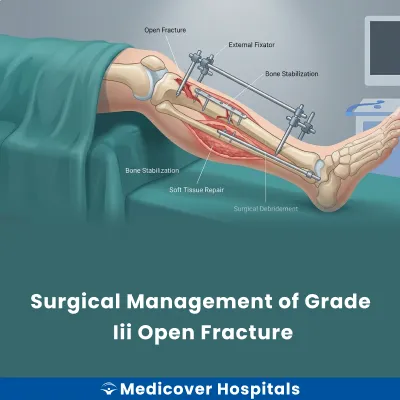
Surgical management of a Grade III open fracture involves treating a severe break in a bone where the bone is exposed through the skin. This type of fracture often affects long bones like the tibia (shinbone) or femur (thighbone). The surgery aims to clean the wound, remove debris, and stabilize the bone using internal fixation (metal rods or plates) or external fixation (a stabilizing frame outside the body).
This surgery is crucial for preventing complications like infection or improper healing. Grade III open fractures usually result from high-energy trauma, such as car accidents or falls from a height. If untreated, these fractures can lead to chronic pain, deformity, or even limb loss. Modern surgical approaches include debridement (removal of damaged tissue), bone grafting, and advanced fixation techniques. These methods help ensure proper healing and restore function.
Surgical Management of Grade III Open Fracture Doctors Near You
Discover expert orthopedics for surgical management of Grade III open fractures at Medicover Hospitals. Choose your city and book a consultation to receive specialised care near you.
Why Choose Medicover Hospitals for Surgical Management of Grade III Open Fracture?
Get a second opinion from trusted experts and makeconfident, informed decisions.
 Get Second Opinion
Complete Guide To Surgical Management Of Grade Iii Open Fracture
Everything you need to know about the procedure, preparation, and recovery
Surgical Management of Grade III Open Fracture Surgery Indications
Doctors recommend surgical management for Grade III open fractures when the injury is severe and exposes the bone. This procedure is crucial when immediate intervention is needed to prevent complications.
Severe Bone Exposure
Patients experience intense pain and visible bone through the wound. Doctors find significant tissue damage and contamination. Surgery is advised when the fracture is too complex for non-surgical methods.
Extensive Soft Tissue Damage
Patients may have severe bleeding and swelling. Examination reveals damaged muscles and skin. Surgery is necessary when the injury cannot heal with conservative treatment.
High Risk of Infection
Patients might notice redness and warmth around the wound. Lab tests show elevated infection markers. Surgery is recommended when infection risk is high due to contamination.
Vascular Compromise
Patients report numbness or coldness in the affected area. Doctors detect weak pulses or poor blood flow in scans. Surgery becomes essential when blood supply is compromised.
Failed Initial Treatment
Patients continue to experience pain and instability after initial care. Follow-up X-rays show improper bone alignment. Surgery is needed when non-surgical methods do not restore function.
Complex Fracture Patterns
Patients suffer from severe pain and inability to move the limb. Imaging reveals multiple fracture lines. Surgery is indicated when the fracture pattern is too intricate for casting or bracing.
How to Prepare for Surgical Management of Grade III Open Fracture?
Proper preparation is crucial for the surgical management of Grade III open fractures to ensure a smooth procedure and recovery. Following these steps can help minimise complications and enhance healing.
- Medication Review: Stop NSAIDs, anticoagulants, and herbal supplements at least 7 days before surgery.
- Fasting: Do not eat or drink anything for at least 8 hours before the surgery to prepare for general anaesthesia.
- Pre-surgery Hygiene: Take a shower with antiseptic soap the night before and the morning of the surgery.
- Clothing: Wear loose, comfortable clothing on the day of the surgery to accommodate dressings and casts.
- Transport Arrangement: Arrange for someone to drive you home post-surgery, as you will not be able to drive yourself.
- Medication List: Bring a list of your current medications, including dosages, to share with your healthcare team.
- Smoking and Alcohol: Avoid smoking and alcohol for at least 24 hours before the procedure to aid recovery.
- Home Preparation: Prepare your home for easy accessibility and comfort during recovery, such as arranging a resting area.
Surgical Management of Grade III Open Fracture Surgery (Step-by-Step)
Overview: This procedure is performed by orthopaedic surgeons. It typically lasts 2-4 hours and is done under general anaesthesia.
- Preparation: The patient is positioned and given general anaesthesia. The surgical area is cleaned and sterilised.
- Incision: A large incision is made to access the fracture site. The size depends on the injury but is generally larger than 5 cm.
- Debridement: Dead tissue and contaminants are removed using a curette. This prevents infection and promotes healing.
- Fracture Fixation: The fracture is stabilised using plates, screws, or rods. Instruments like drills and screws are used for fixation.
- Wound Irrigation: The wound is thoroughly irrigated with saline solution to clean the area and reduce infection risk.
- Closure: The incision is closed with sutures or staples. A sterile dressing is applied to protect the wound.
- Post-Operative Care: The patient is moved to recovery. Pain management and monitoring are provided as anaesthesia wears off.
Who Performs Surgical Management of Grade III Open Fracture Surgery?
Orthopaedic surgeons, who specialise in musculoskeletal injuries, perform this surgery. They are trained to handle complex fractures and ensure proper bone healing.
Recovery After Surgical Management of Grade III Open Fracture Surgery
Recovery from a Grade III open fracture surgery involves careful monitoring and gradual rehabilitation. Patients can expect a structured recovery plan with specific guidelines to follow for optimal healing.
Day 1-3:
- Hospital stay for monitoring and pain management.
- Initial wound care and dressing changes.
- Begin with a soft diet including curd, dal-rice, and soups.
Day 4-7:
- Gradual increase in mobility with assistance.
- Continue with a nutritious diet; include khichdi and moong dal for protein.
- Regular physiotherapy sessions may begin.
Week 2-4:
- Stitches or staples may be removed, depending on healing.
- Increase in physical therapy to improve strength and range of motion.
- Continue high-protein diet to aid bone healing.
Month 1-3:
- Gradual return to daily activities, avoiding strenuous tasks.
- Regular follow-ups to monitor bone healing through X-rays.
- Return to work or school may be possible, depending on job nature.
When to Seek Urgent Help:
- Increased pain or swelling at the fracture site.
- Fever or chills indicating possible infection.
- Redness or discharge from the wound.
- Numbness or tingling in the affected limb.
Benefits of Surgical Management of Grade III Open Fracture Surgery
Surgical intervention for Grade III open fractures is crucial for optimal recovery and function.
- Improved Healing: Surgical fixation stabilises the fracture, promoting better bone healing.
- Infection Control: Thorough cleaning and debridement reduce the risk of infection.
- Restored Function: Proper alignment and fixation help restore limb function.
- Reduced Pain: Stabilising the fracture can alleviate pain and discomfort.
Risks and Complications of Surgical Management of Grade III Open Fracture Surgery
While surgery is often necessary, it carries potential risks and complications.
- Infection (Common): Despite precautions, infections can occur, requiring further treatment.
- Non-union (Common): Sometimes, the bone may not heal properly, needing additional intervention.
- Nerve Damage (Rare): Surgery may inadvertently affect nearby nerves, causing temporary or permanent issues.
- Blood Clots (Rare): Post-surgical immobility can lead to clot formation, necessitating monitoring.
- Implant Failure (Rare): Fixation devices may fail, requiring revision surgery.
- Scarring (Common): Surgical incisions can lead to visible scars.
Cost of Surgical Management of Grade III Open Fracture Surgery
The cost for the surgical management of Grade III open fracture surgery at Medicover Hospitals ranges from Rs. 90,000 to Rs. 144,000. The price varies depending on the ward category chosen, such as general, private, or deluxe accommodations.
We offer transparent pricing and support for insurance and TPA, including CGHS, ESI, and major TPAs. A cashless facility is also available for your convenience. Please contact the hospital for the latest insurance panel details as these may change periodically.
Frequently Asked Questions
1. How much does Surgical Management of Grade III Open Fracture surgery cost at Medicover Hospitals?
The cost ranges from Rs. 90,000 to Rs. 144,000 at Medicover Hospitals, depending on the room category chosen.
2. Is Surgical Management of Grade III Open Fracture surgery covered under health insurance at Medicover?
This surgery may be covered by CGHS, ESI, and major TPAs, offering cashless options. Please contact the hospital for current panel details.
3. Will I need a cast after Grade III open fracture surgery?
Yes, a cast is often required to immobilize the bone and aid healing. Your doctor will advise on the duration based on your recovery.
4. Can I walk immediately after Grade III open fracture surgery?
Walking is usually restricted initially to allow healing. Your doctor will guide you on when and how to start weight-bearing activities.
5. What complications are common after Grade III open fracture surgery?
Infection and delayed bone healing are common concerns. Regular follow-ups and proper wound care are essential to manage these risks.
6. Will I need physiotherapy after Grade III open fracture surgery?
Yes, physiotherapy is crucial to regain mobility and strength. Your physiotherapist will tailor exercises to your specific needs.
7. What foods should I eat after Grade III open fracture surgery?
Consume protein-rich foods like dal-rice and curd to support healing. Avoid spicy and oily foods to prevent inflammation.


