 Call
Call Patient Reports
Best Hospital for Surgical Debridement and Skin Grafting for Avulsion Injuries with Advanced Plastic Surgery Care
At Medicover Hospitals, our skilled Plastic Surgeons and General Surgeons perform surgical debridement and skin grafting for avulsion injuries using advanced surgical techniques. With qualifications such as MS, DNB, and MCh, our team ensures precise wound management, effective tissue repair, and optimal healing outcomes. This approach helps reduce complications, supports faster recovery, and may shorten hospital stays for patients.
Expert Surgeons
Yearly Surgeries
Patient Satisfaction
What is Surgical Debridement and Skin Grafting for Avulsion Injuries?
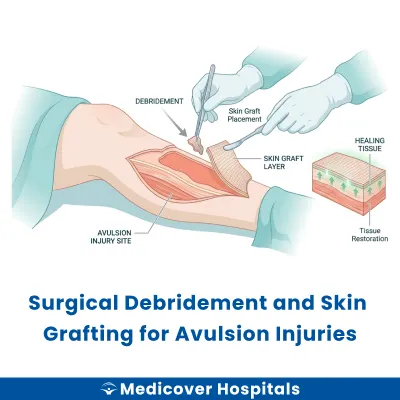
Surgical debridement involves the removal of dead or damaged tissue from a wound. In the case of avulsion injuries, this often affects the skin and underlying tissues. Skin grafting is a procedure where healthy skin is transplanted to cover the affected area. This helps in promoting healing and restoring the function of the injured body part.
This surgery is necessary to prevent infection and promote proper healing. Avulsion injuries can occur due to accidents or trauma, leading to significant tissue loss. If left untreated, these injuries can result in severe complications like infection or delayed healing. Modern surgical approaches include techniques like split-thickness and full-thickness skin grafts. These methods ensure effective coverage and healing of the injured area.
Surgical Debridement and Skin Grafting for Avulsion Injuries Doctors Near You
Find expert Plastic Surgeons for avulsion injuries at Medicover Hospitals across India. Choose your city and book a consultation to explore surgical debridement and skin grafting options.
Why Choose Medicover Hospitals for Surgical Debridement and Skin Grafting for Avulsion Injuries?
Get a second opinion from trusted experts and makeconfident, informed decisions.
 Get Second Opinion
Complete Guide To Surgical Debridement And Skin Grafting For Avulsion Injuries
Everything you need to know about the procedure, preparation, and recovery
Surgical Debridement and Skin Grafting for Avulsion Injuries Surgery Indications
Doctors recommend surgical debridement and skin grafting for avulsion injuries when the skin and underlying tissues are severely damaged. This procedure is considered when conservative treatments do not suffice in promoting healing or preventing infection.
Severe Tissue Loss
Patients may experience significant pain and bleeding due to the loss of large skin areas. On examination, doctors find exposed underlying tissues. When wound dressings and medications fail to restore tissue integrity, surgery is necessary.
Infection Risk
Signs of redness, swelling, and pus indicate infection risk. Lab tests may show elevated white blood cell counts. If antibiotics and wound care do not control the infection, surgical intervention is required to remove infected tissue.
Delayed Healing
Patients notice persistent open wounds that do not heal over time. Doctors observe non-healing edges and poor granulation tissue. When standard wound care does not improve healing, surgery is recommended.
Necrotic Tissue
Blackened or dead tissue may be present, causing pain and foul odour. Doctors identify necrosis through visual examination and tissue samples. When debridement creams and dressings are ineffective, surgical removal is needed.
Functional Impairment
Patients may experience difficulty moving the affected area due to tissue loss. Doctors find restricted movement during physical exams. When physiotherapy and splints do not restore function, surgery is advised.
How to Prepare for Surgical Debridement and Skin Grafting for Avulsion Injuries?
Proper preparation is crucial for a smooth surgical experience and recovery. It helps minimise risks and ensures the best possible outcome for avulsion injuries.
- Medication Review: Stop NSAIDs, anticoagulants, and herbal supplements 7-10 days before surgery.
- Fasting Requirement: Fast for at least 8 hours before the procedure if general anaesthesia is used.
- Pre-Surgery Hygiene: Bathe with antibacterial soap the night before and the morning of the surgery.
- Clothing: Wear loose, comfortable clothing on the day of the surgery for easy dressing post-procedure.
- Transportation: Arrange for someone to drive you home after the surgery as you may feel groggy.
- Medication List: Bring a list of all medications with dosages for the medical team to review.
- Smoking and Alcohol: Avoid smoking and alcohol for at least 48 hours before the surgery to aid healing.
- Pre-Op Instructions: Follow any additional instructions provided by your healthcare team for optimal preparation.
Surgical Debridement and Skin Grafting for Avulsion Injuries Surgery (Step-by-Step)
This procedure is performed by surgical specialists. It typically lasts 2-4 hours and is done under general anaesthesia to ensure the patient is unconscious and pain-free.
- Preparation: The patient is positioned comfortably on the operating table. The surgical area is cleaned and sterilised to prevent infection.
- Incision: A precise incision is made around the avulsion injury, usually 1-2 cm from the wound edges, to access the damaged tissue.
- Debridement: Using instruments like a curette or harmonic scalpel, the surgeon removes dead or infected tissue. This step is crucial for promoting healing.
- Graft Harvesting: A healthy skin graft is taken from another part of the body, often the thigh or buttocks. The skin is carefully removed using a dermatome.
- Graft Placement: The harvested skin is placed over the cleaned wound. It is secured with sutures or staples, ensuring it covers the area fully.
- Closure: The donor site is closed with stitches, and both the graft and donor areas are dressed with sterile bandages.
- Recovery: The patient is moved to a recovery room. They are monitored as they wake from anaesthesia. Pain management and wound care instructions are provided.
Who Performs Surgical Debridement and Skin Grafting for Avulsion Injuries Surgery?
This surgery is conducted by plastic surgeons or trauma specialists. They have expertise in managing complex wounds and performing skin grafts to restore function and appearance.
Recovery After Surgical Debridement and Skin Grafting for Avulsion Injuries Surgery
Recovery from surgical debridement and skin grafting for avulsion injuries involves careful wound care and gradual return to normal activities. It's important to follow your doctor's instructions to ensure proper healing.
Day 1-3:
- Expect some pain and swelling. Pain management will be provided.
- Keep the wound clean and dry. Follow dressing change instructions.
- Rest is crucial. Avoid any strenuous activities.
Day 4-7:
- Continue with prescribed medications and wound care.
- Introduce light activities as advised by your doctor.
- Focus on a soft diet. Include foods like curd, dal-rice, and soups.
Day 8-14:
- Gradually increase activity levels, but avoid heavy lifting.
- Attend follow-up appointments for wound assessment.
- Incorporate nutritious foods like khichdi and moong dal to aid healing.
Phase 3 (Week 3-4):
- Most patients can resume work or school, depending on the nature of the job.
- Continue to protect the graft site from injury and sun exposure.
- Maintain a balanced diet to support recovery.
When to Seek Urgent Help
- Increased redness, swelling, or warmth around the wound.
- Fever or chills indicating possible infection.
- Severe pain not relieved by medication.
- Unusual discharge or foul smell from the wound.
Benefits of Surgical Debridement and Skin Grafting for Avulsion Injuries Surgery
Surgical debridement and skin grafting are essential procedures for treating avulsion injuries, offering several benefits.
- Enhanced Healing: Removing damaged tissue promotes faster and more effective healing.
- Infection Prevention: Debridement reduces the risk of infection by eliminating necrotic tissue.
- Improved Functionality: Skin grafting restores the skin's integrity, aiding in better movement and function.
- Cosmetic Improvement: Grafting helps achieve a more natural appearance, reducing scarring.
Risks and Complications of Surgical Debridement and Skin Grafting for Avulsion Injuries Surgery
While generally safe, this surgery carries some risks and potential complications.
- Infection at the graft or donor site.
- Scarring, which may require further treatment.
- Graft failure, necessitating additional procedures.
- Allergic reactions to anaesthesia or medications.
- Chronic pain or sensitivity at the graft site.
What is the Cost of Surgical Debridement and Skin Grafting for Avulsion Injuries Surgery?
The cost of Surgical Debridement and Skin Grafting for Avulsion Injuries Surgery at Medicover Hospitals ranges from Rs. 20,000 to Rs. 1,50,000, based on the surgical approach, duration of hospital stay, room category, required diagnostics, and post-operative care.
Medicover Hospitals offers transparent pricing with support for insurance and TPA, including CGHS, ESI, and major TPAs. A cashless facility is available for eligible patients. Please contact the hospital for the latest insurance panel details as these may change periodically.
Frequently Asked Questions
1. How much does Surgical Debridement and Skin Grafting for Avulsion Injuries surgery cost at Medicover Hospitals?
The cost of Surgical Debridement and Skin Grafting for Avulsion Injuries ranges from Rs. 20,000 to Rs. 1,50,
2. Please contact Medicover Hospitals for detailed pricing information. 2. Is Surgical Debridement and Skin Grafting for Avulsion Injuries surgery covered under health insurance at Medicover?
Surgical Debridement and Skin Grafting for Avulsion Injuries may be covered under CGHS, ESI, and major TPAs. Please contact the hospital for current panel details.
3. Will I need physiotherapy after skin grafting?
Yes, physiotherapy is often recommended to restore movement and function. It helps in reducing stiffness and improving mobility in the affected area.
4. Can I shower immediately after skin grafting?
No, you should avoid showering until the grafted area has healed. Typically, this is advised for at least the first two weeks post-surgery.
5. What foods aid recovery after skin grafting?
Consume protein-rich foods like dal, paneer, and eggs. Include vitamin C-rich fruits like oranges and guavas to promote healing.
6. Will the grafted skin look different?
Yes, grafted skin may differ in colour or texture. Over time, it may blend better with surrounding skin, but some differences might remain.
7. Can skin grafts fail to heal properly?
Yes, factors like infection or poor blood supply can affect healing. Regular follow-ups and proper care are crucial to ensure successful healing.


