 Call
Call Patient Reports
Best Surgical Debridement and Fasciotomy Surgery Hospital
At Medicover Hospitals, our general surgeons, with qualifications like MS, DNB, and FMAS, perform surgical debridement and fasciotomy using open surgical techniques. This approach is essential for treating severe infections and compartment syndrome, often resulting in quicker recovery and reduced hospital stay.
Expert Surgeons
Yearly Surgeries
Patient Satisfaction
What is Surgical Debridement and Fasciotomy?
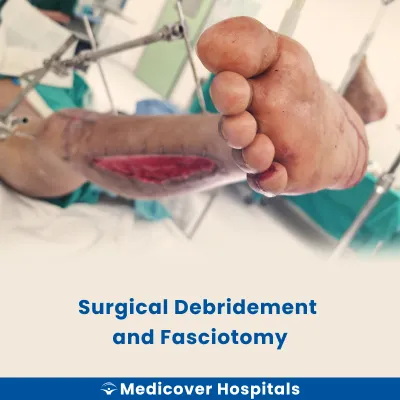
Surgical debridement is a procedure to remove dead or infected tissue from a wound. Fasciotomy involves cutting the fascia (connective tissue) to relieve pressure. These procedures are often performed on limbs, especially legs and arms. They help in preventing further tissue damage and promoting healing.
This surgery is needed for conditions like compartment syndrome, severe infections, or chronic wounds. If untreated, these conditions can lead to tissue death or loss of limb function. Modern surgical approaches include minimally invasive techniques and advanced wound care methods. These help in faster recovery and reduced complications. Early intervention is crucial to avoid severe outcomes.
Surgical Debridement and Fasciotomy Doctors Near You
Find experienced general-surgeons for surgical debridement and fasciotomy at Medicover Hospitals across India. Choose your city and book a consultation to discuss your treatment options today.
Why Choose Medicover Hospitals for Surgical Debridement and Fasciotomy?
Get a second opinion from trusted experts and makeconfident, informed decisions.
 Get Second Opinion
Complete Guide To Surgical Debridement And Fasciotomy
Everything you need to know about the procedure, preparation, and recovery
Surgical debridement and fasciotomy Surgery Indications
Surgical debridement and fasciotomy are recommended when severe tissue damage or infection threatens limb function. These procedures help remove dead tissue and relieve pressure, preventing further complications.
Necrotising Fasciitis
Patients experience severe pain, swelling, and redness in the affected area. Doctors find rapidly spreading infection and tissue death. When antibiotics and wound care fail, surgery is necessary to remove infected tissue.
Compartment Syndrome
Patients report intense pain, swelling, and numbness in a limb. Examination reveals increased pressure within muscle compartments. When conservative measures like elevation and medication do not relieve symptoms, fasciotomy is needed to release pressure.
Chronic Wounds
Patients with non-healing wounds experience persistent pain and discharge. Doctors observe dead tissue and poor healing despite dressings and medications. Surgical debridement is required to remove necrotic tissue and promote healing.
Diabetic Foot Ulcers
Patients notice ulcers with foul smell and discharge on the foot. Examination shows infection and dead tissue. When standard wound care and antibiotics are ineffective, debridement is essential to prevent further infection.
Severe Burns
Patients suffer from extensive burns with charred skin and blood blisters or vesicle. Doctors find dead tissue and risk of infection. When initial treatments do not suffice, surgical debridement helps remove damaged tissue and aids recovery.
How to Prepare for Surgical debridement and fasciotomy?
Proper preparation for surgical debridement and fasciotomy is crucial to ensure a smooth procedure and recovery. Following the guidelines helps minimise risks and complications.
- Medication Review: Stop NSAIDs, anticoagulants, and herbal supplements at least a week before surgery, as advised by your doctor.
- Fasting: Fast for at least 8 hours before the surgery if general anaesthesia is planned. Follow specific instructions from your healthcare provider.
- Pre-Surgery Hygiene: Bathe with an antiseptic soap the night before and the morning of the surgery to reduce infection risk.
- Clothing: Wear loose, comfortable clothing on the day of the surgery for ease of changing and comfort post-procedure.
- Transportation: Arrange for someone to drive you home after the surgery, as you may feel drowsy from anaesthesia.
- Medication List: Bring a list of all medications, including dosages, to the hospital for reference.
- Smoking and Alcohol: Avoid smoking and alcohol at least 24 hours before the surgery to aid recovery.
- Pre-Op Instructions: Follow any additional instructions provided by your surgeon or healthcare team.
Surgical debridement and fasciotomy Surgery (Step-by-Step)
Surgical debridement and fasciotomy are performed by general surgeons. The procedure typically lasts 1 to 3 hours. It is usually done under general anaesthesia to ensure the patient is comfortable and pain-free.
- Preparation: The patient is positioned comfortably on the operating table. Vital signs are monitored. The area is cleaned and sterilised.
- Incision: A 1-2 cm incision is made over the affected area using a scalpel. This allows access to the underlying tissues.
- Debridement: Dead or infected tissue is removed using a curette or scalpel. This helps in preventing further infection and promotes healing.
- Fasciotomy: The fascia is carefully incised to relieve pressure and improve blood flow. This step is crucial in cases of compartment syndrome.
- Hemostasis: Bipolar cautery may be used to control bleeding. This ensures a clear surgical field and reduces blood loss.
- Closure: The incision is either left open to heal by secondary intention or closed with sutures, depending on the situation.
- Recovery: The patient is moved to the recovery room. They are monitored as they wake from anaesthesia. Pain management and wound care instructions are provided.
Who Performs Surgical debridement and fasciotomy Surgery?
This surgery is performed by general surgeons. They are trained to handle complex tissue injuries and infections. Their expertise ensures effective removal of damaged tissues and pressure relief.
Recovery After Surgical debridement and fasciotomy Surgery
Recovery from surgical debridement and fasciotomy involves careful monitoring and gradual return to normal activities. It's important to follow your doctor's advice to ensure proper healing and avoid complications.
Day 1-3:
- Rest is crucial. Keep the affected area elevated to reduce swelling.
- Pain and swelling are common. Follow prescribed pain management.
- Diet: Start with light, easily digestible foods like dal-rice or khichdi.
Day 4-7:
- Continue with wound care as instructed. Change dressings regularly.
- Gradually increase mobility, but avoid strenuous activities.
- Diet: Include protein-rich foods like moong dal and curd to aid healing.
Day 8-14:
- Stitches may be removed if healing is adequate.
- Light activities can be resumed, but avoid heavy lifting.
- Diet: Incorporate soups and fresh fruits for vitamins and minerals.
Phase 3 (Week 3-4):
- Most people can return to work or school, depending on the nature of their activities.
- Continue with physiotherapy if recommended to restore full function.
When to Seek Urgent Help:
- Increased pain, redness, or swelling at the surgical site.
- Pus or unusual discharge from the wound.
- Fever or chills, which may indicate an infection.
Benefits of Surgical debridement and fasciotomy Surgery
Surgical debridement and fasciotomy are essential procedures for treating severe infections and compartment syndrome.
- Infection Control: Helps remove dead tissue, reducing infection risk.
- Pain Relief: Alleviates pressure and pain in affected areas.
- Improved Healing: Promotes faster and more effective wound healing.
- Prevent Complications: Reduces the risk of further tissue damage.
Risks and Complications of Surgical debridement and fasciotomy Surgery
While generally safe, surgical debridement and fasciotomy carry some risks. It's important to be aware of potential complications.
- Infection (Common): Risk of infection at the surgical site.
- Bleeding (Common): Possible excessive bleeding during or after surgery.
- Nerve Damage (Rare): Potential for nerve injury leading to numbness or weakness.
- Scarring (Common): Scarring may occur at the incision site.
- Delayed Healing (Rare): Some patients may experience slower wound healing.
- Compartment Syndrome (Rare): Risk of recurrence if not fully resolved.
Cost of Surgical debridement and fasciotomy Surgery
The cost of Surgical debridement and fasciotomy surgery at Medicover Hospitals ranges from Rs.33,000 to Rs.90,000. The price varies based on the ward category chosen, such as day care, general, private, or deluxe options. We offer transparent pricing to ensure clarity for our patients.
Insurance and TPA support is available, with acceptance of CGHS, ESI, and major TPAs. A cashless facility is also offered for convenience. Please contact the hospital for the latest insurance panel details as these may change periodically.
Frequently Asked Questions
1. How much does Surgical debridement and fasciotomy surgery cost at Medicover Hospitals?
The cost for Surgical debridement and fasciotomy surgery at Medicover Hospitals ranges from Rs. 33,000 to Rs. 90,000, depending on the type of room and care.
2. Is Surgical debridement and fasciotomy surgery covered under health insurance at Medicover?
Surgical debridement and fasciotomy may be covered by CGHS, ESI, and major TPAs with cashless options. Please contact the hospital for current panel details.
3. Will I need a wheelchair after fasciotomy?
After fasciotomy, temporary use of a wheelchair may be necessary for mobility. The duration depends on individual recovery and rehabilitation progress.
4. Can I walk immediately after debridement?
Walking immediately after debridement may not be advisable. It is important to follow the doctor's guidance on when to resume weight-bearing activities.
5. Will I have scars after surgical debridement?
Scarring is possible after surgical debridement, depending on the wound's size and location. Proper wound care can help minimize scar formation.
6. Can I eat spicy food after fasciotomy?
Spicy foods should be avoided initially after fasciotomy to prevent inflammation. A diet including curd, dal-rice, and khichdi is recommended for recovery.
7. Is there a risk of infection after fasciotomy?
Infection is a potential complication after fasciotomy, requiring careful wound monitoring. Follow medical advice for wound care to minimize infection risk.
8. What is the difference between a debridement and a fasciotomy?
Debridement involves removing dead or infected tissue to help a wound heal properly. Fasciotomy is a procedure where the fascia is cut to relieve dangerous pressure in muscles, often in emergencies.
9. Is debridement surgery serious?
Debridement can range from minor to serious depending on the size and depth of the wound. It is generally safe but may be more complex if there is severe infection or extensive tissue damage.


