 Call
Call Patient Reports
Suprapubic Catheterization Insertion By Expert Urologists
Suprapubic Catheterization Insertion at Medicover Hospitals is performed using the open surgical approach. Our team of skilled urologists, holding qualifications like MS, DNB, and MCh, ensure precise care. This method often results in a shorter hospital stay for patients.
Expert Surgeons
Yearly Surgeries
Patient Satisfaction
What is Suprapubic Catheterization Insertion?
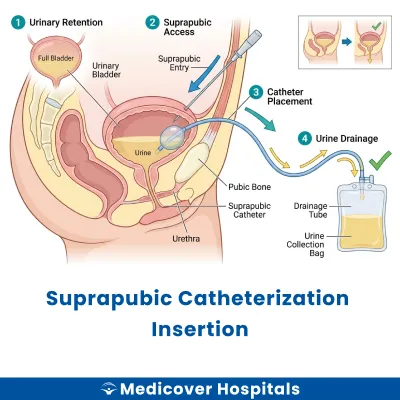
Suprapubic Catheterization Insertion is a medical procedure where a catheter (a thin, flexible tube) is placed into the bladder through a small incision in the abdomen, just above the pubic bone. This allows urine to drain directly from the bladder, bypassing the urethra. It is used when long-term catheterization is needed, or when urethral catheterization is not possible.
This procedure is often necessary for individuals with urinary retention, bladder obstruction, or certain neurological condition affecting bladder function. If left untreated, these conditions can lead to kidney damage or infections. Modern surgical approaches for this procedure include ultrasound-guided insertion and minimally invasive techniques, which enhance precision and reduce recovery time.
Suprapubic Catheterization Insertion Doctors Near You
Discover experienced urologists for suprapubic catheterization at Medicover Hospitals across India. Choose your city and book a consultation to address your healthcare needs effectively.
Why Choose Medicover Hospitals for Suprapubic Catheterization Insertion?
Get a second opinion from trusted experts and makeconfident, informed decisions.
 Get Second Opinion
Complete Guide To Suprapubic Catheterization Insertion
Everything you need to know about the procedure, preparation, and recovery
Suprapubic Catheterization Insertion procedure Indications
Doctors recommend suprapubic catheterization insertion when patients face difficulties with normal urinary catheterization. It is often advised when there is a need for long-term bladder drainage or when urethral catheterization is not feasible.
Urethral Obstruction
Patients may experience difficulty in urination, pain, or a complete inability to urinate. On examination, doctors find blockages in the urethra through imaging or cystoscopy. When medications and less invasive methods fail, suprapubic catheterization becomes necessary.
Severe Urethral Trauma
Individuals with pelvic injuries might have blood in urine and severe pain. Imaging tests reveal damage to the urethra. When immediate relief is needed and urethral catheterization is unsafe, this procedure is recommended.
Chronic Urinary Retention
Patients often report a constant urge to urinate, discomfort, and incomplete bladder emptying. Ultrasound may show significant urine retention. When medications and lifestyle changes do not improve symptoms, suprapubic catheterization is considered.
Neurogenic Bladder
Patients with nerve-related bladder issues experience frequent infections and incontinence. Urodynamic studies confirm abnormal bladder function. When conservative treatments fail, this procedure helps manage symptoms.
Post-Surgical Urinary Management
After certain surgeries, patients may have difficulty urinating. Doctors may observe poor bladder function post-operatively. When temporary urinary diversion is needed, suprapubic catheterization is used.
How to Prepare for Suprapubic Catheterization Insertion?
Proper preparation is crucial for a smooth suprapubic catheterization insertion. It helps reduce complications and ensures a quicker recovery.
- Medication Review: Stop NSAIDs, anticoagulants, and herbal supplements as advised by your doctor.
- Fasting: Do not eat or drink for at least 6 hours before the procedure if general anaesthesia is used.
- Hydration: Drink clear fluids up to 2 hours before the procedure unless instructed otherwise.
- Clothing: Wear loose, comfortable clothing on the day of the procedure for ease and comfort.
- Transportation: Arrange for someone to drive you home after the procedure as you may feel drowsy.
- Medication List: Bring a list of your current medications, including dosages, to the hospital.
- Hygiene: Take a shower the night before or the morning of the procedure to reduce infection risk.
- Consent: Ensure all consent forms are signed and understood before the procedure.
Suprapubic Catheterization Insertion procedure (Step-by-Step)
Overview: This procedure is performed by urologists. It typically takes about 30-45 minutes. Local anaesthesia is commonly used to numb the area.
- Preparation: The patient lies on their back. The lower abdomen is cleaned with an antiseptic solution. Local anaesthesia is administered to numb the area.
- Incision: A small incision, about 1-2 cm, is made in the lower abdomen, just above the pubic bone.
- Trocar Insertion: A trocar, a sharp-pointed surgical instrument, is inserted through the incision to create a pathway to the bladder.
- Catheter Placement: A suprapubic catheter is inserted through the trocar into the bladder. The trocar is then removed, leaving the catheter in place.
- Balloon Inflation: The catheter has a balloon at its tip, which is inflated with sterile water to keep it securely in the bladder.
- Securing the Catheter: The catheter is secured to the skin with adhesive tape to prevent movement and ensure comfort.
- Closure and Dressing: The incision site is closed with sutures or adhesive strips, and a sterile dressing is applied to protect the area.
Who Performs Suprapubic Catheterization Insertion procedure?
This procedure is performed by urology doctors, specialists in urinary tract and male reproductive system conditions. They have the expertise to safely insert the catheter and manage any complications that may arise. Please contact the hospital for current details as insurance panels may change.
Recovery After Suprapubic Catheterization Insertion procedure
Recovery from a suprapubic catheterization insertion involves monitoring the catheter site and ensuring proper urinary function. Patients may experience some discomfort initially, but this typically subsides within a few days.
Day 1-3:
- Expect mild pain or discomfort around the insertion site. Pain relief medication may be prescribed.
- Maintain a light diet. Include soft foods like curd, dal-rice, and soups to avoid constipation.
- Rest is crucial. Avoid strenuous activities and heavy lifting.
Day 4-7:
- Discomfort should decrease. Continue taking prescribed medications as directed.
- Gradually introduce more solid foods like khichdi and moong dal to your diet.
- Light activities can be resumed, but avoid any activity that strains the abdominal area.
Day 8-14:
- The insertion site should be healing well. Monitor for any signs of infection.
- Normal diet can be resumed, but stay hydrated and include fibre-rich foods to prevent constipation.
- Most patients can return to work or school, provided their job does not involve heavy physical activity.
When to Seek Urgent Help:
- Severe pain or swelling around the catheter site.
- Fever or chills, which may indicate an infection.
- Blood in urine or foul-smelling discharge from the catheter site.
- Difficulty in urination or catheter blockage.
If any of these symptoms occur, contact your healthcare provider immediately for further evaluation and management.
Benefits of Suprapubic Catheterization Insertion procedure
Suprapubic catheterization is a procedure used to drain urine from the bladder when normal urination is not possible.
- Reduced Infection Risk: Lower chance of urinary tract infections compared to urethral catheters.
- Improved Comfort: More comfortable for long-term use as it avoids the urethra.
- Enhanced Mobility: Allows greater freedom of movement compared to traditional catheters.
- Better Skin Health: Reduces the risk of skin irritation and breakdown around the urethral area.
Risks and Complications of Suprapubic Catheterization Insertion procedure
While generally safe, suprapubic catheterization carries some risks and potential complications.
Common Risks:
- Infection at the insertion site.
- Bladder spasms causing discomfort.
Rare Risks:
- Injury to surrounding organs during insertion.
- Blockage of the catheter leading to urinary retention.
- Bleeding at the insertion site.
- Peritonitis, an infection of the abdominal lining.
Cost of Suprapubic Catheterization Insertion procedure
The cost of a Suprapubic Catheterization Insertion procedure at Medicover Hospitals ranges from ₹20,000 to ₹80,000. The price varies depending on the ward category chosen, such as outpatient, day care, general, and private wards.
We offer transparent pricing with support for insurance and TPA, including CGHS, ESI, and major TPAs. Cashless facilities are also available for your convenience. Please contact the hospital for the latest insurance panel details as these may change periodically.
Frequently Asked Questions
1. How much does Suprapubic Catheterization Insertion procedure cost at Medicover Hospitals?
The cost for Suprapubic Catheterization Insertion at Medicover Hospitals ranges from ₹20,000 to ₹80,000, depending on the facility type.
2. Is Suprapubic Catheterization Insertion procedure covered under health insurance at Medicover?
Suprapubic Catheterization Insertion may be covered by CGHS, ESI, and major TPAs. Please contact the hospital for current panel details.
3. Will I experience bladder spasms after the procedure?
Bladder spasms are a common occurrence after suprapubic catheter insertion. They usually subside within a few weeks as your body adjusts.
4. Can I shower with a suprapubic catheter?
Yes, you can shower with a suprapubic catheter. Ensure the area is dry after showering to prevent infections.
5. Will I need to change my diet after the procedure?
No specific diet change is required, but staying hydrated is important. Include fluids and light meals like dal-rice and curd in your diet.
6. Can I resume normal activities immediately after?
You should avoid strenuous activities for a few weeks post-procedure. Light activities can be resumed as advised by your doctor.
7. What if the catheter gets blocked?
If the catheter becomes blocked, contact your healthcare provider immediately. Do not attempt to unblock it yourself.


