 Call
Call Patient Reports
Best Spinal Osteotomy and Internal Fixation Surgery Hospital
At Medicover Hospitals, our neurosurgeons, with qualifications like MS, MCh, and DNB, perform open spinal osteotomy and internal fixation. This procedure addresses complex spinal deformities. It results in smaller incisions and reduced blood loss, enhancing recovery and reducing hospital stay.
Expert Surgeons
Yearly Surgeries
Patient Satisfaction
What is Spinal Osteotomy and Internal Fixation?
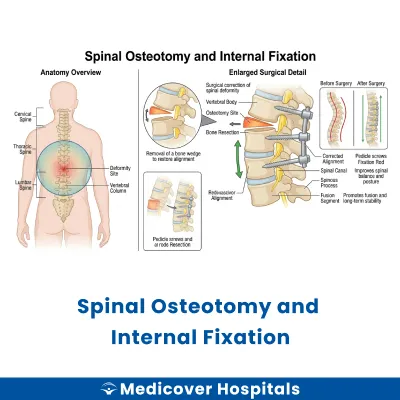
Spinal osteotomy is a surgical procedure involving the spine (backbone). It involves cutting and realigning the bones to correct deformities. Internal fixation is the use of rods, screws, or plates to stabilize the spine after the osteotomy. This helps maintain the new alignment and promotes healing.
This surgery is needed for conditions like severe scoliosis, kyphosis, or other spinal deformities. If left untreated, these conditions can lead to pain, reduced mobility, and breathing issues. Modern surgical approaches include pedicle subtraction osteotomy and vertebral column resection. These techniques help achieve better spinal alignment and improve quality of life.
Spinal Osteotomy and Internal Fixation Doctors Near You
Discover skilled neurosurgeons for spinal osteotomy and internal fixation at Medicover Hospitals across India. Choose your city and book a consultation to explore treatment options tailored to your needs.
Why Choose Medicover Hospitals for Spinal Osteotomy and Internal Fixation?
Get a second opinion from trusted experts and makeconfident, informed decisions.
 Get Second Opinion
Complete Guide To Spinal Osteotomy And Internal Fixation
Everything you need to know about the procedure, preparation, and recovery
Spinal Osteotomy and Internal Fixation Surgery Indications
Doctors recommend spinal osteotomy and internal fixation when non-surgical treatments fail to relieve symptoms. This procedure is often considered for severe spinal deformities or instability affecting daily life.
Severe Spinal Deformity
Patients may experience significant back pain and difficulty standing or walking due to abnormal spinal curvature. Imaging tests like X-rays or MRIs reveal pronounced deformities such as kyphosis or scoliosis. Surgery is advised when bracing and physical therapy do not improve posture or relieve pain.
Spinal Instability
Symptoms include persistent back pain and a feeling of instability in the spine. Doctors may find vertebral slippage or misalignment on imaging studies. When conservative treatments like medication and physiotherapy fail, surgery becomes necessary to stabilize the spine.
Post-Traumatic Deformity
After a spinal injury, patients might suffer from chronic pain and limited mobility. Imaging can show misaligned vertebrae or fractures. Surgery is considered when the deformity leads to functional impairment and does not respond to non-surgical interventions.
Failed Back Surgery Syndrome
Patients may experience ongoing pain and disability after previous spinal surgeries. Diagnostic imaging can reveal unresolved issues or new deformities. When additional conservative treatments are ineffective, surgery is recommended to correct the underlying problems.
Ankylosing Spondylitis
Chronic pain and stiffness are common symptoms as the spine fuses over time. X-rays or MRIs show significant spinal fusion and deformity. Surgery is considered when medication and physical therapy do not alleviate symptoms or improve mobility.
How to Prepare for Spinal Osteotomy and Internal Fixation?
Proper preparation is crucial for a successful spinal osteotomy and internal fixation. It helps in reducing complications and aids in a smoother recovery.
- Medication Review: Stop NSAIDs, anticoagulants, and herbal supplements as advised by your doctor.
- Fasting Guidelines: Fast for at least 8 hours before the surgery to ensure safety during anaesthesia.
- Pre-Surgical Tests: Complete all required blood tests, imaging, and other assessments as scheduled.
- Clothing: Wear loose, comfortable clothing on the day of surgery for ease of movement post-procedure.
- Transportation: Arrange for someone to drive you home after the surgery, as you will not be able to drive yourself.
- Medication List: Bring a list of all medications you are taking, including dosages, for the medical team.
- Home Preparation: Set up a comfortable recovery area at home with easy access to essentials.
- Smoking and Alcohol: Avoid smoking and alcohol for a few weeks before and after the surgery to promote healing.
Spinal Osteotomy and Internal Fixation Surgery (Step-by-Step)
This procedure is performed by neurological surgeons. It typically lasts 4-6 hours and is done under general anaesthesia.
- Preparation: The patient is positioned on the operating table. Monitoring devices are attached to track vital signs. General anaesthesia is administered, ensuring the patient is asleep and pain-free.
- Incision: A 5-10 cm incision is made over the affected spinal area. The surgeon carefully exposes the spine using retractors.
- Osteotomy: The surgeon uses instruments like a curette or harmonic scalpel to remove a wedge of bone from the spine. This step corrects spinal alignment.
- Internal Fixation: Screws and rods are placed using a trocar to stabilise the spine. These are secured to maintain the corrected position.
- Closure: The incision is closed in layers with sutures or staples. A sterile dressing is applied to protect the area.
- Recovery Room: The patient is moved to a recovery room. Nurses monitor vital signs as the patient wakes up from anaesthesia.
- Post-Operative Care: Pain management begins. The patient is encouraged to start gentle movements as advised by the medical team.
Who Performs Spinal Osteotomy and Internal Fixation Surgery?
This surgery is performed by neurosurgeons with expertise in spinal procedures. They have specialised training to manage complex spinal conditions and ensure optimal surgical outcomes.
Recovery After Spinal Osteotomy and Internal Fixation Surgery
Recovery from spinal osteotomy and internal fixation surgery requires patience and adherence to medical advice. You may experience discomfort initially, but this will gradually improve. Following your surgeon's instructions is crucial for a smooth recovery.
Day 1-3:
- Hospital stay is common. Pain management and monitoring are priorities.
- Start with a liquid diet, gradually moving to soft foods like curd and soups.
- Minimal movement; assistance needed for basic activities.
Day 4-7:
- Transition to semi-solid foods such as dal-rice and khichdi.
- Begin gentle physiotherapy as advised by your doctor.
- Continue to avoid bending, lifting, or twisting your back.
Day 8-14:
- Increase mobility with short, supervised walks.
- Incorporate light meals like moong dal and soft vegetables.
- Focus on maintaining good posture while sitting or standing.
Phase 3-6 Weeks:
- Gradual return to daily activities; avoid strenuous tasks.
- Continue physiotherapy exercises to strengthen muscles.
- Most can return to work or school within 4-6 weeks, depending on recovery.
When to Seek Urgent Help
- Severe or worsening pain not relieved by medication.
- Signs of infection: fever, redness, or discharge at the incision site.
- Numbness, tingling, or weakness in the legs.
- Difficulty breathing or chest pain.
Benefits of Spinal Osteotomy and Internal Fixation Surgery
Spinal osteotomy and internal fixation surgery can significantly improve quality of life for patients with severe spinal deformities.
- Pain Relief: Helps alleviate chronic back pain associated with spinal deformities.
- Improved Mobility: Enhances spinal alignment, leading to better posture and increased mobility.
- Enhanced Functionality: Allows patients to perform daily activities with greater ease.
- Stability: Provides structural support to the spine, reducing the risk of further deformity.
Risks and Complications of Spinal Osteotomy and Internal Fixation Surgery
While the surgery offers significant benefits, it also carries potential risks and complications.
- Common: Infection at the surgical site.
- Common: Blood loss during surgery.
- Rare: Nerve damage leading to numbness or weakness.
- Rare: Non-union or improper healing of the bones.
- Rare: Hardware failure requiring additional surgery.
- Rare: Blood clots forming in the legs or lungs.
Cost of Spinal Osteotomy and Internal Fixation Surgery
The cost of spinal osteotomy and internal fixation surgery can vary from Rs.150000 to Rs.850000 based on several factors. These include the surgical approach, duration of hospital stay, room category, diagnostic tests, and post-operative care required.
At Medicover Hospitals, we ensure transparent pricing for all procedures. We offer insurance and TPA support, accepting CGHS, ESI, and major TPAs. A cashless facility is also available for added convenience. Please contact the hospital for the latest insurance panel details as these may change periodically.
Frequently Asked Questions
1. How much does Spinal Osteotomy and Internal Fixation surgery cost at Medicover Hospitals?
The cost of Spinal Osteotomy and Internal Fixation surgery varies from Rs.150000 to Rs.
2. Please contact Medicover Hospitals for detailed pricing information. 2. Is Spinal Osteotomy and Internal Fixation surgery covered under health insurance at Medicover?
Spinal Osteotomy and Internal Fixation surgery may be covered by CGHS, ESI, and major TPAs. Please contact the hospital for current panel details.
3. Will I need a back brace after spinal osteotomy?
A back brace is often recommended post-surgery to support healing. Your doctor will guide you on the duration of its use.
4. Can I drive after spinal osteotomy surgery?
Driving is usually restricted for several weeks post-surgery. Your doctor will advise when it's safe to resume driving.
5. Will I have reduced spine flexibility post-surgery?
Some reduction in spine flexibility is possible after surgery. Physical therapy can help improve movement over time.
6. Can spinal osteotomy affect my height?
Spinal osteotomy may result in a slight increase in height due to spine realignment. Discuss expectations with your surgeon for clarity.
7. What foods aid recovery after spinal surgery?
Include protein-rich foods like dal, and calcium sources like curd. A balanced diet supports recovery and bone health.
8. Is osteotomy surgery painful?
Osteotomy can cause moderate pain after the procedure, especially in the first few days. However, pain is well controlled with medications, and it gradually improves as healing progresses.
9. Can you walk after an osteotomy?
After an Osteotomy, walking is usually allowed with support (like crutches or a walker) within a few days to weeks, depending on the type of surgery. Full weight-bearing and normal walking may take several weeks to a few months.


