 Call
Call Patient Reports
Sphincteroplasty or Anal Sphincter Repair Surgery by Expert General Surgeons
At Medicover Hospitals, our experienced general surgeons, with qualifications like MS, DNB, and FMAS, perform Sphincteroplasty using open surgical techniques. This procedure addresses anal sphincter defects effectively. Patients often experience shorter hospital stays due to the precision of the surgical approach.
Expert Surgeons
Yearly Surgeries
Patient Satisfaction
What is Sphincteroplasty or Anal Sphincter Repair?
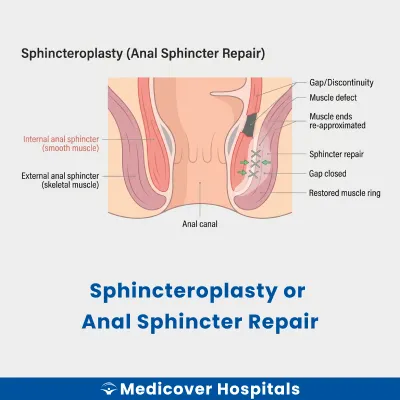
Sphincteroplasty, also known as Anal Sphincter Repair, is a surgical procedure aimed at repairing the anal sphincter. The anal sphincter is a muscle that controls bowel movements. This surgery involves stitching the torn or weakened muscles to restore normal function and improve control over bowel movements.
This surgery is often needed for individuals experiencing anal incontinence, which is the inability to control bowel movements. Conditions like childbirth injuries, trauma, or previous surgeries can lead to sphincter damage. If left untreated, it can result in social embarrassment and hygiene issues. Modern surgical approaches for Sphincteroplasty include open repair and minimally invasive techniques, which offer faster recovery and reduced complications.
Sphincteroplasty or Anal Sphincter Repair Doctors Near You
Find experienced general-surgeons for sphincteroplasty at Medicover Hospitals across India. Choose your city and book a consultation to discuss your treatment options and start your journey to recovery.
Why Choose Medicover Hospitals for Sphincteroplasty or Anal Sphincter Repair?
Get a second opinion from trusted experts and makeconfident, informed decisions.
 Get Second Opinion
Complete Guide To Sphincteroplasty Or Anal Sphincter Repair
Everything you need to know about the procedure, preparation, and recovery
Sphincteroplasty or Anal Sphincter Repair Surgery Indications
Sphincteroplasty, or anal sphincter repair, is recommended when there is damage or dysfunction in the anal sphincter muscles. This procedure is often considered when conservative treatments do not provide relief.
Fecal Incontinence
Patients may experience an inability to control bowel movements, leading to accidental leakage. Examination often reveals weakened or torn sphincter muscles. When dietary changes and pelvic floor exercises fail, surgery may be advised.
Obstetric Injury
Women who have experienced severe tears during childbirth may suffer from incontinence or pain. Doctors may find muscle damage through physical examination or imaging. If symptoms persist despite physiotherapy, surgical repair may be necessary.
Traumatic Injury
Injuries from accidents can lead to sphincter damage, causing pain and incontinence. Imaging may show muscle tears. If symptoms do not improve with non-surgical methods, surgery might be required.
Congenital Anomalies
Some individuals are born with defects affecting sphincter function, leading to control issues. Diagnosis is often made through clinical assessment and imaging. Surgery is considered when other treatments do not improve function.
Post-Surgical Complications
Previous surgeries in the anal area may result in sphincter dysfunction. Patients might report incontinence or discomfort. If conservative management is ineffective, sphincteroplasty may be recommended.
How to Prepare for Sphincteroplasty or Anal Sphincter Repair?
Proper preparation is crucial for a smooth surgery and recovery. It helps reduce risks and ensures the procedure goes as planned.
- Medication Management: Stop NSAIDs, anticoagulants, and herbal supplements 7-10 days before surgery.
- Fasting: Do not eat or drink anything for at least 8 hours before the procedure.
- Bowel Preparation: Follow the doctor's instructions for bowel cleansing, if advised.
- Pelvic Floor Exercises: Practice exercises as directed to strengthen the pelvic muscles.
- Comfortable Clothing: Wear loose clothing on the day of the surgery for comfort.
- Transportation: Arrange for someone to drive you home post-surgery.
- Medication List: Bring a list of all medications with dosages to the hospital.
- Pre-Surgery Consultation: Attend all pre-surgery appointments for assessments and instructions.
Sphincteroplasty or Anal Sphincter Repair Surgery (Step-by-Step)
Overview: This procedure is performed by general surgeons. It typically lasts 1-2 hours. General or regional anaesthesia is used to ensure the patient is comfortable and pain-free during the surgery.
- Preparation: The patient is positioned comfortably on the operating table. Anaesthesia is administered, and the surgical area is cleaned and sterilized.
- Incision: A small incision, usually 1-2 cm, is made near the anal sphincter to access the damaged muscle. The surgeon uses a scalpel for precision.
- Muscle Identification: The surgeon carefully identifies the torn or damaged sphincter muscles. This is done using surgical tools like retractors to gently separate tissue.
- Muscle Repair: The torn ends of the sphincter muscle are brought together. Sutures are used to stitch the muscle ends, restoring the muscle's function.
- Closure: The incision is closed with sutures or surgical staples. The area is then cleaned, and a sterile dressing is applied to protect the wound.
- Recovery: The patient is moved to a recovery room. Vital signs are monitored as the anaesthesia wears off. Pain management is provided as needed.
- Post-Operative Care: Instructions are given for home care, including activity restrictions and follow-up appointments. The patient is advised on diet and bowel management to aid healing.
Who Performs Sphincteroplasty or Anal Sphincter Repair Surgery?
This surgery is performed by general surgeons with expertise in colorectal procedures. They are trained to handle delicate tissues and ensure proper muscle repair.
Recovery After Sphincteroplasty or Anal Sphincter Repair Surgery
Recovery from sphincteroplasty or anal sphincter repair surgery requires patience and care. It's essential to follow your doctor's advice to ensure a smooth healing process. Expect some discomfort initially, but this will gradually improve.
Day 1-3:
- Rest is crucial. Avoid any strenuous activities.
- Stick to a liquid or soft diet. Include soups and curd to ease digestion.
- Manage pain with prescribed medications.
Day 4-7:
- Begin incorporating soft, easy-to-digest foods like dal-rice, khichdi, and moong dal.
- Continue to avoid heavy lifting and vigorous activities.
- Monitor bowel movements. Use stool softeners if recommended.
Week 2-4:
- Gradually resume light activities. Walking is encouraged.
- Return to work or school if your job is not physically demanding.
- Maintain a high-fibre diet to prevent constipation.
Phase 2 (1-3 months):
- Slowly reintroduce regular activities as comfort allows.
- Continue with a balanced diet, including fibre-rich foods.
- Follow up with your doctor to monitor healing progress.
When to Seek Urgent Help:
- Severe pain not relieved by medication.
- Fever or signs of infection like redness or swelling at the surgical site.
- Excessive bleeding or pus discharge.
- Difficulty in passing urine or stool.
Benefits of Sphincteroplasty or Anal Sphincter Repair Surgery
Sphincteroplasty, also known as anal sphincter repair, is a surgical procedure aimed at improving bowel control. It offers several benefits for individuals experiencing incontinence.
- Improved Bowel Control: Helps restore the function of the anal sphincter, reducing incontinence episodes.
- Enhanced Quality of Life: Patients often experience increased confidence and comfort in daily activities.
- Reduced Need for Pads: Decreases reliance on incontinence pads or other protective wear.
- Minimally Invasive: Typically involves less extensive surgery compared to other procedures.
Risks and Complications of Sphincteroplasty or Anal Sphincter Repair Surgery
While sphincteroplasty can be beneficial, it is important to be aware of potential risks and complications associated with the surgery.
Common Risks
- Infection at the surgical site, which may require antibiotics.
- Pain or discomfort during the recovery period.
Rare Risks
- Damage to nearby organs or tissues during surgery.
- Recurrence of incontinence symptoms over time.
- Anesthesia-related complications, though these are uncommon.
Cost of Sphincteroplasty or Anal Sphincter Repair Surgery
The cost of Sphincteroplasty or Anal Sphincter Repair Surgery at Medicover Hospitals ranges from ₹35,000 and ₹1,50,000. The price varies depending on the ward category chosen. We offer transparent pricing to ensure clarity for our patients.
Insurance and TPA support, including CGHS, ESI, and major TPAs, is available. We also provide a cashless facility for a hassle-free experience. Please contact the hospital for the latest insurance panel details as these may change periodically.
Frequently Asked Questions
1. How much does Sphincteroplasty or Anal Sphincter Repair surgery cost at Medicover Hospitals?
The cost for Sphincteroplasty or Anal Sphincter Repair surgery ranges from ₹35,000 and ₹1,50,000 across Medicover Hospitals.
2. Is Sphincteroplasty or Anal Sphincter Repair surgery covered under health insurance at Medicover?
Yes, it is covered by CGHS, ESI, and major TPAs. Please contact the hospital for current panel details.
3. Will I experience incontinence after Sphincteroplasty?
Some patients may experience temporary incontinence post-surgery. This usually improves with time and pelvic floor exercises.
4. Can I sit comfortably after Anal Sphincter Repair?
Sitting may be uncomfortable initially after the surgery. Using a cushion can help alleviate pressure and improve comfort.
5. What foods aid recovery after Anal Sphincter Repair?
Soft foods like curd, dal-rice, and khichdi are recommended. They help prevent constipation and ease bowel movements during recovery.
6. Will I need physiotherapy after Sphincteroplasty?
Physiotherapy, especially pelvic floor exercises, is often recommended. It helps strengthen the muscles and improve control.
7. Can I resume exercise after Anal Sphincter Repair?
Light activities can usually be resumed after a few weeks. Consult your doctor before engaging in strenuous exercises.


