 Call
Call Patient Reports
Sinus of Valsalva Aneurysm Repair Surgery by Expert Ctvs
At Medicover Hospitals, our team of skilled cardiothoracic and vascular surgeons, holding qualifications such as MS, DNB, and MCh, perform open Sinus of Valsalva Aneurysm Repair. This approach ensures reduced blood loss, contributing to a more efficient recovery process for patients across India.
Expert Surgeons
Yearly Surgeries
Patient Satisfaction
What is Sinus of Valsalva Aneurysm Repair?
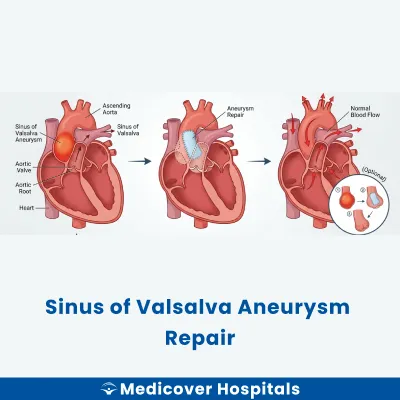
Sinus of Valsalva Aneurysm Repair is a surgical procedure to correct an aneurysm in the Sinus of Valsalva. This is a part of the aorta (the large artery that carries blood from the heart to the rest of the body). An aneurysm is a bulge or ballooning in the wall of a blood vessel. In this case, it occurs in the aortic root, near the heart.
This surgery is needed when the aneurysm poses a risk of rupture or causes other complications. Conditions like connective tissue disorders or congenital heart defects can lead to this aneurysm. If untreated, it may result in heart failure or life-threatening bleeding. Modern surgical approaches include open-heart surgery and minimally invasive techniques. These methods help repair the aneurysm effectively.
Best Sinus of Valsalva Aneurysm Repair Doctors Near You
Find expert CTVS-cardiothoracic-and-vascular-surgery specialists for Sinus of Valsalva Aneurysm Repair at Medicover Hospitals across India. Choose your city and book a consultation today.
Why Choose Medicover Hospitals for Sinus of Valsalva Aneurysm Repair Surgery?
Get a second opinion from trusted experts and makeconfident, informed decisions.
 Get Second Opinion
Complete Guide To Sinus Of Valsalva Aneurysm Repair
Everything you need to know about the procedure, preparation, and recovery
Sinus of Valsalva Aneurysm Repair Surgery Indications
Doctors recommend Sinus of Valsalva Aneurysm Repair Surgery when the aneurysm poses a significant risk to the patient's health. This procedure is considered when symptoms are severe or when diagnostic findings indicate potential complications.
Ruptured Aneurysm
Patients may experience sudden chest pain, shortness of breath, or fainting. Imaging tests like echocardiograms reveal blood leakage from the aneurysm. Surgery is necessary when rupture occurs, as it can lead to life-threatening complications.
Compression of Adjacent Structures
Symptoms include difficulty breathing or swallowing due to pressure on nearby organs. CT or MRI scans show the aneurysm pressing against these structures. Surgery is advised when compression affects daily activities and conservative measures fail.
Progressive Enlargement
Patients might not have symptoms initially. Regular imaging shows the aneurysm increasing in size over time. Surgery is recommended when the aneurysm reaches a size that risks rupture or other complications.
Aortic Valve Dysfunction
Signs include heart murmurs and symptoms like fatigue or dizziness. Echocardiograms may show valve regurgitation due to the aneurysm. Surgery is needed when valve function is compromised, affecting heart performance.
Associated Congenital Heart Defects
Patients may have symptoms like cyanosis or heart failure. Diagnostic tests reveal defects linked with the aneurysm. Surgery is indicated when these defects worsen the patient's condition and conservative treatments are insufficient.
How to Prepare for Sinus of Valsalva Aneurysm Repair?
Preparing well before surgery helps reduce complications and improve recovery outcomes. At Medicover Hospitals, patients receive structured guidance from an experienced Cardiothoracic Surgeon.
- Medication Review: Consult your doctor about stopping NSAIDs, anticoagulants, and herbal supplements at least a week before surgery.
- Fasting Guidelines: Follow your doctor's advice to fast for at least 8 hours before the procedure to prepare for anaesthesia.
- Pre-Surgery Tests: Complete all recommended tests like blood work, ECG, or imaging studies as advised by your healthcare provider.
- Clothing: Wear loose, comfortable clothing on the day of surgery to ease movement and reduce discomfort.
- Transport Arrangements: Arrange for someone to drive you home post-surgery, as you will not be able to drive yourself.
- Medication List: Bring a list of all medications you are currently taking, including dosages, to the hospital.
- Smoking and Alcohol: Avoid smoking and alcohol for at least 24 hours before the surgery to reduce complications.
- Pre-Surgery Hygiene: Follow any specific hygiene instructions, such as showering with antiseptic soap, as directed by your doctor.
Sinus of Valsalva Aneurysm Repair Surgery (Step-by-Step)
Sinus of Valsalva aneurysm repair is a complex heart surgery usually performed under general anaesthesia. The procedure typically takes 4-6 hours, depending on the severity and location of the aneurysm.
- Preparation: General anaesthesia is administered to keep the patient asleep and pain-free. The chest area is cleaned and sterilised before surgery.
- Incision: A median sternotomy is performed, involving a 15-20 cm incision along the sternum to access the heart and aorta.
- Cardiopulmonary Bypass: The patient is connected to a heart-lung machine, which temporarily takes over the function of the heart and lungs during the procedure.
- Aneurysm Repair: The surgeon carefully opens the affected section of the aorta and repairs the aneurysm using a surgical patch or graft to strengthen the weakened area.
- Closure: Once the repair is completed, the aorta is closed with sutures, and the heart is gradually restarted before disconnecting the patient from the heart-lung machine.
- Incision Closure: The sternum is secured using surgical wires, and the skin incision is closed with sutures or staples.
- Recovery: After surgery, the patient is shifted to the ICU for close monitoring, pain management, and observation of heart function and vital signs.
Who Performs Sinus of Valsalva Aneurysm Repair Surgery?
Sinus of Valsalva aneurysm repair is performed by experienced surgeons from the Cardiothoracic specialty, who specialise in advanced heart and vascular surgical procedures.
Recovery After Sinus of Valsalva Aneurysm Repair Surgery
Recovery from Sinus of Valsalva Aneurysm Repair Surgery requires careful attention to your body's signals. Expect a gradual return to normal activities with specific guidelines to follow for optimal healing.
Day 1-3:
- Hospital stay is common. Medical staff will monitor vital signs and manage pain.
- Start with a liquid diet, gradually introducing soft foods like soups and dal-rice.
- Minimal physical activity; focus on rest and breathing exercises.
Day 4-7:
- Transition to a light diet including curd, khichdi, and moong dal.
- Short walks around the room are encouraged to improve circulation.
- Avoid lifting heavy objects or strenuous activities.
Week 2-4:
- Continue with a balanced diet; include fruits and vegetables.
- Gradually increase walking distance as tolerated.
- Most patients can resume light work or school activities by the end of this phase.
Month 1-3:
- Introduce regular foods while maintaining a heart-healthy diet.
- Engage in moderate activities; avoid high-impact sports.
- Follow up with your doctor to assess recovery progress.
When to Seek Urgent Help:
- Sudden chest pain or shortness of breath.
- Fever or signs of infection at the incision site.
- Irregular heartbeat or dizziness.
Benefits of Sinus of Valsalva Aneurysm Repair Surgery
Sinus of Valsalva Aneurysm Repair Surgery can significantly improve heart function and prevent complications.
- Improved Heart Function: Restores normal blood flow and reduces strain on the heart.
- Prevention of Rupture: Reduces the risk of aneurysm rupture, which can be life-threatening.
- Symptom Relief: Alleviates symptoms like chest pain and shortness of breath.
- Enhanced Quality of Life: Patients often experience better overall health and energy levels post-surgery.
Risks and Complications of Sinus of Valsalva Aneurysm Repair Surgery
While the surgery is generally safe, it carries some risks and potential complications.
- Common: Bleeding during or after surgery.
- Common: Infection at the surgical site.
- Rare: Arrhythmias or irregular heartbeats post-surgery.
- Rare: Blood clots, which may lead to stroke.
- Rare: Damage to nearby structures such as heart valves.
- Rare: Reaction to anaesthesia.
Cost of Sinus of Valsalva Aneurysm Repair Surgery
The cost of Sinus of Valsalva Aneurysm (RSOV) repair surgery in India typically ranges from ₹2,65,000 to over ₹10,00,000. The overall cost may vary depending on factors such as the surgical approach, complexity of the condition, duration of hospital stay, room category, diagnostic tests, ICU care, and post-operative recovery requirements.
At Medicover Hospitals, we ensure transparent pricing and provide support for insurance and TPA services, including CGHS, ESI, and major TPAs. Cashless treatment facilities are also available for eligible patients. Patients are advised to contact the hospital for the latest insurance panel details, as they may change periodically.
Frequently Asked Questions
1. What are the symptoms of a sinus of Valsalva aneurysm?
Many individuals may not experience symptoms in the early stages. However, when symptoms occur, they can include chest pain, shortness of breath, fatigue, and palpitations. If the aneurysm ruptures, it can lead to sudden and severe symptoms, making it a medical emergency that requires immediate attention.
2. Is Sinus of Valsalva Aneurysm Repair surgery covered under health insurance at Medicover?
Many insurance providers, including CGHS and ESI, may cover this surgery. Please contact the hospital for current panel details.
3. What is the Sinus of Valsalva?
The Sinus of Valsalva is a part of the aorta near the heart. It plays a crucial role in maintaining blood flow efficiency.
4. Can I exercise after Sinus of Valsalva Aneurysm Repair?
Light exercises can usually be resumed after a few weeks. Consult your doctor for a personalised exercise plan.
5. Will I need blood thinners after surgery?
Blood thinners may be prescribed to prevent clots. Your cardiologist will decide based on your specific condition.
6. What are the risks of not treating the aneurysm?
Untreated Sinus of Valsalva aneurysms can lead to rupture. This is a life-threatening condition requiring immediate medical attention.
7. Can I eat spicy food after surgery?
It's best to avoid spicy foods like curries initially. Focus on a bland diet with options like curd and khichdi during recovery.
8. How do you repair a sinus of Valsalva aneurysm?
Repair of a sinus of Valsalva aneurysm is typically performed through open-heart surgery, where the weakened area is closed using a patch or sutures to restore normal blood flow. In selected cases, minimally invasive catheter-based techniques may be used depending on the patient's condition and anatomy. The primary goal of treatment is to prevent rupture and associated complications.
9. What is the normal range of the sinus of Valsalva?
The normal size of the sinus of Valsalva in adults generally ranges from about 3.0 to 3.7 cm, although this can vary based on body size, age, and gender. Measurements above this range may indicate dilation or the presence of an aneurysm and usually require further evaluation.
10. How much does Sinus of Valsalva Aneurysm Repair surgery cost at Medicover Hospitals?
The cost of Sinus of Valsalva Aneurysm Repair surgery in India typically ranges from ₹2,65,000 to over ₹10,00,000, depending on the complexity of the condition, surgical approach, hospital stay, and post-operative care. Please contact Medicover Hospitals for detailed pricing information.


