 Call
Call Patient Reports
Advanced Single Chamber Implantable Cardioverter Defibrillator Implantation Hospital with Expert Care
At Medicover Hospitals, our DM and DNB qualified cardiologists perform Single Chamber Implantable Cardioverter Defibrillator Implantation using an open surgical approach. This procedure helps manage life-threatening heart rhythm disorders. Patients benefit from shorter hospital stays due to the precise nature of the surgery.
Expert Surgeons
Yearly Surgeries
Patient Satisfaction
What is Single Chamber Implantable Cardioverter Defibrillator Implantation?
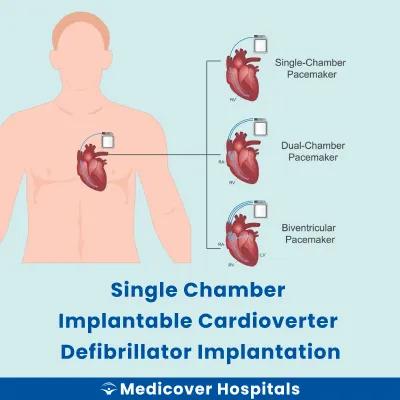
Single Chamber Implantable Cardioverter Defibrillator (ICD) Implantation is a procedure to place a small device in the chest. This device monitors the heart's rhythm and delivers electric shocks when needed. It helps regulate abnormal heartbeats (arrhythmias). The ICD is connected to the heart (cardiac muscle) through a lead. This ensures it can detect and correct irregular rhythms effectively.
This surgery is essential for patients at risk of sudden cardiac arrest. Conditions like ventricular tachycardia or fibrillation may lead to this risk. If untreated, these can result in life-threatening situations. Modern surgical approaches include minimally invasive techniques. These reduce recovery time and improve outcomes. Single Chamber ICDs are vital for managing serious heart rhythm disorders.
Single Chamber Implantable Cardioverter Defibrillator Implantation Doctors Near You
Discover skilled cardiologists for Single Chamber ICD implantation at Medicover Hospitals across India. Choose your city and book a consultation to discuss your heart health needs today.
Why Choose Medicover Hospitals for Single Chamber Implantable Cardioverter Defibrillator Implantation?
Get a second opinion from trusted experts and makeconfident, informed decisions.
 Get Second Opinion
Complete Guide To Single Chamber Implantable Cardioverter Defibrillator Implantation
Everything you need to know about the procedure, preparation, and recovery
Single Chamber Implantable Cardioverter Defibrillator Implantation procedure Indications
Doctors recommend Single Chamber Implantable Cardioverter Defibrillator (ICD) implantation for patients at risk of life-threatening heart rhythms. This device helps manage and prevent sudden cardiac arrest by delivering electrical shocks to restore normal heart rhythm.
Ventricular Tachycardia
Patients may experience palpitations, dizziness, or fainting due to rapid heartbeats originating from the ventricles. An ECG or Holter monitor may show sustained ventricular tachycardia. When medications or other treatments fail to control the episodes, an ICD may be advised.
Previous Cardiac Arrest
Individuals who have survived a cardiac arrest often face a high risk of recurrence. Symptoms like sudden collapse or unconsciousness are critical. An ICD is recommended when tests confirm the heart's vulnerability to dangerous rhythms despite other interventions.
Severe Left Ventricular Dysfunction
Patients with symptoms like breathlessness, fatigue, or swelling may have reduced heart pumping ability. An echocardiogram showing a low ejection fraction indicates high risk for arrhythmias. When medication does not improve heart function, an ICD may be necessary.
Inherited Arrhythmia Syndromes
Conditions like Long QT syndrome can cause fainting or seizures due to irregular heartbeats. Genetic testing or ECG findings confirm the diagnosis. An ICD is considered when lifestyle changes and drugs do not prevent dangerous episodes.
Post-Myocardial Infarction
After a heart attack, patients may experience chest pain or shortness of breath. Tests might reveal scar tissue affecting heart rhythm. If arrhythmias persist despite treatment, an ICD can be crucial in preventing sudden cardiac death.
How to Prepare for Single Chamber Implantable Cardioverter Defibrillator Implantation?
Proper preparation is crucial for a successful Single Chamber Implantable Cardioverter Defibrillator (ICD) implantation. It helps minimise risks and ensures a smooth procedure and recovery.
- Medication Review: Consult your doctor about stopping NSAIDs, anticoagulants, and herbal supplements at least a week before the procedure.
- Fasting Guidelines: Do not eat or drink anything for at least 8 hours before the procedure to prepare for anaesthesia.
- Clothing: Wear loose, comfortable clothing on the day of the procedure to avoid pressure on the surgical site.
- Transportation: Arrange for someone to drive you home after the procedure, as you may feel drowsy from the anaesthesia.
- Medication List: Bring a list of all medications you are currently taking, including dosages, to share with your healthcare team.
- Pre-Procedure Tests: Complete any required tests, such as blood tests or ECG, as instructed by your doctor.
- Follow Instructions: Adhere to any additional instructions provided by your healthcare provider for a smooth procedure.
- Rest Well: Ensure you get a good night's sleep before the procedure to help your body prepare.
Single Chamber Implantable Cardioverter Defibrillator Implantation procedure (Step-by-Step)
This procedure is performed by cardiologists. It typically takes 1-2 hours and is done under local anaesthesia with sedation.
- Preparation: The patient is positioned on the operating table. Local anaesthesia is administered to numb the area.
- Incision: A small incision, about 5-7 cm, is made below the collarbone. The patient may feel pressure but no pain.
- Lead Insertion: Using a guide wire and fluoroscopy, the cardiologist inserts a lead through a vein into the heart. The patient may feel slight discomfort.
- Device Placement: The defibrillator device is connected to the lead. It is then placed in a pocket created under the skin.
- Testing: The device is tested to ensure it functions correctly. The patient may feel a slight shock during testing.
- Closure: The incision is closed with sutures or staples. A dressing is applied to protect the area.
- Recovery: The patient is monitored for a few hours post-procedure. They may feel tired but should not experience significant pain.
Who Performs Single Chamber Implantable Cardioverter Defibrillator Implantation procedure?
This procedure is performed by expert cardiologists who specialise in electrophysiology. They have expertise in managing heart rhythm disorders and are skilled in implanting cardiac devices.
Recovery After Single Chamber Implantable Cardioverter Defibrillator Implantation procedure
Recovering from a Single Chamber Implantable Cardioverter Defibrillator (ICD) implantation involves gradual healing and adjustment. Patients can expect some discomfort initially, but it typically improves over time. Following your doctor's advice is crucial for a smooth recovery.
Day 1-3:
- Rest is essential. Avoid strenuous activities.
- Keep the incision area clean and dry.
- Light meals like curd, dal-rice, and soups are recommended.
Day 4-7:
- Gradually increase light activities like walking.
- Avoid lifting heavy objects or raising the arm on the side of the ICD above shoulder level.
- Continue with a soft diet - khichdi and moong dal are good options.
Week 2-4:
- Most patients can resume work or school, depending on the nature of their activities.
- Begin gentle exercises as advised by your doctor.
- Maintain a balanced diet with plenty of fruits and vegetables.
Phase 2 (1-3 months):
- Regular follow-ups to check ICD function.
- Resume normal activities gradually, avoiding contact sports.
- Continue with a heart-healthy diet.
When to Seek Urgent Help
- Severe pain or swelling at the incision site.
- Signs of infection such as fever or redness.
- Shortness of breath or chest pain.
- Any unusual symptoms or ICD shocks.
Benefits of Single Chamber Implantable Cardioverter Defibrillator Implantation procedure
This procedure helps manage life-threatening heart rhythms effectively.
- Life-Saving Intervention: It can detect and correct abnormal heart rhythms, potentially preventing sudden cardiac arrest.
- Continuous Monitoring: Provides ongoing heart rhythm monitoring, alerting to any irregularities.
- Reduced Hospital Visits: Minimises the need for frequent hospital visits for heart rhythm management.
- Improved Quality of Life: Allows patients to resume daily activities with reduced risk of cardiac events.
Risks and Complications of Single Chamber Implantable Cardioverter Defibrillator Implantation procedure
While generally safe, this procedure carries some risks and potential complications.
- Common: Infection at the implant site.
- Common: Bleeding or bruising at the incision site.
- Rare: Lead displacement, affecting device function.
- Rare: Allergic reaction to the device materials.
- Rare: Device malfunction requiring replacement or reprogramming.
- Rare: Heart or lung injury during the procedure.
Cost of Single Chamber Implantable Cardioverter Defibrillator Implantation procedure
The cost for a Single Chamber Implantable Cardioverter Defibrillator Implantation procedure ranges from Rs. 112,000 to Rs. 205,000 across Medicover Hospitals. The price varies depending on the ward category chosen, such as day care, general, or private rooms.
We offer transparent pricing and support for insurance and TPA, including CGHS, ESI, and major TPAs. Cashless facility is available for your convenience. Please contact the hospital for the latest insurance panel details as these may change periodically.
Frequently Asked Questions
1. How much does Single Chamber ICD cost?
The cost for Single Chamber ICD implantation at Medicover Hospitals ranges from Rs. 112,000 to Rs. 205,000, depending on the room type and care level.
2. Is Single Chamber ICD covered under insurance?
Yes, Single Chamber ICD implantation may be covered under CGHS, ESI, and major TPAs. Please contact the hospital for current panel details.
3. Can I exercise after Single Chamber ICD?
After a Single Chamber ICD implantation, light exercises can be resumed after 2 weeks. Consult your doctor for specific activities suitable for you.
4. Will I feel the ICD shock?
Yes, you may feel a jolt if the ICD delivers a shock. It's designed to correct life-threatening heart rhythms.
5. Can I use a mobile phone after ICD?
Yes, you can use a mobile phone, but keep it at least 15 cm away from the ICD site. Avoid placing it in a shirt pocket over the device.
6. What foods to avoid with Single Chamber ICD?
Avoid high-sodium and high-fat foods to support heart health. Opt for Indian meals like dal-rice and khichdi for balanced nutrition.
7. Will I need regular check-ups after ICD?
Yes, regular check-ups are necessary to monitor the ICD's function and battery life. Follow-up schedules are typically every 3-6 months.


