 Call
Call Patient Reports
Best Hospital for Shoulder Arthroscopy & Latarjet Procedure with Advanced Joint Care
At Medicover Hospitals, our orthopaedic team, with qualifications like MS and DNB, performs the Shoulder arthroscopy with Latarjet procedure using an open surgical approach. This technique addresses shoulder instability effectively, resulting in smaller incisions and reduced blood loss, enhancing patient recovery.
Expert Surgeons
Yearly Surgeries
Patient Satisfaction
What is Shoulder Arthroscopy With Latarjet Procedure?
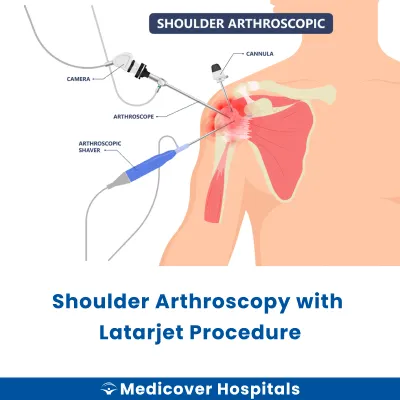
Shoulder arthroscopy with Latarjet procedure is a minimally invasive surgery on the shoulder joint. It involves using a small camera (arthroscope) to view the joint. The Latarjet procedure adds bone from the shoulder blade (scapula) to the front of the shoulder socket (glenoid). This helps stabilize the shoulder and prevent dislocations.
This surgery is needed for recurrent shoulder dislocations or instability. Conditions like bone loss or ligament damage can lead to this. If untreated, it may cause chronic pain and limited movement. Modern surgical approaches include arthroscopic techniques, which allow for smaller incisions and faster recovery. These methods are less invasive compared to traditional open surgery.
Shoulder Arthroscopy With Latarjet Procedure Doctors Near You
Find expert orthopedics for shoulder arthroscopy with Latarjet procedure at Medicover Hospitals. Choose your city and book a consultation to explore the best treatment options near you.
Why Choose Medicover Hospitals for Shoulder Arthroscopy With Latarjet Procedure?
Get a second opinion from trusted experts and makeconfident, informed decisions.
 Get Second Opinion
Complete Guide To Shoulder Arthroscopy With Latarjet Procedure
Everything you need to know about the procedure, preparation, and recovery
Shoulder Arthroscopy with Latarjet Procedure Surgery Indications
Doctors recommend shoulder arthroscopy with the Latarjet procedure when patients experience recurrent shoulder dislocations or instability. This surgery is often considered when conservative treatments like physical therapy and medication do not provide relief.
Recurrent Shoulder Dislocations
Patients may experience frequent shoulder dislocations, often with minimal trauma. Imaging tests may show bone loss or damage to the glenoid. When dislocations persist despite non-surgical treatments, surgery becomes necessary.
Chronic Shoulder Instability
Patients report a persistent feeling of the shoulder slipping out of place. Physical examinations reveal excessive joint laxity. If strengthening exercises and bracing fail to improve stability, surgical intervention is advised.
Glenoid Bone Loss
Patients with significant bone loss in the shoulder socket often experience instability. CT scans confirm the extent of bone loss. When bone loss exceeds a certain percentage, surgery is recommended to restore stability.
Failed Previous Stabilization Surgery
Some patients continue to experience instability after previous surgical attempts. Imaging may show incomplete repair or new bone defects. In such cases, the Latarjet procedure is considered to address the underlying issues.
Engaging Hill-Sachs Lesion
Patients with a large Hill-Sachs lesion may feel the shoulder catching or locking. MRI scans reveal the lesion engaging with the glenoid rim. Surgery is suggested when these lesions contribute to instability.
How to Prepare for Shoulder Arthroscopy with Latarjet Procedure?
Proper preparation is crucial for a successful shoulder arthroscopy with Latarjet procedure. It helps minimise complications and ensures a smoother recovery.
- Medication Management: Stop NSAIDs, anticoagulants, and herbal supplements as advised by your doctor.
- Fasting Instructions: Fast for at least 8 hours before the procedure due to general anaesthesia.
- Pre-Surgery Exercises: Perform any recommended shoulder exercises to maintain mobility.
- Clothing Choice: Wear loose, comfortable clothing on the day of surgery for easy access to the shoulder.
- Transportation: Arrange for someone to drive you home post-surgery as you may feel drowsy.
- Medication List: Bring a list of current medications with dosages for hospital records.
- Home Preparation: Set up a comfortable recovery area at home with essentials within reach.
- Pre-Op Consultation: Attend all pre-surgery appointments to discuss any concerns with your surgeon.
Shoulder Arthroscopy with Latarjet Procedure Surgery (Step-by-Step)
This procedure is performed by orthopaedic surgeons. It typically lasts 2-3 hours. General anaesthesia is commonly used, ensuring the patient is asleep and pain-free.
- Preparation: The patient is positioned to allow easy access to the shoulder. The area is cleaned and sterilised to prevent infection.
- Incision and Access: Small incisions of about 1-2 cm are made around the shoulder. A trocar is inserted to allow the arthroscope to enter the joint.
- Arthroscopic Examination: The surgeon uses an arthroscope to view the inside of the shoulder. This helps in assessing the extent of damage and planning the procedure.
- Bone Preparation: A curette or coblation wand is used to prepare the coracoid bone. This step involves shaping the bone for proper graft placement.
- Graft Placement: The coracoid bone is transferred to the shoulder socket. It is secured using screws to stabilise the joint and prevent future dislocations.
- Closure: The incisions are closed with sutures or staples. A bandage is applied to protect the area and aid in healing.
- Recovery: The patient is moved to a recovery room. They are monitored as the anaesthesia wears off. Pain management and post-operative care instructions are provided.
Who Performs Shoulder Arthroscopy with Latarjet Procedure Surgery?
This surgery is performed by orthopaedic surgeons who specialise in shoulder procedures. They have expertise in minimally invasive techniques and complex shoulder reconstructions. Their training ensures precision in performing such intricate surgeries.
Recovery After Shoulder Arthroscopy with Latarjet Procedure Surgery
Recovery from shoulder arthroscopy with the Latarjet procedure requires patience and adherence to your doctor's instructions. Expect some discomfort and limited mobility initially, but gradual improvement over time.
Day 1-3:
- Rest and keep the shoulder immobilized in a sling.
- Apply ice packs to reduce swelling.
- Consume soft, easy-to-digest foods like curd, dal-rice, and soups.
Day 4-7:
- Begin gentle passive exercises as advised by your physiotherapist.
- Continue with a balanced diet including moong dal and khichdi to support healing.
- Avoid lifting any weight with the affected arm.
Week 2-4:
- Gradually increase the range of motion exercises under guidance.
- Incorporate more solid foods into your diet, maintaining a focus on nutrition.
- Return to desk work or school activities if comfortable, but avoid strenuous tasks.
Phase 2 (Week 4-8):
- Start active exercises to strengthen shoulder muscles.
- Continue to avoid heavy lifting and overhead activities.
- Regular follow-up appointments to monitor progress.
Phase 3 (Week 8-12):
- Progress to more intensive physiotherapy exercises.
- Gradual return to sports or physically demanding activities as advised.
- Maintain a balanced diet to support ongoing recovery.
When to Seek Urgent Help
- Severe pain unrelieved by medication.
- Signs of infection such as fever, redness, or discharge from the incision site.
- Numbness or tingling in the arm or hand.
Benefits of Shoulder Arthroscopy with Latarjet Procedure Surgery
The Shoulder arthroscopy with Latarjet procedure is a surgical technique aimed at addressing shoulder instability and recurrent dislocations.
- Improved Stability: This procedure enhances shoulder stability by transferring a bone block to the front of the shoulder joint.
- Reduced Dislocation Risk: It significantly lowers the chances of future shoulder dislocations.
- Minimally Invasive: Being an arthroscopic procedure, it involves smaller incisions, leading to quicker recovery.
- Enhanced Function: Patients often experience improved shoulder function post-surgery.
Risks and Complications of Shoulder Arthroscopy with Latarjet Procedure Surgery
While the procedure is generally safe, like any surgery, it carries certain risks and potential complications.
- Infection at the surgical site can occur, requiring medical attention.
- Stiffness in the shoulder joint may develop post-surgery.
- Nerve injury, though uncommon, can affect shoulder movement.
- Fracture of the transferred bone block is possible.
- Non-union of the bone block may occur, affecting stability.
- Persistent pain despite surgery might be experienced by some patients.
Cost of Shoulder Arthroscopy with Latarjet Procedure Surgery
The cost for Shoulder arthroscopy with Latarjet procedure surgery at Medicover Hospitals ranges from Rs. 1,52,000 to Rs. 2,45,000. The price varies depending on the ward category chosen, such as general, twin sharing, or deluxe suites. We offer transparent pricing to ensure clarity for our patients.
Insurance and TPA support are available, with acceptance of CGHS, ESI, and major TPAs. A cashless facility is also offered for convenience. Please contact the hospital for the latest insurance panel details as these may change periodically.
Frequently Asked Questions
1. How much does Shoulder arthroscopy with Latarjet procedure surgery cost at Medicover Hospitals?
The cost for Shoulder arthroscopy with Latarjet procedure surgery at Medicover Hospitals ranges from Rs. 1,52,000 to Rs. 2,45,000, depending on the room type.
2. Is Shoulder arthroscopy with Latarjet procedure surgery covered under health insurance at Medicover?
This surgery may be covered under CGHS, ESI, and major TPAs, with cashless options available. Please contact the hospital for current panel details.
3. Will I regain full shoulder mobility after Latarjet?
Most patients regain significant shoulder mobility post-surgery with proper rehabilitation. Full recovery can take several months, requiring dedicated physiotherapy.
4. Can I lift heavy objects after Latarjet surgery?
Lifting heavy objects is generally restricted for several months post-surgery. Consult your doctor for specific guidelines based on your recovery progress.
5. What foods aid recovery after Latarjet surgery?
A balanced diet including curd, dal-rice, and khichdi can aid recovery. These foods provide essential nutrients and are easy to digest.
6. Will I experience shoulder instability after surgery?
Shoulder instability is significantly reduced after the Latarjet procedure. Proper adherence to post-operative care and exercises is crucial for stability.
7. Can I play sports after Latarjet surgery?
Returning to sports is possible but usually after a few months. Clearance from your doctor and completing rehabilitation are essential before resuming sports activities.


