 Call
Call Patient Reports
Best Hospital for Septic Arthritis Treatment by Expert Expert Orthopaedic Surgeon
Septic arthritis is a serious joint infection requiring prompt treatment. At Medicover Hospitals, our skilled Orthopaedic Surgeon, with qualifications like MBBS and MD, employ open surgical approaches for effective management. This method often results in shorter hospital stays for patients across India.
Expert Specialists
Yearly Treatments
Patient Satisfaction
What is Septic Arthritis?
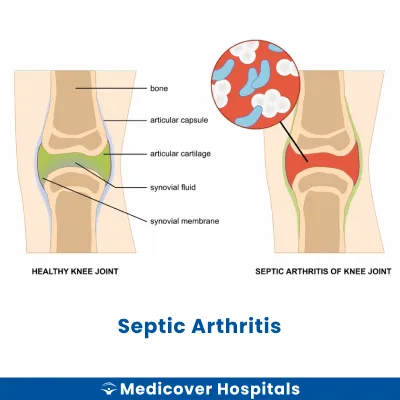
Septic arthritis is a painful infection in a joint (articulation). It occurs when bacteria, viruses, or fungi invade the joint space. Commonly affected joints include the knee, hip, and shoulder. The infection can lead to joint inflammation and damage. Symptoms often include severe pain, swelling, redness, and difficulty moving the affected joint.
Surgery is needed to treat septic arthritis to prevent joint damage and preserve function. Conditions like a weakened immune system, joint injury, or existing arthritis can lead to septic arthritis. If untreated, it can cause permanent joint damage or spread the infection. Modern surgical approaches include arthroscopic joint drainage and open joint surgery. These methods help remove infected material and relieve symptoms.
Septic Arthritis Doctors Near You
Find experienced Orthopaedic Surgeons for septic arthritis at Medicover Hospitals across India. Choose your city and book a consultation to receive expert care and guidance tailored to your needs.
Why Choose Medicover Hospitals for Septic Arthritis Treatment?
Get a second opinion from trusted experts and makeconfident, informed decisions.
 Get Second Opinion
Complete Guide To Septic Arthritis
Everything you need to know about the procedure, preparation, and recovery
Septic Arthritis procedure Indications
Doctors recommend the septic arthritis procedure when an infection in the joint leads to severe symptoms that do not improve with medication. It is crucial to address the infection promptly to prevent joint damage.
Severe Joint Pain and Swelling
Patients often experience intense pain and noticeable swelling in the affected joint. On examination, the joint may be warm to touch. When pain relief and antibiotics fail to reduce symptoms, the procedure is considered.
Fever and Chills
High fever and chills accompany joint symptoms, indicating a systemic infection. Blood tests may show elevated white blood cell counts. If antibiotics do not resolve the fever, surgical intervention may be needed.
Limited Joint Mobility
Patients may struggle to move the affected joint due to pain and swelling. Physical examination reveals restricted range of motion. When physiotherapy and medication do not restore mobility, the procedure is advised.
Pus in Joint Fluid
Joint aspiration may reveal pus in the synovial fluid, confirming infection. Lab tests show bacteria presence. If drainage and antibiotics are ineffective, surgery is necessary to clear the infection.
Persistent Infection Signs
Despite antibiotic treatment, signs of infection like redness and warmth persist. Blood cultures may still test positive for bacteria. When conservative measures fail, the procedure is required to prevent further complications.
How to Prepare for Septic Arthritis?
Proper preparation for septic arthritis surgery is crucial to ensure a smooth procedure and recovery. It helps in reducing risks and improving outcomes.
- Medication Review: Stop NSAIDs, anticoagulants, and herbal supplements as advised by your doctor.
- Fasting: Fast for at least 8 hours before the procedure if general anaesthesia is used.
- Medical History: Bring a list of all medications with dosages you are currently taking.
- Clothing: Wear loose, comfortable clothing to the hospital for ease of movement post-surgery.
- Transportation: Arrange for someone to drive you home after the procedure.
- Pre-Op Tests: Complete any blood tests or imaging studies as instructed by your healthcare provider.
- Infection Control: Follow any specific instructions given to prevent infection, such as using antiseptic wipes.
- Hydration: Stay well-hydrated in the days leading up to the surgery unless otherwise directed.
Septic Arthritis procedure (Step-by-Step)
It typically lasts 1 to 2 hours. Anaesthesia can be general or regional, depending on the joint involved and patient condition.
- Preparation: The patient is positioned comfortably. Anaesthesia is administered to ensure they are pain-free during the procedure.
- Incision: A small incision, usually 1-2 cm, is made near the affected joint to allow access for surgical instruments.
- Joint Aspiration: A trocar is used to aspirate the infected fluid from the joint. This helps relieve pressure and pain.
- Debridement: Instruments like a curette are used to remove infected tissue and debris from the joint. This step is crucial to eliminate the source of infection.
- Irrigation: The joint is thoroughly washed with a sterile saline solution. This helps to flush out any remaining bacteria or debris.
- Closure: The incision is closed with sutures or staples. A sterile dressing is applied to protect the area.
- Recovery: The patient is monitored as they wake from anaesthesia. Pain management and antibiotics are provided to aid recovery.
Who Performs Septic Arthritis procedure?
The procedure is performed by orthopaedic surgeons or specialists in general medicine. These professionals are trained to manage joint infections and perform necessary surgical interventions. They ensure the procedure is conducted safely and effectively.
Recovery After the Septic Arthritis Procedure
Recovery from septic arthritis involves careful monitoring and gradual return to daily activities. Patients can expect some discomfort and need to follow medical advice closely to ensure proper healing.
Day 1-3:
- Rest is crucial. Avoid putting weight on the affected joint.
- Follow prescribed antibiotics regimen strictly.
- Keep the joint elevated to reduce swelling.
- Consume light meals like khichdi or moong dal to aid digestion.
Day 4-7:
- Continue with antibiotics and pain management as advised.
- Gentle movements may be introduced under medical guidance.
- Include curd and dal-rice in meals for protein and probiotics.
- Hydration is important. Drink plenty of fluids.
Week 2-4:
- Gradual increase in joint mobility exercises as per physiotherapist's advice.
- Return to light activities, avoiding strenuous tasks.
- Incorporate soups and soft foods to maintain nutrition.
- Monitor for any signs of infection or increased pain.
Phase 2 (1-3 months):
- Continue physiotherapy to regain full joint function.
- Resume work or school activities based on recovery progress.
- Balanced diet with proteins and vitamins to support healing.
When to Seek Urgent Help
- Increased redness, swelling, or warmth around the joint.
- Severe pain not relieved by medication.
- Fever or chills indicating possible infection.
- Any unusual discharge from the joint area.
Benefits of the Septic Arthritis Procedure
The procedure for septic arthritis aims to relieve joint pain and prevent further damage. It is crucial for restoring joint function.
- Pain Relief: Helps alleviate severe joint pain caused by infection.
- Infection Control: Removes infectious material, reducing the spread of bacteria.
- Joint Preservation: Prevents joint damage and maintains mobility.
- Improved Functionality: Enhances joint movement and overall function.
Risks and Complications of the Septic Arthritis Procedure
While the procedure is generally safe, there are potential risks and complications that patients should be aware of.
- Common: Infection at the site of the procedure.
- Common: Bleeding within the joint.
- Rare: Damage to surrounding tissues or nerves.
- Rare: Allergic reaction to anaesthesia.
- Rare: Blood clots forming in the treated area.
Cost of the Septic Arthritis Procedure
The cost of the Septic Arthritis procedure at Medicover Hospitals ranges from Rs.400 to Rs.2900. The price varies based on the ward category chosen, such as outpatient, day care, or private rooms. We offer transparent pricing to ensure clarity for our patients.
Insurance and TPA support are available, with acceptance of CGHS, ESI, and major TPAs. A cashless facility is also offered for added convenience. Please contact the hospital for the latest insurance panel details as these may change periodically.
Frequently Asked Questions
1. How much does Septic Arthritis procedure cost at Medicover Hospitals?
The cost for the septic arthritis procedure ranges from Rs.400 to Rs.2900 across Medicover Hospitals, depending on the type of care and accommodation.
2. Is Septic Arthritis procedure covered under health insurance at Medicover?
Septic arthritis procedures may be covered by CGHS, ESI, and major TPAs, offering cashless options. Please contact the hospital for current panel details.
3. Will I need physiotherapy after septic arthritis treatment?
Yes, physiotherapy is often required to regain joint mobility and strength. It helps in reducing stiffness and improving overall joint function.
4. Can septic arthritis cause permanent joint damage?
If not treated promptly, septic arthritis can lead to permanent joint damage. Early intervention is crucial to prevent long-term complications.
5. What foods should I avoid after septic arthritis treatment?
Avoid foods high in purines like red meat and certain seafood. Opt for a balanced diet with curd, dal-rice, and fresh vegetables.
6. How soon can I resume normal activities after treatment?
Most patients can gradually resume normal activities within 4-6 weeks. However, full recovery may vary depending on the severity of the condition.
7. Can septic arthritis recur after treatment?
Yes, septic arthritis can recur, especially if underlying risk factors are not addressed. Regular follow-ups and monitoring are essential to prevent recurrence.
8. Why is septic arthritis an emergency?
Septic arthritis is an emergency because the infection can rapidly destroy the joint and spread to the bloodstream (sepsis). Early treatment is crucial to prevent permanent joint damage and life-threatening complications.
9. What is the mortality rate for septic arthritis?
The mortality rate is generally around 5% to 15%, but it can be higher in elderly patients or those with weakened immune systems or delayed treatment.
10. What type of infection causes arthritis?
Septic arthritis is usually caused by a bacterial infection, most commonly Staphylococcus aureus. Less commonly, it can be caused by viruses or fungi.


