 Call
Call Patient Reports
Best Scar Endometriosis Excision Surgery Hospital with Expert Gyno Care
Scar endometriosis excision at Medicover Hospitals is performed using laparoscopic techniques by our skilled gynecologists with qualifications such as MS, DNB, and FMAS. This minimally invasive approach ensures smaller incisions and reduced blood loss, promoting a quicker recovery for patients across India.
Expert Surgeons
Yearly Surgeries
Patient Satisfaction
What is Scar Endometriosis Excision?
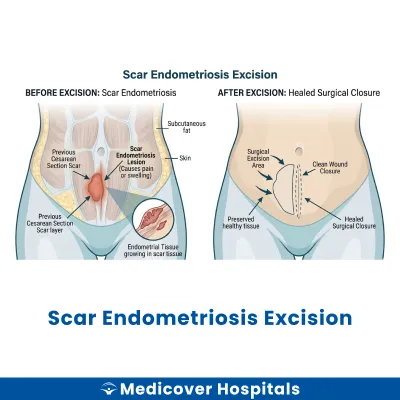
Scar endometriosis excision is a surgical procedure to remove endometrial tissue (lining of the uterus) that has grown in a scar, often from a previous surgery. This condition typically affects the abdominal wall, especially after procedures like a caesarean section. The excision involves carefully removing the abnormal tissue to alleviate symptoms and prevent recurrence.
This surgery is needed when endometrial tissue causes pain, swelling, or bleeding in the scar area. If untreated, it can lead to chronic pain and discomfort. Scar endometriosis excision is essential to improve quality of life. Modern surgical approaches include laparoscopic surgery, which is minimally invasive and promotes quicker recovery. Early intervention can prevent complications and provide relief from symptoms.
Scar Endometriosis Excision Doctors Near You
Find experienced gynecologists for scar endometriosis excision at Medicover Hospitals across India. Choose your city and book a consultation to discuss your treatment options today.
Why Choose Medicover Hospitals for Scar Endometriosis Excision?
Get a second opinion from trusted experts and makeconfident, informed decisions.
 Get Second Opinion
Complete Guide To Scar Endometriosis Excision
Everything you need to know about the procedure, preparation, and recovery
Scar endometriosis excision Surgery Indications
Scar endometriosis excision is recommended when endometrial tissue grows in or around a scar, often from previous surgeries. This can cause pain and other symptoms that interfere with daily life.
Chronic Pain at Scar Site
Patients may experience persistent pain at the scar site, especially during menstruation. On examination, doctors may find tender nodules in the scar area. If pain relief methods like medication or physical therapy do not help, surgery may be necessary.
Swelling and Lump Formation
Some patients notice a swelling or lump near the scar, which can become more pronounced during menstrual cycles. Imaging tests like ultrasound may reveal endometrial tissue. Surgery is considered when these lumps cause discomfort or cosmetic concerns.
Bleeding from Scar
Unusual bleeding from the scar, especially during periods, can be a sign of scar endometriosis. Doctors may use imaging to confirm the presence of endometrial tissue. If bleeding persists despite conservative treatments, surgical excision is advised.
Failed Medical Management
When medications fail to control symptoms like pain or swelling, surgery becomes a viable option. Doctors assess the effectiveness of hormonal treatments and pain relief before recommending excision.
Interference with Daily Activities
Severe symptoms that disrupt daily life, such as difficulty in movement or performing routine tasks, may lead to the consideration of surgery. Doctors evaluate the impact on quality of life before proceeding with excision.
How to Prepare for Scar Endometriosis Excision?
Proper preparation is crucial for a successful scar endometriosis excision. It helps minimise risks and ensures a smooth recovery process.
- Medication Review: Stop NSAIDs, anticoagulants, and herbal supplements at least a week before surgery.
- Fasting Guidelines: Fast for at least 8 hours before the procedure if general anaesthesia is used.
- Bowel Preparation: Follow any specific bowel prep instructions given by your doctor.
- Clothing Choice: Wear loose, comfortable clothing on the day of the surgery for easy movement post-procedure.
- Transportation: Arrange for someone to drive you home after the surgery as you may feel drowsy.
- Medication List: Bring a list of all medications you take, including dosages, to the hospital.
- Pre-Surgery Consultation: Attend any pre-surgery appointments to discuss the procedure and address concerns.
- Personal Items: Pack essentials like ID, insurance details, and any required documents.
Scar endometriosis excision Surgery (Step-by-Step)
This procedure is performed by obstetrician. It typically lasts 1 to 2 hours and is done under general anaesthesia.
- Preparation: The patient is taken to the operating room and given general anaesthesia to ensure they are asleep and pain-free during the procedure.
- Incision: A small incision, usually 1-2 cm, is made near the scar tissue. This allows access to the affected area.
- Excision: The surgeon uses a scalpel or harmonic scalpel to carefully remove the endometriotic tissue from the scar. Precision is key to avoid damage to surrounding tissues.
- Hemostasis: Bipolar cautery may be used to control bleeding and ensure the area is dry before closing the incision.
- Closure: The incision is closed with sutures or surgical glue. The patient is then moved to the recovery area.
- Recovery: In the recovery room, the patient is monitored as they wake up from anaesthesia. Pain management is provided as needed.
- Post-Operative Care: Instructions are given for wound care and activity restrictions. Follow-up appointments are scheduled to monitor healing.
Who Performs Scar endometriosis excision Surgery?
This surgery is performed by gynecologists who have experience in treating endometriosis. They are skilled in using surgical instruments like scalpels and harmonic scalpels to excise the endometriotic tissue effectively.
Recovery After Scar Endometriosis Excision Surgery
Recovery from scar endometriosis excision surgery involves gradual healing and care. It's important to follow your doctor's advice to ensure a smooth recovery. You may experience some discomfort and swelling, which is normal. Here's a general timeline to help you understand what to expect during your recovery.
Day 1-3:
- Rest is crucial. Avoid any strenuous activities.
- Stick to a soft diet. Include foods like curd, dal-rice, and soups.
- Take prescribed medications to manage pain and prevent infection.
Day 4-7:
- Gradually increase light activities as tolerated.
- Continue with a balanced diet. Add moong dal and khichdi for easy digestion.
- Avoid lifting heavy objects or bending excessively.
Day 8-14:
- You may start resuming normal activities, but avoid intense physical exertion.
- Monitor the surgical site for any unusual changes.
- Consult your doctor before returning to work or school.
Phase 3 (Week 3-4):
- Most patients can return to work or school by this phase.
- Continue to eat a nutritious diet to support healing.
- Engage in light exercises, but avoid high-impact activities.
When to Seek Urgent Help:
- Severe pain unrelieved by medication.
- Excessive bleeding or discharge from the surgical site.
- Signs of infection such as fever or redness around the incision.
- Swelling that worsens or does not improve.
Benefits of Scar endometriosis excision Surgery
Scar endometriosis excision surgery can provide relief from symptoms and improve quality of life.
- Pain Relief: Reduces or eliminates pain associated with scar endometriosis.
- Improved Mobility: Alleviates discomfort, allowing for better movement and daily activities.
- Enhanced Healing: Promotes proper healing of the affected area by removing endometrial tissue.
- Reduced Recurrence: Decreases the likelihood of endometriosis returning in the scar area.
Risks and Complications of Scar endometriosis excision Surgery
While generally safe, scar endometriosis excision surgery carries some risks and potential complications.
- Common: Infection at the site of surgery, which may require antibiotics.
- Common: Bleeding during or after the procedure, possibly needing further intervention.
- Rare: Damage to surrounding tissues or organs, which may necessitate additional treatment.
- Rare: Scarring, which could lead to cosmetic concerns or discomfort.
- Rare: Anesthesia-related complications, which can vary in severity.
Cost of Scar endometriosis excision Surgery
The cost of scar endometriosis excision surgery at Medicover Hospitals varies depending on the ward category chosen. Prices range from Rs. 1650 to Rs. 11500. This variation ensures that patients can select a suitable option based on their preferences and budget.
Medicover Hospitals offers transparent pricing with support for insurance and TPA, including CGHS, ESI, and major TPAs. A cashless facility is also available for added convenience. Please contact the hospital for the latest insurance panel details as these may change periodically.
Frequently Asked Questions
1. How much does Scar endometriosis excision cost?
The cost for Scar endometriosis excision surgery at Medicover Hospitals ranges from Rs. 1650 to Rs. 11500, depending on the care type.
2. Is Scar endometriosis excision covered by insurance?
Scar endometriosis excision may be covered by CGHS, ESI, and major TPAs. Please contact the hospital for current panel details.
3. Can scar endometriosis affect fertility?
Scar endometriosis can sometimes affect fertility, especially if it impacts the reproductive organs. Consult your doctor for a personalised assessment.
4. Will I need hormone therapy after surgery?
Hormone therapy is not typically needed after scar endometriosis excision. Your doctor will guide you based on your specific condition.
5. Can scar endometriosis recur after excision?
There is a possibility of recurrence after excision of scar endometriosis. Regular follow-ups with your doctor are essential to monitor your condition.
6. What lifestyle changes are needed post-surgery?
Post-surgery, avoid heavy lifting and strenuous activities for a few weeks. Maintaining a balanced diet with curd and dal-rice can aid recovery.
7. Is pain normal after scar endometriosis excision?
Mild pain and discomfort are normal after surgery and usually subside within a week. Consult your doctor if pain persists or worsens.
8. Is scar endometriosis serious?
Scar endometriosis is usually not life-threatening, but it can cause significant pain, swelling, and discomfort, especially during periods. If left untreated, symptoms may worsen over time.
9. How to get rid of scar endometriosis?
The most effective treatment is surgical excision, where the affected tissue is completely removed. Medications may help reduce symptoms temporarily but usually do not cure the condition.
10. Can endometriosis scar tissue go away on its own?
Scar endometriosis typically does not go away on its own and tends to persist or grow slowly. Medical treatment can manage symptoms, but surgery is often needed for permanent relief.


