 Call
Call Patient Reports
Sacrospinous or Sacral Colpopexy Surgery by Expert Gynecologists
At Medicover Hospitals, our gynecologists, with qualifications like MS, DNB, and FMAS, perform sacrospinous or sacral colpopexy using laparoscopic techniques. This approach helps in treating pelvic floor disorders effectively. Patients benefit from smaller incisions and reduced blood loss, ensuring a quicker recovery.
Expert Surgeons
Yearly Surgeries
Patient Satisfaction
What is Sacrospinous or Sacral Colpopexy?
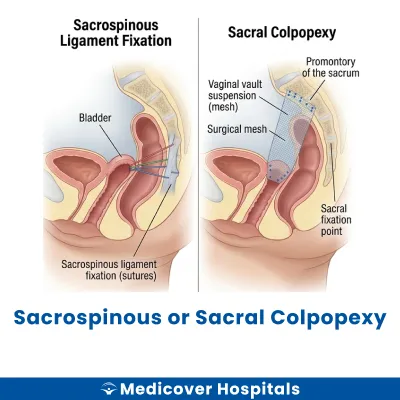
Sacrospinous or Sacral Colpopexy is a surgical procedure aimed at correcting pelvic organ prolapse. It involves the vagina, which may have descended due to weakened pelvic support. In Sacrospinous Colpopexy, the vaginal vault is attached to the sacrospinous ligament. In Sacral Colpopexy, it is attached to the sacrum (the triangular bone at the base of the spine). This helps restore the normal position of the vagina.
This surgery is needed when pelvic organ prolapse causes discomfort or urinary issues. Conditions like childbirth, aging, or obesity can lead to this prolapse. If untreated, it may worsen, leading to more severe symptoms. Modern surgical approaches include laparoscopic and robotic-assisted techniques. These methods offer less pain and quicker recovery. Always consult with your healthcare provider for the best approach.
Sacrospinous or Sacral Colpopexy Doctors Near You
Discover expert gynecologists for sacrospinous or sacral colpopexy at Medicover Hospitals across India. Choose your city and book a consultation to address your health needs today.
Why Choose Medicover Hospitals for Sacrospinous or Sacral Colpopexy?
Get a second opinion from trusted experts and makeconfident, informed decisions.
 Get Second Opinion
Complete Guide To Sacrospinous Or Sacral Colpopexy
Everything you need to know about the procedure, preparation, and recovery
Sacrospinous or Sacral Colpopexy Surgery Indications
Doctors recommend sacrospinous or sacral colpopexy when pelvic organ prolapse affects a woman's quality of life. This procedure is often considered when non-surgical treatments do not provide relief.
Pelvic Organ Prolapse
Patients may experience a sensation of heaviness or pressure in the pelvic area. On examination, doctors find that the pelvic organs have descended from their normal position. When pelvic floor exercises and pessaries fail to alleviate symptoms, surgery is advised.
Vaginal Vault Prolapse
Women may notice a bulge or protrusion in the vaginal area, especially after a hysterectomy. Doctors diagnose this through a pelvic exam showing the vaginal vault has dropped. If lifestyle changes and physical therapy do not help, surgery is considered.
Urinary Incontinence
Some women experience involuntary urine leakage, particularly during physical activities. Medical tests may reveal a prolapsed bladder contributing to the issue. When medications and pelvic exercises are ineffective, surgical intervention is recommended.
Recurrent Prolapse
Patients with previous prolapse surgery may encounter recurring symptoms like pelvic pressure or bulging. Doctors confirm recurrence through imaging or examination. If conservative measures fail again, repeat surgery may be necessary.
Sexual Dysfunction
Women might report discomfort or pain during intercourse due to prolapse. A physical exam confirms the anatomical changes. When non-surgical options do not restore comfort, surgery is considered.
How to Prepare for Sacrospinous or Sacral Colpopexy?
Proper preparation is crucial for a smooth surgery and recovery. It helps reduce complications and ensures a successful outcome.
- Medication Review: Stop NSAIDs, anticoagulants, and herbal supplements at least a week before surgery. Consult your doctor for specific instructions.
- Fasting Guidelines: Do not eat or drink anything for at least 8 hours before the procedure if general anaesthesia is used.
- Bowel Preparation: Follow the bowel prep instructions provided by your surgeon to ensure a clear surgical field.
- Pelvic Floor Exercises: Practice pelvic floor exercises as advised to strengthen muscles and aid recovery.
- Comfortable Clothing: Wear loose, comfortable clothing on the day of surgery for ease of movement post-procedure.
- Transportation: Arrange for someone to drive you home after the surgery, as you will not be able to drive yourself.
- Medication List: Bring a list of all medications you are currently taking, including dosages, to the hospital.
- Pre-Surgery Instructions: Follow any additional instructions provided by your healthcare team to ensure you are fully prepared.
Sacrospinous or Sacral Colpopexy Surgery (Step-by-Step)
Overview: Sacrospinous or Sacral Colpopexy is performed by gynecologists. The procedure typically lasts 1 to 2 hours. It is done under general or regional anaesthesia.
- Preparation: The patient is positioned, and anaesthesia is administered. The surgical area is cleaned and sterilized.
- Incision: A small incision, about 1-2 cm, is made in the vaginal wall. This allows access to the pelvic structures.
- Access and Exposure: The surgeon uses a speculum to hold the vaginal walls apart. This provides a clear view of the surgical area.
- Attachment: Using a trocar, the surgeon attaches sutures to the sacrospinous ligament or sacral promontory. This supports the vaginal vault.
- Suture Placement: Sutures are placed with precision using instruments like a needle holder. This secures the vaginal vault in its new position.
- Closure: The incision is closed with absorbable sutures. The area is then cleaned and dressed.
- Recovery: The patient is moved to the recovery room. Vital signs are monitored as the anaesthesia wears off.
Who Performs Sacrospinous or Sacral Colpopexy Surgery?
This surgery is performed by gynecologists with expertise in pelvic floor disorders. They are trained to handle complex cases and ensure effective outcomes. Please contact the hospital for current details as insurance panels may change.
Recovery After Sacrospinous or Sacral Colpopexy Surgery
Recovery from sacrospinous or sacral colpopexy surgery involves gradual healing and returning to normal activities. It's important to follow your doctor's advice to ensure a smooth recovery.
Day 1-3:
- Rest is crucial. Avoid strenuous activities.
- Stick to a light diet. Include soft foods like curd, dal-rice, and soups.
- Stay hydrated. Drink plenty of water.
Day 4-7:
- Slowly increase light activities, like walking around the house.
- Continue with a balanced diet. Add easily digestible foods like khichdi and moong dal.
- Avoid lifting heavy objects or bending.
Week 2-4:
- Resume light household chores. Avoid strenuous tasks.
- Gradually return to work or school, depending on your comfort and doctor's advice.
- Maintain a nutritious diet to support healing.
Week 5-6:
- Most daily activities can be resumed.
- Continue avoiding heavy lifting and intense exercise.
- Follow up with your doctor to assess recovery progress.
When to Seek Urgent Help:
- Severe pain or swelling in the pelvic area.
- Unusual discharge or bleeding.
- High fever or chills.
- Difficulty urinating or bowel movements.
If you experience any of these symptoms, contact your healthcare provider immediately.
Benefits of Sacrospinous or Sacral Colpopexy Surgery
Sacrospinous or Sacral Colpopexy is a surgical procedure aimed at correcting pelvic organ prolapse, offering several benefits.
- Improved Support: Provides better support to the pelvic organs, reducing prolapse symptoms.
- Enhanced Quality of Life: Alleviates discomfort and improves daily activities.
- Minimally Invasive: Typically involves less recovery time compared to more extensive surgeries.
- Long-lasting Results: Offers durable correction for pelvic organ prolapse.
Risks and Complications of Sacrospinous or Sacral Colpopexy Surgery
While generally safe, sacrospinous or sacral colpopexy surgery carries potential risks and complications.
- Common: Pain or discomfort in the pelvic region post-surgery.
- Common: Risk of infection at the surgical site.
- Rare: Injury to nearby organs such as the bladder or rectum.
- Rare: Nerve damage leading to numbness or weakness.
- Rare: Recurrence of prolapse over time.
- Rare: Bleeding that may require additional intervention.
Cost of Sacrospinous or Sacral Colpopexy Surgery
The cost of Sacrospinous or Sacral Colpopexy Surgery at Medicover Hospitals ranges from Rs. 98,000 to Rs. 239,000. The price varies depending on the ward category chosen, such as day care, general, private, or deluxe options. Our transparent pricing ensures you know what to expect.
We offer insurance and TPA support, accepting CGHS, ESI, and major TPAs, along with a cashless facility for your convenience. Please contact the hospital for the latest insurance panel details as these may change periodically.
Frequently Asked Questions
1. How much does Sacrospinous or Sacral Colpopexy surgery cost at Medicover Hospitals?
The cost of Sacrospinous or Sacral Colpopexy surgery at Medicover Hospitals ranges from Rs. 98,000 to Rs. 239,000, depending on the type of room and care required.
2. Is Sacrospinous or Sacral Colpopexy surgery covered under health insurance at Medicover?
Sacrospinous or Sacral Colpopexy surgery may be covered under CGHS, ESI, and major TPAs with cashless options. Please contact the hospital for current panel details.
3. Will I need a pessary after Sacrospinous Colpopexy?
A pessary is usually not required after Sacrospinous Colpopexy as the surgery aims to correct prolapse. Consult your doctor for personalised advice.
4. Can I lift heavy objects post-Sacral Colpopexy?
Avoid lifting heavy objects for at least six weeks post-surgery to ensure proper healing. Discuss specific activity restrictions with your surgeon.
5. Will Sacral Colpopexy affect my bowel function?
Some patients may experience temporary bowel changes after Sacral Colpopexy. These usually resolve with time; consult your doctor if issues persist.
6. Is urinary incontinence common after Sacrospinous Colpopexy?
Urinary incontinence can occur post-surgery but often improves. If symptoms persist, discuss further treatment options with your healthcare provider.
7. What diet should I follow after Sacral Colpopexy?
Consume a light diet with foods like curd, dal-rice, and khichdi to aid digestion. Avoid spicy and heavy foods for the first week post-surgery.


