 Call
Call Patient Reports
Best Hospital for Rotational Atherectomy Procedure with Advanced Cardiac Care
Rotational Atherectomy at Medicover Hospitals is performed by skilled cardiologists with DM and DNB qualifications. This procedure uses a minimally invasive approach to treat complex coronary artery disease. Patients benefit from shorter hospital stays and quicker recovery times.
Expert Experts
Yearly Procedures
Patient Satisfaction
What is Rotational Atherectomy?
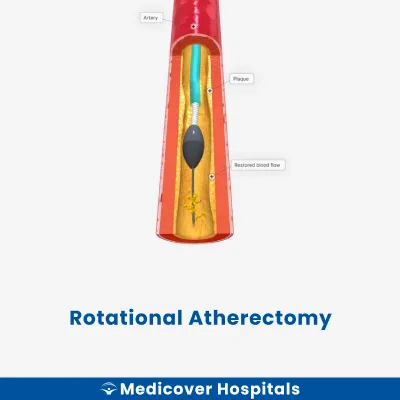
Rotational Atherectomy is a medical procedure used to treat coronary arteries. It involves the use of a tiny, rotating device to remove hardened plaque (calcified deposits) from the walls of the arteries. This helps in restoring normal blood flow to the heart. The procedure is often used when the plaque is too hard to be compressed by traditional methods like balloon angioplasty.
This surgery is needed for patients with severe coronary artery disease. It is often recommended when plaque buildup is resistant to other treatments. If left untreated, this condition can lead to serious heart problems, including heart attacks. Modern approaches for Rotational Atherectomy include the use of advanced devices like the Rotablator. These devices offer precision in removing calcified plaque.
Rotational Atherectomy Doctors Near You
Discover skilled cardiologists for rotational atherectomy at Medicover Hospitals across India. Choose your city and book a consultation to explore treatment options tailored to your needs.
Why Choose Medicover Hospitals for Rotational Atherectomy?
Get a second opinion from trusted experts and makeconfident, informed decisions.
 Get Second Opinion
Complete Guide To Rotational Atherectomy
Everything you need to know about the procedure, preparation, and recovery
Rotational Atherectomy Procedure Indications
Doctors recommend rotational atherectomy when plaque buildup in the coronary arteries is too hard or calcified for traditional angioplasty. This procedure helps improve blood flow to the heart when other treatments are ineffective.
Severe Coronary Artery Calcification
Patients may experience chest pain or shortness of breath during physical activity. Imaging tests reveal heavily calcified plaques in the coronary arteries. When medications and lifestyle changes fail to alleviate symptoms, rotational atherectomy becomes necessary.
Failed Balloon Angioplasty
Some patients continue to have chest discomfort despite undergoing balloon angioplasty. Doctors find that the artery remains narrowed due to rigid plaques. In such cases, rotational atherectomy is considered to effectively clear the blockage.
Complex Lesions
Patients with complex coronary artery lesions may experience persistent chest pain. Diagnostic imaging shows irregular or eccentric plaques. When these lesions do not respond to standard interventions, rotational atherectomy is recommended.
Chronic Total Occlusions
Patients often have severe chest pain and fatigue due to completely blocked arteries. Angiograms confirm the presence of chronic total occlusions. When other methods cannot penetrate the blockage, rotational atherectomy is used.
In-Stent Restenosis
Patients may report recurring symptoms after stent placement. Tests reveal that the stent is blocked by calcified tissue. Rotational atherectomy can help remove the obstruction and restore proper blood flow.
How to Prepare for Rotational Atherectomy?
Proper preparation for rotational atherectomy is crucial to ensure a smooth procedure and recovery. It helps reduce risks and improves outcomes.
- Medication Review: Inform your doctor about all medications. Stop NSAIDs, anticoagulants, and herbal supplements as advised.
- Fasting Instructions: Do not eat or drink anything for at least 6-8 hours before the procedure due to anaesthesia requirements.
- Pre-Procedure Tests: Complete any blood tests or imaging studies as scheduled to assess your readiness.
- Clothing: Wear loose, comfortable clothing on the day of the procedure for ease of changing and comfort.
- Transportation: Arrange for someone to drive you home post-procedure as you may feel drowsy from anaesthesia.
- Medication List: Bring a list of your current medications with dosages for hospital records.
- Allergy Information: Inform the medical team of any known allergies, especially to medications or anaesthesia.
- Hydration: Stay well-hydrated the day before the procedure unless advised otherwise by your doctor.
Rotational Atherectomy procedure (Step-by-Step)
Overview: Rotational Atherectomy is performed by a Heart Surgeon. It typically takes 1-2 hours and is done under local anaesthesia.
- Preparation: The patient is positioned comfortably. Local anaesthesia is administered to numb the area. A small incision, about 1-2 cm, is made near the groin or wrist to access the artery.
- Catheter Insertion: A guide catheter is inserted through the incision. The patient may feel slight pressure but no pain. This catheter helps in guiding the rotational atherectomy device to the blockage site.
- Guidewire Placement: A thin guidewire is carefully threaded through the catheter to the site of the arterial blockage. The patient remains awake and can communicate with the team.
- Rotational Atherectomy Device: A rotational atherectomy device, equipped with a diamond-tipped burr, is advanced over the guidewire. The patient may hear a whirring sound as the device rotates to break down the plaque.
- Plaque Removal: The rotating burr grinds the calcified plaque into tiny particles. These particles are small enough to pass through the bloodstream without causing harm. The patient may feel mild vibrations.
- Balloon Angioplasty (if needed): After plaque removal, a balloon may be inflated to widen the artery further. The patient might feel slight pressure during this step.
- Completion: The devices are removed, and the incision is closed with a small bandage. The patient is monitored for a short time before being moved to recovery.
Who performs the rotational atherectomy procedure?
Rotational Atherectomy is performed by interventional cardiologists. These specialists are trained in minimally invasive procedures to treat heart conditions. They use advanced tools and techniques to ensure effective treatment.
Recovery After Rotational Atherectomy Procedure
Recovery from a rotational atherectomy procedure is generally smooth, but it requires careful attention to your body's signals. Expect some fatigue and mild discomfort initially, but these should gradually improve.
Day 1-3:
- Rest is crucial. Avoid strenuous activities and ensure you get plenty of sleep.
- Stick to a light diet. Include easily digestible foods like curd, dal-rice, and soups.
- Keep the incision site clean and dry to prevent infection.
Day 4-7:
- You may start gentle activities like walking around the house.
- Continue with a balanced diet. Incorporate moong dal and khichdi for nutrition.
- Monitor the incision site for any signs of infection.
Day 8-14:
- Gradually increase activity levels, but avoid heavy lifting or intense exercise.
- Return to work or school might be possible, depending on your recovery progress and job demands.
- Maintain a heart-healthy diet to support recovery.
Phase 3 (Week 3-4):
- Resume most daily activities, but listen to your body and rest as needed.
- Continue with regular follow-up appointments to monitor your progress.
When to Seek Urgent Help:
- Severe chest pain or shortness of breath.
- Excessive bleeding or swelling at the incision site.
- Signs of infection such as fever or redness around the incision.
If you experience any of these symptoms, contact your healthcare provider immediately.
Benefits of the Rotational Atherectomy Procedure
Rotational Atherectomy is a specialised procedure used to treat calcified coronary artery blockages. It offers several advantages for patients with complex conditions.
- Effective Plaque Removal: It efficiently removes hard, calcified plaque that may not respond to other treatments.
- Improved Blood Flow: By clearing blockages, it enhances blood flow to the heart muscle.
- Minimally Invasive: The procedure is less invasive compared to traditional surgery, promoting quicker recovery.
- Enhanced Stent Placement: It facilitates the placement of stents in narrowed arteries, improving their effectiveness.
Risks and Complications of the Rotational Atherectomy Procedure
While Rotational Atherectomy is generally safe, it carries some risks and potential complications.
- Common: Minor bleeding or bruising at the catheter insertion site.
- Common: Temporary chest discomfort during the procedure.
- Rare: Artery perforation or dissection, which may require additional intervention.
- Rare: Slow heart rate or arrhythmias during the procedure.
- Rare: Embolisation, where plaque particles travel to other parts of the body.
- Rare: Allergic reaction to contrast dye used during the procedure.
Cost of Rotational Atherectomy Procedure
The cost of the Rotational Atherectomy procedure at Medicover Hospitals ranges from Rs. 35,000 to Rs. 112,000. The price varies by ward category, such as day care, general, twin sharing, private, and more. We offer transparent pricing to ensure clarity for our patients.
Insurance and TPA support, including CGHS, ESI, and major TPAs, are accepted. A cashless facility is available for your convenience. Please contact the hospital for the latest insurance panel details as these may change periodically.
Frequently Asked Questions
1. How much does Rotational Atherectomy cost?
The cost of Rotational Atherectomy at Medicover Hospitals ranges from Rs. 35000 to Rs. 112,000, depending on the room type and other factors.
2. Is Rotational Atherectomy covered by insurance?
Rotational Atherectomy may be covered under CGHS, ESI, and major TPAs with cashless options. Please contact the hospital for current panel details.
3. Can Rotational Atherectomy cause artery damage?
There is a risk of artery damage during Rotational Atherectomy due to the high-speed rotational burr. However, this is rare and managed with care.
4. Will I need a special diet after Rotational Atherectomy?
Post-procedure, a heart-healthy diet including curd, dal-rice, and khichdi is recommended. Avoid oily and high-cholesterol foods for better recovery.
5. How soon can I exercise after Rotational Atherectomy?
Light activities can be resumed after a week, but strenuous exercise should wait for 4-6 weeks. Always consult your doctor before starting any exercise.
6. Can I drive immediately after Rotational Atherectomy?
Driving is generally not recommended for at least a week after the procedure. Ensure you get clearance from your doctor before resuming driving.
7. Is chest pain normal after Rotational Atherectomy?
Mild chest discomfort can occur post-procedure but should subside. Persistent or severe pain requires immediate medical attention.
8. Is an atherectomy better than a stent?
Atherectomy is not necessarily "better" than a stent-they are used for different purposes. Atherectomy helps remove or modify hard plaque, especially in heavily calcified arteries, while stents are used to keep the artery open. In many cases, both are used together.
9. What is the success rate of rotational atherectomy?
Rotational atherectomy has a high procedural success rate (around 90% or more), particularly in complex, calcified coronary artery disease.
10. Is rotational atherectomy available in India?
Yes, rotational atherectomy is widely available in India, especially in advanced cardiac centers and tertiary care hospitals.
11. How safe is a rotational atherectomy?
Rotational atherectomy is generally safe when performed by experienced cardiologists, but like any procedure, it carries some risks such as vessel injury, arrhythmias, or complications related to the catheter.


