 Call
Call Patient Reports
Best Hospital for Right Heart Catheterization Procedure with Advanced Cardiac Care
Right heart catheterization at Medicover Hospitals is performed using advanced techniques by skilled cardiologists with DM and DNB qualifications. This procedure helps diagnose and manage heart conditions effectively. Patients benefit from shorter hospital stays and improved recovery times.
Expert Experts
Yearly Procedures
Patient Satisfaction
What is Right Heart Catheterization?
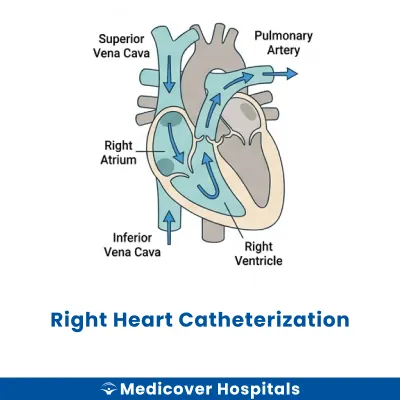
Right heart catheterization is a medical procedure used to examine the right side of the heart. It involves inserting a catheter (a thin, flexible tube) into a vein, usually in the neck or groin. The catheter is then guided into the right atrium and right ventricle of the heart. This procedure helps measure pressures and oxygen levels in the heart chambers and pulmonary arteries.
This procedure is needed to diagnose and manage conditions like pulmonary hypertension, heart failure, and congenital heart defects. If left untreated, these conditions can lead to severe complications. Modern approaches include using advanced imaging techniques for precise catheter placement. This ensures accurate diagnosis and effective treatment planning.
Right Heart Catheterization Doctors Near You
Discover experienced cardiologists for right heart catheterization across Medicover locations in India. Choose your city and book a consultation to ensure your heart health is in expert hands.
Why Choose Medicover Hospitals for Right Heart Catheterization?
Get a second opinion from trusted experts and makeconfident, informed decisions.
 Get Second Opinion
Complete Guide To Right Heart Catheterization
Everything you need to know about the procedure, preparation, and recovery
Right Heart Catheterization Procedure Indications
Doctors recommend right heart catheterization to evaluate heart and lung function. It helps diagnose and manage various cardiovascular conditions when symptoms persist despite initial treatments.
Pulmonary Hypertension
Patients may experience shortness of breath and fatigue. Doctors find elevated pulmonary artery pressure on echocardiograms. When symptoms worsen despite medication, catheterization is needed for accurate pressure measurement.
Heart Failure
Symptoms include swelling in the legs and difficulty breathing. Tests may show reduced cardiac output. If symptoms persist despite medication, catheterization helps assess the severity and guide treatment.
Congenital Heart Disease
Patients often have cyanosis or unusual heart sounds. Imaging may reveal structural heart defects. When non-invasive tests are inconclusive, catheterization provides detailed information for diagnosis.
Valvular Heart Disease
Symptoms include chest pain and breathlessness. Doctors may detect abnormal heart murmurs. If symptoms are severe and imaging is unclear, catheterization assesses valve function and pressure changes.
Cardiomyopathy
Patients report fatigue and palpitations. Echocardiograms may show abnormal heart muscle function. When symptoms do not improve with medication, catheterization evaluates heart pressures and function.
How to Prepare for Right Heart Catheterization?
Proper preparation is crucial for a successful right heart catheterization. It helps minimize risks and ensures accurate results.
- Medication Review: Inform your doctor about all medications you take, including over-the-counter drugs and supplements.
- Stop Certain Medications: Discontinue NSAIDs, anticoagulants, and herbal supplements as advised by your doctor to reduce bleeding risk.
- Fasting Instructions: Do not eat or drink anything for at least 6-8 hours before the procedure to prepare for anaesthesia.
- Clothing: Wear loose, comfortable clothing on the day of the procedure for ease of movement and comfort.
- Transportation: Arrange for someone to drive you home post-procedure, as you may feel drowsy from anaesthesia.
- Medication List: Bring a list of your current medications, including dosages, to the hospital for reference.
- Pre-Procedure Tests: Complete any required blood tests or imaging studies as directed by your healthcare provider.
- Personal Items: Leave valuables at home and bring only essentials to the hospital.
Right Heart Catheterization Procedure (Step-by-Step)
Right heart catheterization is performed by a heart specialist. It typically takes about 30 minutes to an hour. Local anaesthesia is used to numb the area.
- Preparation: The patient lies on a table. The skin is cleaned and numbed with local anaesthesia. An intravenous (IV) line may be inserted for medication.
- Insertion: A small incision, about 1-2 cm, is made in the groin, neck, or arm. A sheath is inserted into a vein using a needle and guidewire.
- Catheter Advancement: A catheter is threaded through the sheath into the right side of the heart. The patient may feel slight pressure but should not feel pain.
- Measurement: Instruments like pressure transducers measure blood pressure in the heart and lungs. Blood samples may be taken to assess oxygen levels.
- Imaging: Fluoroscopy (X-ray imaging) guides the catheter. The patient may be asked to hold their breath briefly for clear images.
- Completion: The catheter and sheath are removed. Pressure is applied to the incision site to prevent bleeding. A bandage is placed over the area.
- Recovery: The patient is monitored for a few hours. They should rest and avoid strenuous activities for a day or two.
Who performs the right heart catheterization procedure?
A cardiologist, a specialist in heart conditions, performs the procedure. They are trained to use catheters and imaging equipment to assess heart function. Please contact the hospital for current details as insurance panels may change.
Recovery After Right Heart Catheterization Procedure
Recovery from a right heart catheterization is generally swift. Most patients can return home the same day. However, it's important to follow specific guidelines to ensure a smooth recovery.
Day 1:
- Rest is crucial. Avoid any strenuous activities.
- Keep the catheter site clean and dry.
- Stick to a light diet. Opt for easily digestible foods like curd, dal-rice, or khichdi.
Day 2-3:
- Gradually resume light activities. Walking is encouraged.
- Continue with a balanced diet. Include moong dal and soups for nutrition.
- Monitor the catheter site for any signs of infection.
Day 4-7:
- Most patients can return to work or school, depending on their comfort level.
- Avoid heavy lifting or vigorous exercise.
- Maintain hydration and a healthy diet.
Week 2:
- Resume normal activities as tolerated.
- Continue to eat a balanced diet with plenty of fruits and vegetables.
- Follow up with your doctor as scheduled.
When to Seek Urgent Help:
- Contact a doctor if you experience chest pain, shortness of breath, or excessive bleeding from the catheter site.
- Seek immediate care if there is swelling or redness at the catheter site.
- Unusual symptoms like dizziness or fainting should be reported promptly.
Benefits of Right heart catheterization procedure
Right heart catheterization is a diagnostic procedure that provides valuable insights into heart function and blood flow.
- Accurate Diagnosis: Helps in diagnosing pulmonary hypertension and heart failure.
- Direct Measurement: Measures pressures in the right side of the heart and lungs.
- Guides Treatment: Assists in planning appropriate treatment for heart conditions.
- Evaluates Treatment Effectiveness: Monitors the effectiveness of ongoing treatments.
Risks and Complications of Right heart catheterization procedure
While generally safe, right heart catheterization does carry some risks. It is important to be aware of potential complications.
- Common: Bruising or bleeding at the catheter insertion site.
- Common: Arrhythmias or irregular heartbeats during the procedure.
- Rare: Infection at the catheter insertion site.
- Rare: Damage to blood vessels or heart structures.
- Rare: Allergic reactions to contrast dye or medications used.
- Rare: Blood clots forming during or after the procedure.
Cost of Right heart catheterization procedure
The cost of a Right heart catheterization procedure at Medicover Hospitals varies depending on the ward category. Prices range from Rs. 600 to Rs. 1350 across different ward types. This ensures that patients can choose a suitable option based on their needs and budget.
We offer transparent pricing and support for insurance and TPA, including CGHS, ESI, and major TPAs. A cashless facility is also available for added convenience. Please contact the hospital for the latest insurance panel details as these may change periodically.
Frequently Asked Questions
1. How much does Right heart catheterization cost?
The Right heart catheterization procedure costs between Rs. 600 and Rs. 1350 across Medicover Hospitals.
2. Is Right heart catheterization covered by insurance?
Right heart catheterization is often covered by CGHS, ESI, and major TPAs. Please contact the hospital for current panel details.
3. Will I feel breathless after Right heart catheterization?
Some patients may experience mild breathlessness post-procedure. It usually resolves within a few days with rest and care.
4. Can I drive immediately after Right heart catheterization?
Driving is not recommended immediately after the procedure. Patients should wait at least 24 hours to ensure full recovery.
5. What foods should I eat after Right heart catheterization?
Consume light meals like curd, dal-rice, and khichdi. Avoid heavy and spicy foods for a few days post-procedure.
6. Is swelling normal after Right heart catheterization?
Mild swelling at the catheter insertion site is common. It should subside within a few days with proper care.
7. Can Right heart catheterization affect my heart rhythm?
There is a small risk of temporary heart rhythm changes. These are usually monitored and managed during the procedure.
8. How serious is a right heart catheterization?
Right heart catheterization is generally considered a safe and minimally invasive procedure, but it is still a medical procedure with some risks. Serious complications are rare when performed by experienced specialists.
9. What is the recovery time for a right heart catheterization?
Recovery is usually quick, with most patients resuming normal activities within 24 to 48 hours. Some may require short observation in the hospital depending on their condition.
10. Are you awake during a right heart catheterization?
Yes, patients are usually awake but relaxed, as the procedure is performed under local anesthesia with mild sedation.


