 Call
Call Patient Reports
Right Femoral Sequestrectomy with Saucerization and Debridement Surgery Hospital by Expert Orthopedics
At Medicover Hospitals, Right Femoral Sequestrectomy with Saucerization and Debridement is performed using an open surgical approach. Our team includes MS and DNB-qualified orthopaedic surgeons. This procedure often results in reduced blood loss and shorter hospital stays for patients.
Expert Surgeons
Yearly Surgeries
Patient Satisfaction
What is Right Femoral Sequestrectomy With Saucerization and Debridement?
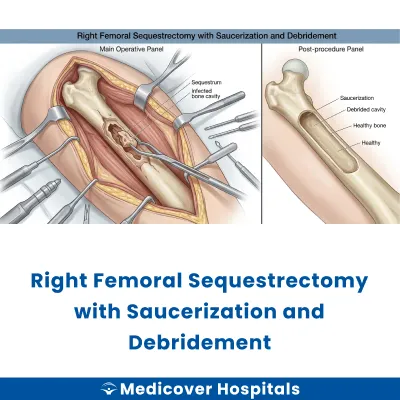
Right Femoral Sequestrectomy with Saucerization and Debridement is a surgical procedure involving the femur (thigh bone). It focuses on removing dead bone tissue (sequestrum) and cleaning the affected area. Saucerization shapes the bone to aid healing, while debridement removes infected or damaged tissue. This helps in promoting recovery and preventing further complications.
This surgery is needed for conditions like osteomyelitis, which is a bone infection. If untreated, it can lead to severe pain, swelling, and even bone loss. Modern surgical approaches include minimally invasive techniques and advanced imaging for precision. These methods aim to reduce recovery time and improve outcomes. Early intervention is crucial to prevent long-term damage.
Right Femoral Sequestrectomy With Saucerization and Debridement Doctors Near You
Find experienced orthopedics for right femoral sequestrectomy with saucerization and debridement at Medicover Hospitals across India. Choose your city and book a consultation today for expert care.
Why Choose Medicover Hospitals for Right Femoral Sequestrectomy With Saucerization and Debridement?
Get a second opinion from trusted experts and makeconfident, informed decisions.
 Get Second Opinion
Complete Guide To Right Femoral Sequestrectomy With Saucerization And Debridement
Everything you need to know about the procedure, preparation, and recovery
Right Femoral Sequestrectomy with Saucerization and Debridement Surgery Indications
Doctors recommend Right Femoral Sequestrectomy with Saucerization and Debridement when there is a need to remove dead bone tissue from the femur. This procedure is often necessary when conservative treatments fail to resolve the underlying issues.
Chronic Osteomyelitis
Patients may experience persistent pain and swelling in the thigh area. Imaging tests like MRI or X-rays reveal dead bone tissue (sequestrum) in the femur. When antibiotics and other treatments do not alleviate symptoms, surgery is considered.
Bone Abscess
Severe pain and tenderness in the thigh may occur, often accompanied by fever. Scans show a collection of pus within the bone. If drainage and antibiotics are ineffective, surgical intervention becomes necessary.
Non-healing Bone Infection
Patients might notice continuous pain and redness over the affected area. Lab tests show elevated inflammatory markers. If prolonged antibiotic therapy fails, surgery is recommended to remove infected tissue.
Severe Bone Necrosis
Individuals may report intense pain and limited mobility. Imaging reveals significant bone death. When conservative management does not improve the condition, surgical removal of necrotic bone is advised.
Recurrent Infections
Frequent infections with symptoms like swelling and warmth in the thigh can occur. Blood tests may indicate ongoing infection. If repeated antibiotic courses do not resolve the issue, surgery is needed to address the root cause.
How to Prepare for Right Femoral Sequestrectomy with Saucerization and Debridement?
Proper preparation is crucial for a smooth surgery and recovery. It helps reduce risks and ensures the procedure goes as planned.
- Medication Review: Stop NSAIDs, anticoagulants, and herbal supplements 7-10 days before surgery.
- Fasting: Fast for at least 8 hours before the procedure if general anaesthesia is used.
- Pre-Surgery Tests: Complete all required blood tests and imaging studies as advised by your doctor.
- Clothing: Wear loose, comfortable clothing on the day of the surgery for easy movement post-procedure.
- Transportation: Arrange for someone to drive you home after the surgery.
- Medication List: Bring a list of all medications you are taking, including dosages, to the hospital.
- Hygiene: Bathe with an antiseptic soap the night before and the morning of the surgery.
- Smoking and Alcohol: Avoid smoking and alcohol for at least 24 hours before the surgery.
Right Femoral Sequestrectomy with Saucerization and Debridement Surgery (Step-by-Step)
Overview: This procedure is performed by orthopedic surgeons. It typically lasts 1-2 hours. General anaesthesia is commonly used to ensure the patient is asleep and pain-free during the surgery.
- Preparation: The patient is positioned on the operating table. The surgical area is cleaned and sterilized. Anaesthesia is administered.
- Incision: A 5-10 cm incision is made over the affected area of the right femur. This provides access to the bone.
- Sequestrectomy: The surgeon uses instruments like curettes to remove dead or infected bone tissue, known as sequestrum, from the femur.
- Saucerization: The bone is shaped into a saucer-like form. This is done to promote drainage and healing. Curettes and rongeurs are used for this process.
- Debridement: Harmonic scalpel or bipolar cautery may be used to remove any remaining diseased tissue. This helps in reducing infection risk.
- Closure: The incision is closed with sutures or staples. A sterile dressing is applied to protect the wound.
- Recovery: The patient is moved to a recovery area. Vital signs are monitored as they wake up from anaesthesia.
Who Performs Right Femoral Sequestrectomy with Saucerization and Debridement Surgery?
This surgery is performed by orthopaedic surgeons. They specialise in treating bone and joint conditions. Their expertise ensures the procedure is conducted safely and effectively.
Recovery After Right Femoral Sequestrectomy with Saucerization and Debridement Surgery
Recovery from this surgery involves careful monitoring and gradual return to daily activities. It is important to follow medical advice to ensure proper healing and avoid complications.
Day 1-3:
- Rest is crucial. Keep the leg elevated to reduce swelling.
- Pain management with prescribed medications.
- Start with a liquid diet, gradually moving to soft foods like khichdi and moong dal.
Day 4-7:
- Begin gentle movements as advised by your doctor.
- Continue with a balanced diet. Include curd, dal-rice, and soups to aid digestion and recovery.
- Regular dressing changes and wound care.
Week 2-4:
- Increase activity gradually. Avoid putting full weight on the leg.
- Physical therapy may begin to improve mobility.
- Return to work or school may be possible if it involves minimal physical activity.
Phase 2 (Month 1-3):
- Continue with physiotherapy to strengthen the leg.
- Normal diet can be resumed, focusing on nutritious meals.
- Gradually increase walking and other activities as tolerated.
When to Seek Urgent Help
- Fever or chills indicating possible infection.
- Severe pain not relieved by medication.
- Redness, swelling, or discharge from the surgical site.
- Sudden difficulty in moving the leg.
Benefits of Right Femoral Sequestrectomy with Saucerization and Debridement Surgery
This procedure helps in managing chronic bone infections effectively.
- Infection Control: Removes infected bone tissue, reducing infection spread.
- Pain Relief: Alleviates pain by eliminating necrotic tissue.
- Improved Mobility: Enhances limb function by addressing the underlying issue.
- Prevention of Complications: Reduces the risk of further complications like abscess formation.
Risks and Complications of Right Femoral Sequestrectomy with Saucerization and Debridement Surgery
While generally safe, this surgery carries certain risks and potential complications.
- Common: Infection at the surgical site.
- Common: Bleeding during or after the procedure.
- Rare: Nerve damage leading to sensory changes.
- Rare: Delayed wound healing.
- Rare: Recurrence of infection requiring further treatment.
- Rare: Blood clots in the leg.
Cost of Right Femoral Sequestrectomy with Saucerization and Debridement Surgery
The cost of Right Femoral Sequestrectomy with Saucerization and Debridement Surgery at Medicover Hospitals ranges from Rs. 2500 to Rs. 5000, depending on the ward category. Prices are transparent, and we offer insurance and TPA support, including CGHS, ESI, and major TPAs. Cashless facilities are available to ease your financial concerns. Please contact the hospital for the latest insurance panel details as these may change periodically.
Frequently Asked Questions
1. How much does Right Femoral Sequestrectomy with Saucerization and Debridement surgery cost at Medicover Hospitals?
The cost ranges from Rs. 2500 to Rs. 5000 at Medicover Hospitals. Prices vary based on the type of care and room chosen.
2. Is Right Femoral Sequestrectomy with Saucerization and Debridement surgery covered under health insurance at Medicover?
Yes, it is covered by CGHS, ESI, and major TPAs with cashless options. Please contact the hospital for current panel details.
3. Can I walk immediately after femoral sequestrectomy?
Walking is usually restricted immediately after the surgery. Gradual mobility is encouraged as per the doctor's advice.
4. Will I need physiotherapy after femoral surgery?
Yes, physiotherapy is often recommended to aid recovery. It helps regain strength and mobility in the affected leg.
5. Can I drive after right femoral sequestrectomy?
Driving is usually not advised for a few weeks post-surgery. Consult your doctor for a specific timeline based on your recovery.
6. Will there be a scar after saucerization?
Yes, a scar is likely after the procedure. It typically fades over time but varies depending on individual healing.
7. Is infection a risk after femoral debridement?
Infection is a potential risk post-surgery. Proper wound care and hygiene are crucial to minimize this risk.


