 Call
Call Patient Reports
Revision Total Knee Replacement Surgery by Expert Orthopedics
At Medicover Hospitals, our team of skilled orthopaedic surgeons, with qualifications like MS, DNB, and fellowships, specialise in Revision Total Knee Replacement using robotic techniques. This advanced approach often results in smaller incisions and reduced blood loss, enhancing patient recovery across India.
Expert Surgeons
Yearly Surgeries
Patient Satisfaction
What is Revision Total Knee Replacement?
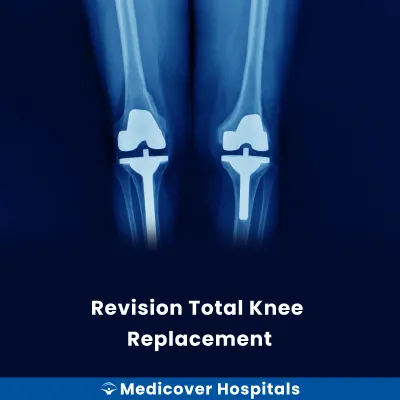
Revision Total Knee Replacement is a surgical procedure involving the knee joint. It replaces or repairs a previously implanted artificial knee joint (prosthesis). This surgery is necessary when the initial knee replacement fails or wears out over time. The goal is to restore function and relieve pain in the knee.
This surgery is needed due to loosening, infection, or wear of the original prosthesis. Conditions like persistent pain or instability can also lead to revision surgery. If untreated, these issues can cause severe pain and mobility problems. Modern surgical approaches include minimally invasive techniques and computer-assisted surgery. These methods aim to improve outcomes and reduce recovery time.
Revision Total Knee Replacement Doctors Near You
Discover experienced orthopedics for revision total knee replacement at Medicover Hospitals across India. Choose your city and book a consultation to explore treatment options tailored to your needs.
Why Choose Medicover Hospitals for Revision Total Knee Replacement?
Get a second opinion from trusted experts and makeconfident, informed decisions.
 Get Second Opinion
Complete Guide To Revision Total Knee Replacement
Everything you need to know about the procedure, preparation, and recovery
Revision Total Knee Replacement Surgery Indications
Doctors recommend revision total knee replacement surgery when the initial knee replacement no longer functions effectively. This procedure is considered when symptoms and diagnostic findings indicate significant issues with the existing implant.
Implant Loosening
Patients may experience persistent pain and instability in the knee. X-rays or other imaging may show gaps between the bone and the implant. When physical therapy and medications fail to alleviate symptoms, surgery may be necessary.
Infection
Signs include swelling, redness, and warmth around the knee, often accompanied by fever. Blood tests and joint fluid analysis may confirm infection. If antibiotics and other treatments do not resolve the infection, revision surgery may be required.
Wear and Tear
Patients often report increased pain and decreased knee function over time. Imaging may reveal worn-out components of the implant. When conservative measures like pain management and physical therapy are ineffective, surgery is considered.
Instability
Patients may feel the knee giving way or experience frequent falls. Clinical examination and imaging can show misalignment or loose components. When bracing and rehabilitation do not improve stability, revision surgery is an option.
Stiffness
Patients may struggle with limited range of motion and knee stiffness. Physical examination and imaging may show scar tissue or improper implant positioning. If exercises and therapy do not help, surgery might be needed.
How to Prepare for Revision Total Knee Replacement?
Proper preparation is crucial for a successful revision total knee replacement. It helps minimise complications and ensures a smoother recovery process.
- Medication Review: Stop NSAIDs, anticoagulants, and herbal supplements as advised by your doctor.
- Fasting: Follow the recommended fasting period of 8-12 hours before the surgery for anaesthesia safety.
- Pre-surgery Exercises: Engage in prescribed exercises to strengthen muscles around the knee.
- Clothing: Wear loose, comfortable clothing on the day of surgery for easy dressing post-operation.
- Transport Arrangement: Arrange for someone to drive you home after discharge from the hospital.
- Medication List: Bring a list of current medications with dosages for hospital records.
- Home Preparation: Set up a recovery area at home with essentials within easy reach.
- Pre-surgery Tests: Complete any required blood tests or imaging as scheduled by your healthcare provider.
Revision Total Knee Replacement Surgery (Step-by-Step)
Overview: Revision Total Knee Replacement is performed by orthopaedic surgeons. The procedure typically lasts 2-3 hours. It is usually done under general or regional anaesthesia.
- Preparation: The patient is positioned on the operating table. Anaesthesia is administered to ensure comfort and pain-free surgery.
- Incision: A 15-20 cm incision is made over the knee. This allows access to the knee joint.
- Removal of Old Prosthesis: The surgeon carefully removes the existing knee prosthesis. Instruments like a curette and harmonic scalpel may be used to detach the prosthesis from the bone.
- Bone Preparation: The bone surfaces are prepared for the new implant. A coblation wand may be used to clean and smooth the bone.
- Implantation of New Prosthesis: The new knee components are placed and secured. The surgeon ensures proper alignment and fit.
- Closure: The incision is closed with sutures or staples. A sterile dressing is applied to protect the area.
- Recovery: The patient is moved to the recovery room. Vital signs are monitored as the anaesthesia wears off.
Who Performs Revision Total Knee Replacement Surgery?
Revision Total Knee Replacement is performed by orthopaedic surgeons. These specialists have expertise in joint surgeries and managing complex cases. They use precision instruments to ensure successful outcomes.
Recovery After Revision Total Knee Replacement Surgery
Recovery from revision total knee replacement surgery can be a gradual process. It requires patience and adherence to your doctor's advice. Expect some discomfort and swelling initially, but these should improve over time.
Day 1-3:
- Rest and elevate your leg to reduce swelling.
- Begin gentle physiotherapy as advised.
- Start with a soft diet including curd, dal-rice, and soups.
Day 4-7:
- Continue physiotherapy exercises to improve mobility.
- Gradually increase your activity level, but avoid strenuous tasks.
- Include easily digestible foods like khichdi and moong dal.
Day 8-14:
- Focus on increasing knee flexibility and strength.
- Walk short distances with support.
- Maintain a balanced diet with proteins and vitamins for healing.
Phase 3 (Week 3-6):
- Continue physiotherapy to enhance knee function.
- Begin to resume light activities and household tasks.
- Consult your doctor about returning to work or school.
Phase 4 (Week 7-12):
- Engage in low-impact exercises like walking and swimming.
- Gradually return to normal activities as tolerated.
- Follow a nutritious diet to support ongoing recovery.
When to Seek Urgent Help
- Severe pain or swelling that doesn't improve.
- Signs of infection like redness, warmth, or discharge.
- Sudden difficulty in moving the knee.
- Fever or chills.
Benefits of Revision Total Knee Replacement Surgery
Revision total knee replacement surgery can restore function and relieve pain when a previous knee replacement fails.
- Pain Relief: Alleviates chronic pain caused by a failing knee implant.
- Improved Mobility: Enhances movement and flexibility in the knee joint.
- Increased Stability: Provides better joint stability, reducing the risk of falls.
- Extended Implant Life: Replaces worn-out components, potentially extending the lifespan of the knee joint.
Risks and Complications of Revision Total Knee Replacement Surgery
As with any surgery, there are risks involved. It's important to be aware of them before proceeding.
Common Risks
- Infection (Common): Risk of infection at the surgical site.
- Blood Clots (Common): Potential for clots in the legs or lungs.
Rare Risks
- Nerve Damage (Rare): Possibility of nerve injury during surgery.
- Implant Loosening (Rare): The new implant may become loose over time.
- Fractures (Rare): Risk of bone fractures during or after the procedure.
- Allergic Reactions (Rare): Reaction to the materials used in the implant.
Cost of Revision Total Knee Replacement Surgery
The cost of Revision Total Knee Replacement Surgery at Medicover Hospitals ranges from ₹2,50,000 and ₹6,50,000. The price varies depending on the ward category chosen, such as general, private, or deluxe suites.
We offer transparent pricing and support for insurance and TPA, including CGHS, ESI, and major TPAs. A cashless facility is also available for your convenience. Please contact the hospital for the latest insurance panel details as these may change periodically.
Frequently Asked Questions
1. How much does Revision Total Knee Replacement surgery cost at Medicover Hospitals?
The cost ranges from ₹2,50,000 and ₹6,50,000 depending on the room type. Prices vary across Medicover Hospitals.
2. Is Revision Total Knee Replacement surgery covered under health insurance at Medicover?
Yes, it is often covered by CGHS, ESI, and major TPAs, with cashless options. Please contact the hospital for current panel details.
3. Will I need physiotherapy after knee revision?
Yes, physiotherapy is crucial for regaining mobility and strength. It usually starts soon after surgery and continues for several weeks.
4. Can I kneel after a knee revision surgery?
Kneeling may be difficult and uncomfortable after surgery. Consult your doctor for specific guidance based on your recovery progress.
5. What are signs of infection after knee revision?
Watch for increased pain, redness, or swelling, and fever. Report any of these symptoms to your doctor immediately.
6. Will I need a walker after knee revision?
Yes, a walker or crutches are typically needed initially. They help support your mobility during the early recovery phase.
7. Can I eat spicy food after knee revision?
It's advisable to start with bland foods like curd and khichdi. Gradually reintroduce spicy foods as your body adjusts.


