 Call
Call Patient Reports
Best Hospital for Revision Total Hip Replacement with Advanced Orthopedic Care
Revision Total Hip Replacement at Medicover Hospitals is performed using the open surgical approach. Our team of MS and DNB-qualified orthopaedic surgeons specialises in joint replacement surgeries. This procedure often results in reduced blood loss and a shorter hospital stay for patients.
Expert Surgeons
Yearly Surgeries
Patient Satisfaction
What is Revision Total Hip Replacement?
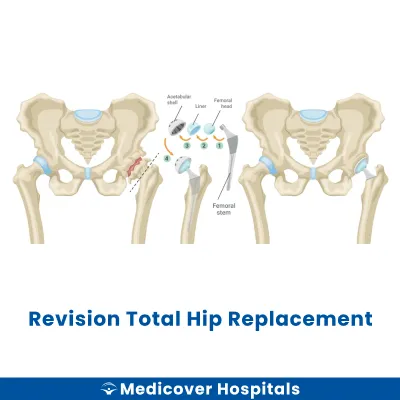
Revision Total Hip Replacement is a surgical procedure involving the hip joint. It replaces or repairs a previously implanted artificial hip joint (prosthesis) that has failed or worn out. This surgery addresses issues with the femur and acetabulum, which are parts of the hip joint. The procedure aims to restore function and relieve pain.
This surgery is needed when the original hip replacement fails. Causes include wear and tear, infection, or dislocation. If untreated, it can lead to severe pain and impaired mobility. Modern surgical approaches for Revision Total Hip Replacement include minimally invasive techniques and computer-assisted surgery. These methods help improve outcomes and reduce recovery time.
Revision Total Hip Replacement Doctors Near You
Find expert orthopedics for revision total hip replacement at Medicover Hospitals across India. Choose your city and book a consultation to discuss your needs with our specialists.
Why Choose Medicover Hospitals for Revision Total Hip Replacement?
Get a second opinion from trusted experts and makeconfident, informed decisions.
 Get Second Opinion
Complete Guide To Revision Total Hip Replacement
Everything you need to know about the procedure, preparation, and recovery
Revision Total Hip Replacement Surgery Indications
Doctors recommend revision total hip replacement when the initial hip replacement fails or causes complications. This procedure aims to restore function and relieve pain when conservative treatments are ineffective.
Prosthetic Loosening
Patients may experience increasing pain and instability in the hip. X-rays or scans show movement or gaps around the implant. Surgery is considered when pain persists despite medication and physical therapy.
Infection
Signs include fever, swelling, and redness around the hip. Blood tests and imaging may reveal an infection. If antibiotics and other treatments do not resolve the infection, revision surgery is necessary.
Recurrent Dislocation
Patients suffer from repeated hip dislocations, causing pain and limited movement. Imaging shows improper alignment or implant issues. Surgery is needed when dislocations occur frequently despite bracing or activity modification.
Wear and Tear
Patients experience pain and reduced mobility due to implant wear. X-rays reveal thinning or damage to the implant surfaces. Surgery is advised when pain and dysfunction persist despite lifestyle changes and medications.
Fracture Around the Implant
Sudden pain and inability to bear weight may indicate a fracture. X-rays confirm a break near the implant. Surgery is required when the fracture cannot be managed with immobilization or conservative methods.
How to Prepare for Revision Total Hip Replacement?
Proper preparation for revision total hip replacement is crucial for a smooth surgery and recovery. It helps minimise complications and ensures a better outcome.
- Medication Management: Stop NSAIDs, anticoagulants, and herbal supplements as advised by your doctor to reduce bleeding risk.
- Fasting Guidelines: Follow the 8-hour fasting rule before surgery to ensure safety during anaesthesia.
- Pre-Surgical Exercises: Engage in pelvic floor exercises to strengthen muscles and aid post-surgery recovery.
- Clothing: Wear loose, comfortable clothing on the day of surgery for easy dressing post-operation.
- Transportation: Arrange for someone to drive you home after discharge, as you won't be able to drive yourself.
- Medication List: Bring a list of all medications with dosages to share with your healthcare team.
- Home Preparation: Set up a recovery area at home with essentials within reach to avoid unnecessary movement.
- Pre-Op Consultation: Attend all scheduled pre-operative appointments for assessments and instructions.
Revision Total Hip Replacement Surgery (Step-by-Step)
Revision Total Hip Replacement is performed by orthopaedic surgeons. The procedure typically lasts 2-4 hours. It is done under general or regional anaesthesia.
- Preparation: The patient is positioned on the operating table. Anaesthesia is administered to ensure comfort. The surgical area is cleaned and sterilised.
- Incision: A 15-20 cm incision is made over the hip. This provides access to the joint. The patient will not feel pain due to anaesthesia.
- Removal of Old Implant: The surgeon carefully removes the old hip prosthesis. Instruments like a curette and harmonic scalpel are used. The patient remains unaware of the procedure.
- Bone Preparation: The bone is prepared for the new implant. A coblation wand may be used to clean and shape the bone. The patient is still under anaesthesia.
- Implantation of New Prosthesis: The new hip implant is positioned and secured. A bipolar cautery may be used to control bleeding. The patient remains comfortable and pain-free.
- Closure: The incision is closed with sutures or staples. A sterile dressing is applied. The patient begins to regain consciousness as anaesthesia wears off.
- Recovery: The patient is moved to the recovery room. Vital signs are monitored. Pain management begins as needed.
Who Performs Revision Total Hip Replacement Surgery?
Revision Total Hip Replacement is performed by orthopaedic surgeons. These specialists have expertise in joint surgeries and managing complex cases. They use advanced techniques to ensure successful outcomes.
Recovery After Revision Total Hip Replacement Surgery
Recovery after revision total hip replacement surgery is a gradual process. It involves rest, rehabilitation, and gradual resumption of daily activities. Following your surgeon's advice is crucial for optimal recovery.
Day 1-3:
- Hospital stay is common. Pain management and monitoring are priorities.
- Begin with a liquid diet, gradually moving to soft foods like curd and soups.
- Initial physiotherapy sessions may start to encourage gentle movement.
Day 4-7:
- Transition to a balanced diet including dal-rice, khichdi, and moong dal for protein and energy.
- Continue physiotherapy to improve mobility. Use of a walker or crutches is advised.
- Avoid bending or twisting the hip excessively.
Week 2-4:
- Increase activity levels gradually. Short walks are encouraged.
- Focus on a nutritious diet to aid healing. Include fruits and vegetables.
- Most patients can resume light activities but avoid heavy lifting.
Month 1-3:
- Continue physiotherapy to strengthen muscles and improve flexibility.
- Driving and returning to work or school may be possible, depending on recovery.
- Maintain a balanced diet to support ongoing recovery.
When to Seek Urgent Help:
- Severe pain or swelling in the operated leg.
- Fever or chills indicating possible infection.
- Sudden difficulty in moving the hip or leg.
Benefits of Revision Total Hip Replacement Surgery
Revision total hip replacement surgery can significantly improve quality of life for those with failed or problematic hip implants.
- Pain Relief: Alleviates chronic pain caused by worn-out or damaged implants.
- Improved Mobility: Restores movement and function, allowing for better daily activities.
- Enhanced Stability: Provides a more secure joint, reducing the risk of dislocation.
- Extended Implant Life: Replaces or repairs components to prolong the lifespan of the hip joint.
Risks and Complications of Revision Total Hip Replacement Surgery
While revision total hip replacement can offer significant benefits, it also carries certain risks and potential complications.
- Infection: Risk of infection at the surgical site or around the implant.
- Blood Clots: Potential for clots forming in the legs or lungs.
- Implant Loosening: The new implant may become loose over time.
- Nerve Damage: Possibility of nerve injury during surgery.
- Fractures: Bone fractures can occur around the implant.
- Allergic Reactions: Some patients may react to the materials used in implants.
What is the Cost of Revision Total Hip Replacement Surgery?
The cost of Revision Total Hip Replacement Surgery at Medicover Hospitals varies depending on the ward category chosen. Prices range from Rs. 1,40,930 to Rs. 5,00,000. This range ensures that patients can select a ward type that suits their needs and budget.
We offer transparent pricing and support for insurance and TPA, including CGHS, ESI, and major TPAs, with a cashless facility available. Please contact the hospital for the latest insurance panel details as these may change periodically.
Frequently Asked Questions
1. How much does Revision Total Hip Replacement surgery cost at Medicover Hospitals?
The cost for Revision Total Hip Replacement surgery at Medicover Hospitals ranges from Rs. 1,40,930 to Rs. 5,00,000, depending on the room type and care required.
2. Is Revision Total Hip Replacement surgery covered under health insurance at Medicover?
Yes, it is often covered by CGHS, ESI, and major TPAs, with cashless options available. Please contact the hospital for current panel details.
3. Will I need crutches after Revision Total Hip Replacement?
Yes, crutches are typically needed for a few weeks post-surgery. This helps in stabilising your hip and aids in a safer recovery.
4. Can I sit cross-legged after hip revision surgery?
Sitting cross-legged is usually discouraged after hip revision surgery. It may increase the risk of dislocation and should be avoided unless advised otherwise by your doctor.
5. When can I drive after Revision Total Hip Replacement?
Driving is generally safe to resume 6-8 weeks after surgery. Ensure you have regained full control and strength in your leg before attempting to drive.
6. What are the signs of hip dislocation post-surgery?
Signs of hip dislocation include sudden pain, inability to move the leg, and a noticeable shortening of the leg. Immediate medical attention is necessary if these occur.
7. Can I eat spicy food after Revision Total Hip Replacement?
Spicy food is best avoided immediately after surgery to prevent stomach discomfort. Opt for bland foods like curd, dal-rice, or khichdi during recovery.


