 Call
Call Patient Reports
Best Hospital for Resection of Rib and Drainage Surgery with Advanced Thoracic Care
The Resection of Rib and Drainage procedure at Medicover Hospitals is performed using an open surgical approach. Our team of cardiothoracic and vascular surgeons, with qualifications like MS, DNB, and MCh, ensures precise care. This approach often results in reduced blood loss and quicker recovery.
Expert Surgeons
Yearly Surgeries
Patient Satisfaction
What is Resection of Rib and Drainage?
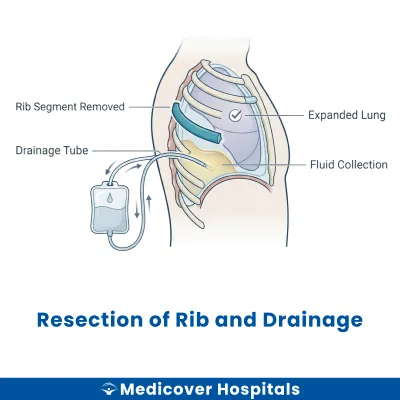
Resection of Rib and Drainage is a surgical procedure involving the removal of a portion of a rib. This is done to access and drain fluid or pus from the pleural cavity (space between the lungs and chest wall). It helps in treating infections or other conditions affecting the chest area. The procedure ensures proper drainage and prevents complications.
This surgery is often needed for conditions like empyema (collection of pus in the pleural space) or severe pleuritis (inflammation of the pleura). If left untreated, these conditions can lead to serious health issues, including respiratory distress. Modern surgical approaches, such as video-assisted thoracoscopic surgery (VATS), offer minimally invasive options for rib resection and drainage.
Resection of Rib and Drainage Doctors Near You
Find expert CTVS-cardiothoracic-and-vascular-surgery specialists for rib resection and drainage at Medicover Hospitals across India. Choose your city and book a consultation today for professional care.
Why Choose Medicover Hospitals for Resection of Rib and Drainage?
Get a second opinion from trusted experts and makeconfident, informed decisions.
 Get Second Opinion
Complete Guide To Resection Of Rib And Drainage
Everything you need to know about the procedure, preparation, and recovery
Resection of Rib and Drainage Surgery Indications
Doctors recommend resection of rib and drainage surgery when conservative treatments fail to address specific thoracic conditions. This procedure helps relieve symptoms and prevent complications in cases involving the ribs and surrounding tissues.
Empyema
Patients may experience chest pain, fever, and difficulty breathing. Imaging tests like chest X-rays or CT scans reveal fluid accumulation in the pleural space. When antibiotics and drainage through a chest tube do not resolve the infection, surgery becomes necessary.
Rib Tumours
Patients might notice a lump, pain, or swelling in the rib area. Imaging studies such as MRI or CT scans show abnormal growths on the ribs. When biopsy tests confirm malignancy or the tumor causes significant symptoms, surgical resection is indicated.
Osteomyelitis of the Rib
Symptoms include persistent pain, fever, and swelling over the affected rib. Blood tests and imaging reveal infection in the bone. If antibiotics and other treatments fail to control the infection, resection of the affected rib is required.
Chest Wall Deformities
Patients may experience breathing difficulties or cosmetic concerns. Physical examination and imaging show structural abnormalities in the chest wall. When these issues impact quality of life and do not improve with non-surgical methods, surgery is advised.
Traumatic Rib Fractures
Severe pain and difficulty breathing are common symptoms. X-rays or CT scans show displaced rib fractures. When conservative treatments like pain management do not alleviate symptoms or complications arise, surgical intervention is needed.
How to Prepare for Resection of Rib and Drainage?
Proper preparation is crucial for a smooth surgery and recovery. It helps minimise risks and ensures optimal outcomes for the resection of rib and drainage procedure.
- Medication Management: Stop NSAIDs, anticoagulants, and herbal supplements 7-10 days before surgery.
- Fasting Guidelines: Do not eat or drink anything for at least 8 hours before the procedure.
- Pre-Surgery Tests: Complete any required blood tests, X-rays, or imaging studies as advised by your doctor.
- Clothing: Wear loose, comfortable clothing on the day of the surgery.
- Transportation: Arrange for someone to drive you home post-surgery, as you will not be able to drive yourself.
- Medication List: Bring a list of all medications you are currently taking, including dosages.
- Smoking and Alcohol: Avoid smoking and alcohol at least 24 hours before the surgery.
- Personal Items: Leave valuables at home and bring only essentials to the hospital.
Resection of Rib and Drainage Surgery (Step-by-Step)
Resection of rib and drainage surgery is performed by experienced specialists from the Cardiothoracic department. The procedure usually takes 2-3 hours and is carried out under general anaesthesia.
- Preparation: The patient is positioned on the operating table. An intravenous line is started for medication and fluids. Monitoring devices are attached to track vital signs.
- Incision: A 1-2 cm incision is made over the affected rib area. This allows access to the rib and underlying tissues.
- Rib Resection: Using a rib cutter and rongeur, the surgeon carefully removes a portion of the rib. This step is crucial for accessing the area needing drainage.
- Drainage: A curette or suction device is used to remove any fluid or pus from the area. This helps reduce infection and promotes healing.
- Closure: The incision is closed with sutures or staples. A drain may be placed to prevent fluid accumulation. The area is then covered with a sterile dressing.
- Recovery: The patient is moved to a recovery room. Vital signs are monitored as the anaesthesia wears off. Pain management is provided as needed.
Who Performs Resection of Rib and Drainage Surgery?
This surgery is performed by cardiothoracic and vascular surgeons. These specialists are trained to handle complex procedures involving the chest and its structures. They use precise techniques to ensure effective treatment and recovery.
Recovery After Resection of Rib and Drainage Surgery
Recovery from resection of rib and drainage surgery involves gradual healing and regaining strength. It is important to follow medical advice for a smooth recovery process.
Day 1-3:
- Expect some pain and discomfort. Pain management will be provided.
- Rest is crucial. Avoid any strenuous activities.
- Begin with a liquid diet, including soups and broths.
Day 4-7:
- Pain should gradually decrease. Continue prescribed medications.
- Introduce soft foods like khichdi, moong dal, and curd.
- Short walks around the house are encouraged to improve circulation.
Day 8-14:
- Resume light activities as tolerated. Avoid heavy lifting.
- Include dal-rice and steamed vegetables in your diet.
- Continue to monitor the surgical site for any changes.
Phase 3 (Week 3-4):
- Gradually increase activity levels. Consult your doctor before resuming work or school.
- Maintain a balanced diet to support healing.
- Regular follow-up appointments are essential.
When to Seek Urgent Help
- Sudden increase in pain or swelling at the surgical site.
- Fever or chills indicating possible infection.
- Difficulty breathing or persistent cough.
- Unusual discharge or bleeding from the incision.
Benefits of Resection of Rib and Drainage Surgery
Resection of rib and drainage surgery is performed to relieve symptoms and treat conditions affecting the chest wall or lungs.
- Pain Relief: Helps alleviate pain caused by rib abnormalities or infections.
- Improved Breathing: Facilitates better lung function by removing obstructions.
- Infection Control: Drains abscesses or infected fluids, reducing infection risk.
- Enhanced Mobility: Reduces discomfort, allowing for improved movement and activity.
Risks and Complications of Resection of Rib and Drainage Surgery
While generally safe, resection of rib and drainage surgery carries some risks. Patients should be aware of potential complications.
- Common: Pain at the surgical site, which may require medication.
- Common: Infection risk, necessitating antibiotics or further treatment.
- Common: Bleeding during or after the procedure.
- Rare: Damage to surrounding organs or tissues.
- Rare: Persistent numbness or tingling in the chest area.
- Rare: Respiratory complications, such as difficulty breathing.
Cost of Resection of Rib and Drainage Surgery
The cost of Resection of Rib and Drainage Surgery typically ranges from ₹4,500 to ₹13,600, depending on several factors. These include the surgical approach, duration of hospital stay, room category, required diagnostic tests, and postoperative care.
At Medicover Hospitals, we ensure transparent pricing for all procedures. We offer support for insurance and TPA, including CGHS, ESI, and major TPAs, with a cashless facility available. Please contact the hospital for the latest insurance panel details, as these may change periodically.
Frequently Asked Questions
1. How much does Resection of Rib and Drainage cost?
The cost of Resection of Rib and Drainage surgery typically ranges from ₹4,500 to ₹13,
2. However, the overall cost may vary depending on factors such as the surgical approach, duration of hospital stay, room category, required diagnostics, and post-operative care. For exact and updated pricing, please contact Medicover Hospitals, as costs may vary based on individual patient requirements and hospital policies. 2. Is Resection of Rib and Drainage covered by insurance?
This surgery is often covered by CGHS, ESI, and major TPAs. Please contact the hospital for current panel details.
3. Will I experience chest pain after rib resection?
Some patients may experience chest pain post-surgery. Pain management options will be discussed by your healthcare team at Medicover Hospitals.
4. Can I resume normal activities after rib resection?
You may need to limit physical activities for a few weeks. Follow your doctor's guidance for a safe recovery.
5. Will I have breathing difficulties post-surgery?
Breathing difficulties can occur initially after rib resection. Breathing exercises may be recommended to aid recovery.
6. What foods should I eat after rib resection?
Opt for soft foods like curd, dal-rice, and khichdi. These are gentle on the system and aid in recovery.
7. Can infection occur after drainage surgery?
Infection is a potential complication after drainage surgery. Proper wound care and follow-up visits help prevent this.
8. What is the recovery time for a rib resection?
Recovery after rib resection typically takes about 4 to 8 weeks, depending on the extent of surgery and the patient's overall health. Some discomfort and limited movement may persist for a few weeks, with gradual return to normal activities.
9. Is resection surgery a major surgery?
Yes, rib resection is considered a major surgery, as it involves removal of part or all of a rib and may affect surrounding muscles and structures.
10. What are the side effects of rib resection?
Common side effects include pain at the surgical site, swelling, temporary numbness, limited shoulder movement, and fatigue. In some cases, there may be risks of infection, bleeding, or nerve irritation.
11. How should you prepare for first rib resection?
Preparation includes pre-operative tests, stopping certain medications if advised, fasting before surgery, and discussing medical history with your doctor. Patients are also advised to plan for post-surgery care and recovery support at home.


