 Call
Call Patient Reports
Removal of Tibial or Femoral Intramedullary Nail Surgery by Expert Orthopedics
The removal of tibial or femoral intramedullary nails at Medicover Hospitals is performed using an open surgical approach. Our team of MS and DNB qualified orthopaedic surgeons ensures precise care. This procedure typically results in shorter hospital stays for patients across India.
Expert Surgeons
Yearly Surgeries
Patient Satisfaction
What is Removal of Tibial or Femoral Intramedullary Nail?
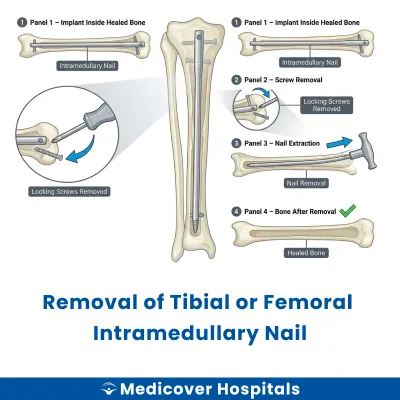
Removal of Tibial or Femoral Intramedullary Nail is a surgical procedure to take out a metal rod (intramedullary nail) from the tibia (shinbone) or femur (thighbone). These nails are often used to stabilize fractures. Once the bone heals, the nail may no longer be needed. The surgery involves accessing the bone through small incisions to carefully extract the nail.
This surgery is needed when the nail causes pain, infection, or irritation. It may also be required if the bone has healed properly. If left untreated, these issues can lead to discomfort or further complications. Modern surgical approaches include minimally invasive techniques, which aim to reduce recovery time and minimize scarring. These methods help ensure a smoother post-surgery experience.
Removal of Tibial or Femoral Intramedullary Nail Doctors Near You
Find expert orthopedics for tibial or femoral intramedullary nail removal at Medicover Hospitals across India. Choose your city to book a consultation and explore your treatment options today.
Why Choose Medicover Hospitals for Removal of Tibial or Femoral Intramedullary Nail?
Get a second opinion from trusted experts and makeconfident, informed decisions.
 Get Second Opinion
Complete Guide To Removal Of Tibial Or Femoral Intramedullary Nail
Everything you need to know about the procedure, preparation, and recovery
Removal of Tibial or Femoral Intramedullary Nail Surgery Indications
Doctors recommend the removal of tibial or femoral intramedullary nails when complications arise or the healing process is complete. This procedure is considered when the nail causes discomfort or other issues.
Persistent Pain
Patients may experience ongoing pain at the site of the nail. This discomfort can occur even after the fracture has healed. On examination, doctors may find tenderness or irritation around the nail. If pain persists despite medication and therapy, nail removal is advised.
Infection
Signs of infection include redness, swelling, and discharge at the surgical site. Patients may also have a fever. Lab tests or imaging can confirm an infection. If antibiotics and other treatments do not resolve the infection, removing the nail becomes necessary.
Nail Migration
Some patients report a feeling of instability or clicking in the limb. X-rays may show the nail has moved from its original position. If repositioning attempts fail, surgery to remove the nail is considered.
Delayed Union or Non-union
Patients may notice persistent pain and limited mobility. Imaging reveals the fracture has not healed as expected. When bone healing is delayed or absent despite conservative measures, nail removal may be part of the treatment plan.
Allergic Reaction
Symptoms include skin rash, itching, or swelling near the implant. Tests may indicate an allergic response to the nail material. If symptoms persist and affect quality of life, removal of the nail is recommended.
How to Prepare for Removal of Tibial or Femoral Intramedullary Nail?
Proper preparation is crucial for a smooth surgery and recovery. It helps in reducing complications and ensures a successful procedure.
- Medication Review: Stop NSAIDs, anticoagulants, and herbal supplements as advised by your doctor.
- Fasting: Do not eat or drink anything for at least 8 hours before the surgery to ensure safe anaesthesia.
- Pre-Surgery Checkup: Complete all required blood tests and imaging studies as instructed by your healthcare provider.
- Clothing: Wear loose, comfortable clothing on the day of the surgery for easy dressing post-procedure.
- Transport: Arrange for someone to drive you home after the surgery, as you will not be able to drive yourself.
- Medication List: Bring a list of all medications you are currently taking, including dosages, to the hospital.
- Pre-Op Instructions: Follow any specific instructions given by your surgeon or anaesthetist regarding the procedure.
- Hygiene: Bathe and clean the surgical area thoroughly on the day of the surgery to reduce infection risk.
Removal of Tibial or Femoral Intramedullary Nail Surgery (Step-by-Step)
Overview: This procedure is performed by orthopaedic surgeons. It typically lasts between 1 to 2 hours. General or regional anaesthesia is used to ensure patient comfort.
- Preparation: The patient is positioned on the operating table. Anaesthesia is administered to ensure no pain during the procedure.
- Incision: A small incision of about 1-2 cm is made over the previous surgical site. This allows access to the nail.
- Exposure: Soft tissues are carefully moved aside using retractors. This exposes the head of the intramedullary nail.
- Instrument Attachment: A special extraction device is attached to the head of the nail. This device helps in loosening and removing the nail.
- Nail Removal: The intramedullary nail is gently extracted using the extraction device. Care is taken to avoid damage to the surrounding bone.
- Closure: The incision is closed with sutures or staples. A sterile dressing is applied to protect the wound.
- Recovery: The patient is moved to the recovery room. Monitoring continues as the anaesthesia wears off.
Who Performs Removal of Tibial or Femoral Intramedullary Nail Surgery?
This surgery is performed by orthopaedic surgeons. They specialise in treating bone and joint conditions. Their expertise ensures the safe removal of implants like intramedullary nails.
Recovery After Removal of Tibial or Femoral Intramedullary Nail Surgery
Recovery from the removal of a tibial or femoral intramedullary nail involves a gradual return to normal activities. You may experience some discomfort and swelling initially, but these should subside over time. Adhering to your doctor's advice is crucial for a smooth recovery.
Day 1-3:
- Rest and keep the leg elevated to reduce swelling.
- Apply ice packs as recommended to manage pain and swelling.
- Follow a light diet with foods like curd, dal-rice, and soups to aid digestion and recovery.
Day 4-7:
- Begin gentle leg movements as advised by your doctor.
- Continue with a nutritious diet, including moong dal and khichdi, to support healing.
- Avoid strenuous activities and heavy lifting.
Week 2-4:
- Gradually increase walking and light activities as tolerated.
- Incorporate more variety in your diet, maintaining a balance of proteins and carbohydrates.
- You may return to work or school if your job does not require physical exertion.
Week 4-6:
- Engage in physical therapy if recommended to regain strength and mobility.
- Continue to avoid high-impact activities until cleared by your doctor.
- Monitor your leg for any unusual symptoms.
When to Seek Urgent Help:
- Severe pain or swelling that does not improve with medication.
- Signs of infection such as redness, warmth, or discharge from the incision site.
- Fever or chills.
- Difficulty in moving the leg or sudden loss of function.
Benefits of Removal of Tibial or Femoral Intramedullary Nail Surgery
Removing an intramedullary nail from the tibia or femur can offer several advantages for patients who have healed from fractures.
- Pain Relief: Alleviates discomfort caused by the nail.
- Improved Mobility: Enhances joint movement and flexibility.
- Reduced Infection Risk: Lowers the chance of infection associated with retained hardware.
- Prevention of Future Complications: Minimises risks of future bone or tissue irritation.
Risks and Complications of Removal of Tibial or Femoral Intramedullary Nail Surgery
While generally safe, the procedure carries potential risks and complications.
Common Risks
- Pain and swelling at the surgical site.
- Temporary loss of strength in the affected limb.
Rare Risks
- Infection at the site of removal.
- Damage to surrounding nerves or blood vessels.
- Fracture during or after nail removal.
- Delayed healing of the bone.
Cost of Removal of Tibial or Femoral Intramedullary Nail Surgery
The cost of removal of tibial or femoral intramedullary nail surgery at Medicover Hospitals ranges from ₹15,000 to ₹60,000, depending on the ward category. Prices vary based on the type of accommodation chosen, ensuring transparent pricing for all patients. We offer insurance and TPA support, including CGHS, ESI, and major TPAs, with cashless facilities available. Please contact the hospital for the latest insurance panel details as these may change periodically.
Frequently Asked Questions
1. How much does Removal of Tibial or Femoral Intramedullary Nail surgery cost at Medicover Hospitals?
The cost for this surgery at Medicover Hospitals ranges from ₹15,000 to ₹60,000, depending on the type of room and care required.
2. Is Removal of Tibial or Femoral Intramedullary Nail surgery covered under health insurance at Medicover?
This surgery may be covered by CGHS, ESI, and major TPAs, offering cashless options. Please contact the hospital for current panel details.
3. Will I be able to walk immediately after nail removal?
Walking immediately after surgery may not be possible. Rehabilitation and physiotherapy are often needed to regain full mobility.
4. Are there any complications with bone healing after nail removal?
Bone healing complications can occur, such as delayed union or non-union. Regular follow-ups are essential to monitor healing progress.
5. Will I need physiotherapy after tibial or femoral nail removal?
Physiotherapy is often recommended to restore strength and flexibility. It aids in a smoother recovery and helps regain normal leg function.
6. Can I resume sports activities after nail removal?
Resuming sports activities should be gradual and guided by a doctor. Full activity is usually possible after a few months, depending on recovery.
7. What should I eat after tibial or femoral nail removal?
A balanced diet with protein-rich foods like dal-rice, curd, and leafy vegetables supports recovery. Adequate calcium and vitamin D intake are also important.


