 Call
Call Patient Reports
Best Hospital for Removal of Impacted Ear Wax with Advanced ENT Care
At Medicover Hospitals, our ENT specialists, with qualifications like MS and DNB, perform endoscopic procedures for the removal of impacted ear wax. This minimally invasive approach ensures smaller incisions and a shorter recovery time, enhancing patient comfort and reducing hospital stay.
Expert Specialists
Yearly Treatments
Patient Satisfaction
What is Removal of Impacted ear wax?
Removal of impacted earwax is a medical procedure to extract hardened cerumen (earwax) from the ear canal. The ear canal is the passage leading from the outer ear to the eardrum. This procedure helps restore hearing and prevent discomfort caused by the blockage.
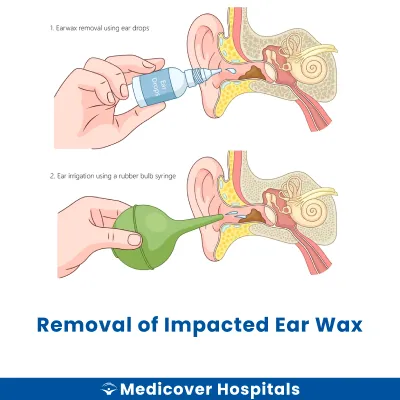
This surgery is needed when excessive earwax accumulates, leading to symptoms such as hearing loss, earache, or dizziness. If untreated, it can cause infections or damage the ear canal. Modern approaches for removal include microsuction, irrigation, and manual extraction using specialised instruments. These methods are safe and effective for clearing the blockage.
Removal of Impacted ear wax Doctors Near You
Find ENT specialists for impacted ear wax removal at Medicover Hospitals across India. Choose your city and book a consultation to address your ear health concerns effectively.
Why Choose Medicover Hospitals for Removal of Impacted ear wax?
Get a second opinion from trusted experts and makeconfident, informed decisions.
 Get Second Opinion
Complete Guide To Removal Of Impacted Ear Wax
Everything you need to know about the procedure, preparation, and recovery
Removal of impacted earwax procedure Indications
Doctors recommend removing impacted earwax when it causes discomfort or affects hearing. This procedure is considered when symptoms persist despite home remedies or over-the-counter treatments.
Hearing Loss
Patients often experience reduced hearing clarity or muffled sounds. On examination, doctors find a blockage in the ear canal due to hardened wax. When hearing aids or ear drops fail to improve hearing, removal is advised.
Ear Pain
Persistent earache is a common symptom. Doctors may observe redness or swelling in the ear canal. If pain relief medications do not alleviate symptoms, wax removal is necessary.
Tinnitus
Patients report ringing or buzzing sounds in the ear. Examination reveals wax pressing against the eardrum. When tinnitus persists despite other treatments, removal of wax is recommended.
Vertigo
Some patients experience dizziness or a spinning sensation. Doctors find that impacted wax can affect balance. If vertigo continues after initial treatments, ear wax removal is considered.
Ear Fullness
A sensation of fullness or pressure in the ear is common. Examination shows wax accumulation. When this feeling does not resolve with ear drops, removal is suggested.
How to Prepare for the Removal of Impacted Earwax?
Proper preparation is crucial for a smooth and effective removal of impacted ear wax. It helps minimise discomfort and ensures the procedure goes smoothly.
- Medication Review: Stop NSAIDs, anticoagulants, and herbal supplements a few days before. Consult your doctor.
- Fasting Guidelines: If sedation is planned, fast for at least 6 hours before the procedure.
- Ear Drops: Use prescribed ear drops to soften wax for a few days before the procedure.
- Clothing Choice: Wear loose, comfortable clothing for ease during the procedure.
- Transport Arrangement: Arrange for someone to drive you home post-procedure.
- Medication List: Bring a list of current medications with dosages for the healthcare team.
- Inform Allergies: Inform the medical team about any known allergies, especially to medications.
- Hydration: Stay well-hydrated unless instructed otherwise by your healthcare provider.
Removal of Impacted Ear Wax Procedure (Step-by-Step)
Removal of impacted earwax is performed by experienced specialists from the ENT department. The procedure usually takes 15-30 minutes and is commonly carried out without major anaesthesia, although local measures may be used for patient comfort when required.
- Preparation: The patient is seated comfortably, and the ear canal is examined using an otoscope to evaluate the extent of wax buildup.
- Softening the Wax: Special ear drops may be applied to soften the impacted wax and make removal easier and more comfortable.
- Positioning: The patient's head is positioned appropriately to provide clear access and visibility to the ear canal.
- Wax Removal: Specialised instruments such as curettes or suction devices are used to gently remove the accumulated ear wax safely.
- Final Inspection: After removal, the ear canal is re-examined to ensure complete clearance and to assess the ear's overall health.
- Post-Procedure Care: The patient receives guidance on ear hygiene, preventive care, and symptoms that may require medical attention.
Who performs the removal of Impacted Ear Wax Procedure?
This procedure is performed by skilled ENT specialists trained to diagnose and treat ear, nose, and throat conditions using specialized instruments and safe ear care techniques.
Recovery After Removal of Impacted Ear Wax Procedure
After the removal of impacted ear wax, most people experience immediate relief. However, some mild discomfort or temporary hearing changes may occur. It's important to follow care instructions to ensure a smooth recovery.
Day 1-2:
- Expect mild soreness or a sensation of fullness in the ear. This should subside quickly.
- Avoid inserting anything into the ear, including cotton swabs.
- Rest and avoid strenuous activities.
- Consume light meals like curd, dal-rice, or soups to maintain energy levels.
Day 3-5:
- Most discomfort should be gone. Hearing should improve.
- You can resume normal activities but avoid water entering the ear during bathing.
- Continue with a balanced diet. Include moong dal and khichdi for easy digestion.
Day 6-7:
- Return to work or school if you feel comfortable.
- Maintain ear hygiene but avoid inserting objects into the ear.
- Regular meals can be resumed, focusing on nutritious options.
When to Seek Urgent Help
- Severe pain or discomfort in the ear.
- Persistent hearing loss or ringing in the ear.
- Discharge or bleeding from the ear.
- Fever or signs of infection.
If you experience any of these symptoms, contact your healthcare provider immediately.
Benefits of the removal of impacted earwax procedure
Removing impacted earwax can significantly improve ear health and hearing.
- Improved Hearing: Clearing wax blockages can restore normal hearing levels.
- Reduced Ear Discomfort: Alleviates pain and pressure in the ear.
- Prevention of Infections: Decreases the risk of ear infections caused by trapped bacteria.
- Better Ear Hygiene: Promotes overall ear cleanliness and health.
Risks and Complications of the Removal of Impacted Earwax Procedure
While generally safe, the procedure carries some risks. It's important to be aware of them.
- Common: Temporary discomfort or irritation in the ear canal.
- Common: Minor bleeding due to sensitive skin in the ear canal.
- Rare: Infection if the procedure is not performed under sterile conditions.
- Rare: Damage to the ear canal or eardrum if not done carefully.
- Rare: Temporary dizziness or imbalance post-procedure.
Cost of Removal of impacted ear wax procedure
The cost for the removal of impacted ear wax at Medicover Hospitals ranges from Rs. 1000 to Rs. 1500. The price varies depending on the ward category chosen. We offer transparent pricing to ensure clarity for our patients.
Insurance and TPA support, including CGHS, ESI, and major TPAs, are accepted. A cashless facility is also available for your convenience. Please contact the hospital for the latest insurance panel details as these may change periodically.
Frequently Asked Questions
1. How much does Removal of impacted ear wax procedure cost at Medicover Hospitals?
The cost for Removal of impacted ear wax procedure at Medicover Hospitals ranges from Rs.1000 to Rs.1500, depending on the service type.
2. Is Removal of impacted ear wax procedure covered under health insurance at Medicover?
The procedure may be covered under CGHS, ESI, and major TPAs. Please contact the hospital for current panel details.
3. Can impacted ear wax affect my hearing?
Yes, impacted ear wax can temporarily reduce hearing. Removal often restores normal hearing levels.
4. Will I experience pain after ear wax removal?
Some patients may experience mild discomfort or irritation. This usually subsides within a day or two.
5. Can impacted ear wax cause dizziness?
Yes, impacted ear wax can lead to dizziness or balance issues. Removal typically alleviates these symptoms.
6. Is it safe to remove ear wax at home?
Home removal methods can be risky and may push wax deeper. It's safer to have it removed by a professional.
7. How often should I have ear wax removed?
Frequency varies per individual; some may need it every few months. Consult an ENT specialist for personalised advice.
8. How do you remove deep impacted ear wax?
Deep impacted earwax is usually removed by a doctor using microsuction, irrigation (ear syringing), or manual instruments. Sometimes, ear drops are prescribed first to soften the wax before removal.
9. Should you remove impacted ear wax?
Yes, removal is recommended if it causes hearing loss, pain, fullness, ringing (tinnitus), or dizziness. If there are no symptoms, it may not always need treatment.
10. How long does it take for impacted earwax to clear?
With ear drops, wax may soften and clear within a few days to a week. If removed by a doctor, relief is often immediate after the procedure.
11. Why did a huge chunk of earwax come out of my ear?
Earwax can build up over time and harden. A large piece may come out naturally or after using ear drops or cleaning, especially when the blockage loosens and dislodges.


