 Call
Call Patient Reports
Reduction and Plating of Diaphyseal Fracture Surgery Hospital with Advanced Care
At Medicover Hospitals, the Reduction and Plating of Diaphyseal Fracture is performed using the open surgical approach. Our team of orthopaedic surgeons, with qualifications like MS and DNB, ensures precise fracture management. This approach often results in reduced recovery time for patients.
Expert Surgeons
Yearly Surgeries
Patient Satisfaction
What is Reduction and Plating of Diaphyseal Fracture?
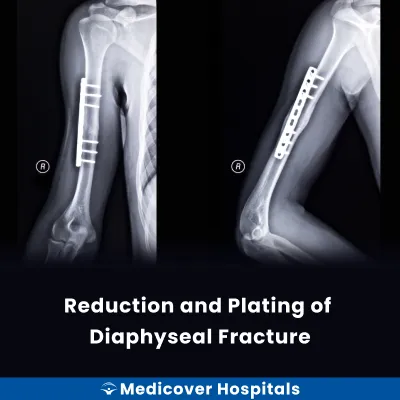
Reduction and plating of diaphyseal fracture is a surgical procedure to fix fractures in the diaphysis (shaft) of long bones like the femur, tibia, or humerus. The process involves aligning the broken bone fragments (reduction) and securing them with metal plates and screws (plating) to ensure proper healing and stability.
This surgery is needed when a diaphyseal fracture occurs due to trauma, accidents, or falls. If left untreated, it can lead to improper healing, deformity, or loss of function. Modern surgical approaches include minimally invasive techniques and locking plate systems, which provide better fixation and promote faster recovery. These methods help restore the bone's normal function and alignment effectively.
Reduction and Plating of Diaphyseal Fracture Doctors Near You
Discover skilled orthopedics for reduction and plating of diaphyseal fractures at Medicover Hospitals across India. Choose your city and book a consultation to address your orthopedic needs today.
Why Choose Medicover Hospitals for Reduction and Plating of Diaphyseal Fracture?
Get a second opinion from trusted experts and makeconfident, informed decisions.
 Get Second Opinion
Complete Guide To Reduction And Plating Of Diaphyseal Fracture
Everything you need to know about the procedure, preparation, and recovery
Reduction and Plating of Diaphyseal Fracture Surgery Indications
Doctors recommend reduction and plating of diaphyseal fractures when non-surgical methods fail to heal the fracture. This procedure stabilises the bone, ensuring proper alignment and healing.
Severe Displacement
Patients often experience intense pain and visible deformity at the fracture site. X-rays reveal significant misalignment of bone fragments. When manual realignment is ineffective, surgery becomes necessary.
Open Fractures
Open fractures present with bleeding and exposed bone. Immediate medical imaging confirms the severity. Surgery is required to prevent infection and ensure proper bone healing.
Non-Union
Persistent pain and swelling may indicate a fracture that hasn't healed over time. X-rays or CT scans show incomplete bone healing. Surgery is considered when conservative treatments like casting fail.
Comminuted Fractures
Patients report severe pain and inability to move the affected limb. Imaging shows the bone shattered into multiple pieces. Surgery is needed to reconstruct and stabilise the bone.
Failed Conservative Treatment
Ongoing pain and instability after weeks of immobilisation suggest inadequate healing. Follow-up imaging shows poor alignment or healing. Surgery is recommended when non-surgical options do not yield results.
How to Prepare for Reduction and Plating of Diaphyseal Fracture?
Proper preparation is crucial for a successful reduction and plating of diaphyseal fracture. It ensures a smoother surgery and aids in recovery.
- Medication Review: Stop NSAIDs, anticoagulants, and herbal supplements as advised by your doctor.
- Fasting: Fast for at least 8 hours before the surgery if general anaesthesia is used.
- Pre-Surgery Tests: Complete any required blood tests or imaging studies as instructed by your healthcare provider.
- Clothing: Wear loose, comfortable clothing on the day of surgery for ease of dressing post-operation.
- Transport: Arrange for someone to drive you home after the procedure, as you will not be able to drive yourself.
- Medication List: Bring a list of all medications you are currently taking, including dosages, to the hospital.
- Smoking and Alcohol: Avoid smoking and alcohol for a few days before the surgery to promote better healing.
- Home Preparation: Prepare your home for easy access and comfort during recovery, such as setting up a rest area.
Reduction and Plating of Diaphyseal Fracture Surgery (Step-by-Step)
This procedure is performed by orthopaedic surgeons. It typically lasts 1-3 hours. General anaesthesia is commonly used to ensure the patient is unconscious and pain-free during the surgery.
- Incision: A 1-2 cm incision is made over the fracture site. This allows access to the bone.
- Exposure: The surrounding tissues are carefully retracted using surgical instruments like retractors to expose the fractured bone.
- Reduction: The fractured bone fragments are aligned into their normal position. This may involve manual manipulation or the use of tools like bone clamps.
- Plating: A metal plate is placed over the fracture. Screws are inserted to secure the plate to the bone. This stabilizes the fracture and aids healing.
- Closure: The incision is closed with sutures or staples. A sterile dressing is applied to protect the wound.
- Recovery: The patient is moved to a recovery room. They are monitored as they wake from anaesthesia.
Who Performs Reduction and Plating of Diaphyseal Fracture Surgery?
This surgery is performed by orthopaedic surgeons. They specialize in diagnosing and treating musculoskeletal issues. Their expertise ensures proper alignment and stabilization of fractures.
Recovery After Reduction and Plating of Diaphyseal Fracture Surgery
Recovery from reduction and plating of a diaphyseal fracture involves a gradual return to normal activities. It requires adherence to medical advice and a balanced diet to promote healing.
Day 1-3:
- Rest is crucial. Keep the limb elevated to reduce swelling.
- Pain management with prescribed medications.
- Begin with light, easily digestible foods like curd and dal-rice.
Day 4-7:
- Continue elevation and start gentle movements as advised by the doctor.
- Introduce more solid foods like khichdi and moong dal to your diet.
- Attend follow-up appointments for wound inspection.
Week 2-4:
- Physical therapy may begin to restore mobility.
- Include protein-rich foods and soups to aid recovery.
- Resume light activities, but avoid strenuous tasks.
Phase 1 (Month 1-2):
- Gradual increase in physical activity as per physiotherapy guidance.
- Return to work or school may be possible, depending on the job's physical demands.
- Focus on a balanced diet to support bone healing.
Phase 2 (Month 3-6):
- Full range of motion exercises to regain strength.
- Regular check-ups to monitor bone healing.
- Continue a nutritious diet to maintain overall health.
When to Seek Urgent Help
- Severe pain unrelieved by medication.
- Signs of infection: redness, swelling, or discharge at the incision site.
- Numbness or tingling in the affected limb.
- Fever or chills indicating possible infection.
Benefits of Reduction and Plating of Diaphyseal Fracture Surgery
Reduction and plating of diaphyseal fractures is a surgical procedure aimed at stabilising broken bones. It offers several benefits for patients.
- Stability: Provides strong support to the fractured bone, promoting proper healing.
- Alignment: Ensures correct alignment of the bone, reducing the risk of deformity.
- Early Mobilisation: Allows for quicker rehabilitation and return to daily activities.
- Reduced Pain: Stabilising the fracture can significantly decrease pain levels.
Risks and Complications of Reduction and Plating of Diaphyseal Fracture Surgery
While the procedure is generally safe, there are potential risks and complications that patients should be aware of.
- Infection (Common): Risk of infection at the surgical site.
- Nerve Damage (Rare): Possibility of injury to surrounding nerves.
- Non-union (Common): The bone may fail to heal properly.
- Implant Failure (Rare): The metal plate or screws may break or loosen.
- Allergic Reaction (Rare): Reaction to the metal used in the implants.
- Blood Clots (Common): Risk of clots forming in the legs or lungs.
Cost of Reduction and Plating of Diaphyseal Fracture Surgery
The cost for Reduction and Plating of Diaphyseal Fracture Surgery at Medicover Hospitals ranges from Rs.12,299 to Rs.144,000. The price varies depending on the ward category chosen, such as general, private, or deluxe options. We offer transparent pricing to ensure clarity for our patients.
Insurance and TPA support are available, with acceptance of CGHS, ESI, and major TPAs. A cashless facility is also provided for added convenience. Please contact the hospital for the latest insurance panel details as these may change periodically.
Frequently Asked Questions
1. How much does Reduction and Plating of Diaphyseal Fracture surgery cost at Medicover Hospitals?
The cost ranges from Rs. 12,299 to Rs. 144,000 at Medicover Hospitals. Prices vary based on the type of room and care required.
2. Is Reduction and Plating of Diaphyseal Fracture surgery covered under health insurance at Medicover?
Yes, it is covered under CGHS, ESI, and many major TPAs. Please contact the hospital for current panel details.
3. Will I need physiotherapy after the surgery?
Yes, physiotherapy is crucial for regaining full limb function. It typically starts a few days post-surgery and continues for several weeks.
4. Can I drive immediately after the surgery?
No, driving is not recommended immediately after surgery. You may resume driving once your doctor confirms full recovery, usually after several weeks.
5. Will I have metal plates in my body permanently?
Metal plates may be left permanently unless they cause discomfort. If removal is needed, it is usually done after the bone has healed.
6. What foods should I eat for bone healing?
Consume calcium-rich foods like curd and leafy greens. Protein-rich foods like dal-rice and khichdi also aid in bone healing.
7. Can I experience complications like non-union?
Yes, complications like non-union or infection can occur. Regular follow-ups and adhering to post-operative care reduce these risks.


