 Call
Call Patient Reports
Rectopexy Surgery Hospital by Expert Gastroenterologists Surgical
At Medicover Hospitals, our team of consultant surgical gastroenterologists, with qualifications like MS, DNB, and MCh, perform laparoscopic rectopexy. This minimally invasive approach offers benefits such as smaller incisions and reduced blood loss, leading to a shorter hospital stay for patients.
Expert Surgeons
Yearly Surgeries
Patient Satisfaction
What is Rectopexy?
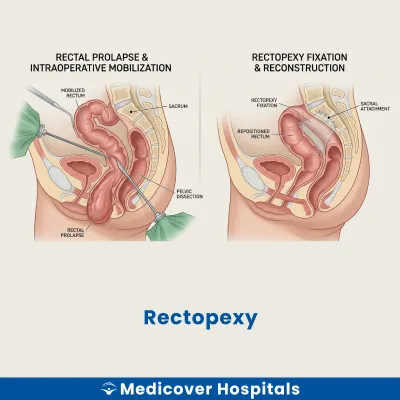
Rectopexy is a surgical procedure to correct rectal prolapse. The rectum, which is the final section of the large intestine, slips out of its normal position. This surgery involves securing the rectum to its proper place in the pelvis. It helps restore normal bowel function and alleviate symptoms associated with prolapse.
Rectopexy is needed for conditions like rectal prolapse, where the rectum protrudes through the anus. If untreated, it can lead to discomfort, incontinence, and other complications. Modern surgical approaches for rectopexy include laparoscopic (minimally invasive) and robotic-assisted techniques. These methods aim to reduce recovery time and improve outcomes.
Rectopexy Doctors Near You
Discover skilled gastroenterologists-surgical for rectopexy at Medicover Hospitals across India. Choose your city and book a consultation to address your health needs with expert care.
Why Choose Medicover Hospitals for Rectopexy?
Get a second opinion from trusted experts and makeconfident, informed decisions.
 Get Second Opinion
Complete Guide To Rectopexy
Everything you need to know about the procedure, preparation, and recovery
Rectopexy Surgery Indications
Rectopexy is a surgical procedure recommended by gastroenterologists-surgical for patients experiencing rectal prolapse. This condition occurs when the rectum protrudes through the anus, causing discomfort and other symptoms. Surgery is often considered when non-surgical treatments do not provide relief.
Chronic Rectal Prolapse
Patients may experience a visible bulge from the anus, along with discomfort and difficulty with bowel movements. Doctors may find the rectum protruding during a physical examination. When lifestyle changes and medications fail to improve the condition, rectopexy is considered.
Incontinence Due to Prolapse
Patients often report involuntary leakage of stool or mucus. Examination may reveal a prolapsed rectum affecting the anal sphincter. If pelvic floor exercises and dietary adjustments do not help, surgery becomes necessary.
Obstructed Defecation Syndrome
Patients may struggle with incomplete bowel movements and straining. Diagnostic tests might show rectal prolapse or intussusception. When fibre supplements and biofeedback therapy are ineffective, rectopexy is advised.
Severe Rectal Bleeding
Patients can experience bright red bleeding during bowel movements. Doctors might find rectal prolapse as the underlying cause. If medications and dietary changes do not control the bleeding, surgical intervention is recommended.
Recurrent Prolapse After Previous Surgery
Some patients may have recurring prolapse symptoms despite previous surgical attempts. Imaging or examination confirms the recurrence. When other surgical methods fail, rectopexy may be the next step.
How to Prepare for Rectopexy?
Proper preparation for rectopexy is crucial to ensure a smooth procedure and recovery. Following these steps can help minimise complications and enhance outcomes.
- Medication Adjustment: Stop NSAIDs, anticoagulants, and herbal supplements at least a week before surgery. Consult your doctor for guidance.
- Fasting: Follow a fasting period of 6-8 hours before the procedure, as general anaesthesia is typically used.
- Bowel Preparation: Complete any prescribed bowel prep to clear the intestines. This may involve laxatives or enemas.
- Pelvic Floor Exercises: Engage in recommended exercises to strengthen the pelvic floor, aiding recovery.
- Comfortable Clothing: Wear loose, comfortable clothing on the day of surgery for ease of movement post-procedure.
- Transport Arrangement: Arrange for someone to drive you home after the surgery, as you may feel drowsy from anaesthesia.
- Medication List: Bring a list of your current medications, including dosages, for the medical team to review.
- Pre-Surgery Consultation: Attend all pre-surgery appointments to discuss any concerns and confirm preparation steps.
Rectopexy Surgery (Step-by-Step)
Overview: Rectopexy is performed by surgical gastroenterologists. The procedure typically lasts 1-2 hours and is done under general anaesthesia.
- Preparation: The patient is positioned on the operating table. General anaesthesia is administered to ensure they are asleep and pain-free.
- Incision: Small incisions (1-2 cm) are made in the abdomen. A laparoscope is inserted through one of these incisions to provide a view of the internal organs.
- Accessing the Rectum: Additional instruments like trocars are inserted through the other incisions. These help in accessing and mobilising the rectum.
- Securing the Rectum: The rectum is lifted and secured to the sacrum using sutures. This step prevents prolapse and restores normal positioning.
- Use of Instruments: Instruments such as a harmonic scalpel may be used to cut and seal tissues, reducing bleeding during the procedure.
- Closure: The instruments are removed, and the small incisions are closed with sutures or surgical glue. The patient is then moved to the recovery area.
- Recovery: As the anaesthesia wears off, the patient gradually wakes up. They may experience mild discomfort, which is managed with medication.
Who Performs Rectopexy Surgery?
Rectopexy is performed by surgical gastroenterologists. These specialists are trained in procedures involving the digestive tract and have expertise in managing conditions like rectal prolapse.
Recovery After Rectopexy Surgery
Recovery from rectopexy surgery involves gradual healing and returning to daily activities. It's crucial to follow medical advice to ensure a smooth recovery process.
Day 1-3:
- Rest is essential. Avoid strenuous activities.
- Start with a liquid diet. Include clear soups and broths.
- Manage pain with prescribed medications.
Day 4-7:
- Gradually introduce soft foods like khichdi, dal-rice, and moong dal.
- Continue to avoid heavy lifting and strenuous exercises.
- Short walks are encouraged to improve circulation.
Day 8-14:
- Increase activity levels slowly. Light household tasks are permissible.
- Incorporate curd and soft fruits into your diet for better digestion.
- Most patients can resume work or school, depending on their comfort and doctor's advice.
Phase 3 (Week 3-4):
- Resume normal diet gradually, avoiding spicy and oily foods.
- Engage in light exercises like walking or yoga.
- Monitor bowel movements and maintain hydration.
When to Seek Urgent Help:
- Severe abdominal pain or swelling.
- Fever or chills indicating possible infection.
- Persistent nausea or vomiting.
- Unexpected changes in bowel habits.
Benefits of Rectopexy Surgery
Rectopexy is a surgical procedure aimed at correcting rectal prolapse. It offers several benefits for patients experiencing this condition.
- Improved Bowel Function: Helps restore normal bowel movements by correcting the prolapse.
- Reduced Discomfort: Alleviates pain and discomfort associated with rectal prolapse.
- Enhanced Quality of Life: Improves daily activities and overall well-being by addressing prolapse symptoms.
- Long-term Solution: Provides a durable fix for rectal prolapse, reducing the likelihood of recurrence.
Risks and Complications of Rectopexy Surgery
While rectopexy is generally safe, like any surgery, it carries certain risks and potential complications.
- Common: Infection at the surgical site, which may require antibiotics.
- Common: Bleeding during or after the procedure.
- Rare: Injury to surrounding organs such as the bladder or intestines.
- Rare: Nerve damage leading to altered sensation or function.
- Rare: Recurrence of rectal prolapse despite surgery.
- Rare: Adhesion formation causing bowel obstruction.
Cost of Rectopexy Surgery
The cost of rectopexy surgery can vary based on several factors ranges from ₹1,00,000 to ₹1,50,000. including the surgical approach, duration of hospital stay, room category, required diagnostics, and post-operative care.
At Medicover Hospitals, we ensure transparent pricing for all procedures. We offer support for insurance and TPA, with acceptance of CGHS, ESI, and major TPAs. A cashless facility is also available for your convenience. Please contact the hospital for the latest insurance panel details as these may change periodically.
Frequently Asked Questions
1. How much does Rectopexy surgery cost at Medicover Hospitals?
The cost of Rectopexy surgery varies based on individual needs ranges from ₹1,00,000 to ₹1,50,000.. Please contact Medicover Hospitals for detailed pricing information.
2. Is Rectopexy surgery covered under health insurance at Medicover?
Rectopexy surgery may be covered by CGHS, ESI, and major TPAs. Please contact the hospital for current panel details.
3. Will I need a special diet after Rectopexy?
Post-Rectopexy, a diet high in fibre is recommended. Include foods like curd, dal-rice, and khichdi to aid recovery.
4. Can I lift heavy objects after Rectopexy?
Avoid lifting heavy objects for at least 6 weeks after Rectopexy. This helps prevent strain on the rectal area during recovery.
5. Will I experience bowel changes after Rectopexy?
Some patients may experience temporary changes in bowel habits post-surgery. These usually stabilize within a few weeks.
6. Is there a risk of rectal prolapse recurrence?
While Rectopexy is effective, there's a small risk of recurrence. Regular follow-ups help monitor and manage any complications.
7. How soon can I return to work after Rectopexy?
Most patients can return to work within 2-4 weeks, depending on recovery. It's important to follow your surgeon's advice for a safe return.


