 Call
Call Patient Reports
Rectal or Colonic Dilatation Procedure Hospital with Advanced Care
Rectal or Colonic Dilatation at Medicover Hospitals is performed using advanced endoscopic techniques by skilled general surgeons with qualifications such as MS and DNB. This minimally invasive approach ensures smaller incisions and reduced blood loss, leading to a shorter hospital stay for patients across India.
Expert Experts
Yearly Procedures
Patient Satisfaction
What is Rectal or Colonic Dilatation?
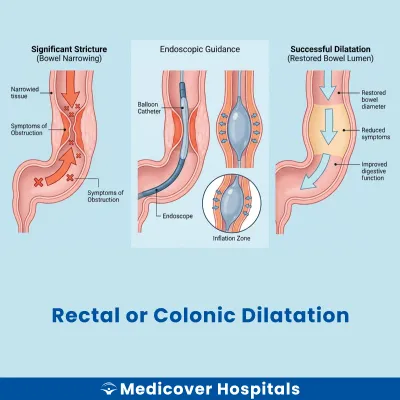
Rectal or Colonic Dilatation is a medical procedure involving the widening of the rectum or colon. The rectum is the final section of the large intestine, while the colon is the main part of the large intestine. This procedure helps to relieve blockages or strictures (narrowing) that may occur in these areas. It is often performed using special instruments to gently stretch the narrowed section.
This surgery is needed for conditions like chronic constipation, inflammatory bowel disease, or strictures caused by surgery or radiation. If left untreated, these conditions can lead to severe pain, bowel obstruction, or even perforation. Modern surgical approaches include balloon dilatation and endoscopic techniques. These methods are minimally invasive and aim to provide relief with quicker recovery times.
Rectal or Colonic Dilatation Doctors Near You
Find experienced general-surgeons for rectal or colonic dilatation at Medicover Hospitals across India. Choose your city and book a consultation to discuss your treatment options today.
Why Choose Medicover Hospitals for Rectal or Colonic Dilatation?
Get a second opinion from trusted experts and makeconfident, informed decisions.
 Get Second Opinion
Complete Guide To Rectal Or Colonic Dilatation
Everything you need to know about the procedure, preparation, and recovery
Rectal or Colonic Dilatation Procedure Indications
Doctors recommend rectal or colonic dilatation when there is a narrowing in the rectum or colon that causes significant symptoms. This procedure helps relieve obstructions and improve bowel function.
Chronic Constipation
Patients often experience severe difficulty in passing stools, leading to abdominal pain and bloating. Imaging may show narrowing in the colon. When dietary changes and medications fail, dilatation can provide relief.
Rectal Stricture
Patients may report pain during bowel movements and a feeling of incomplete evacuation. A colonoscopy might reveal a narrowed rectal passage. If symptoms persist despite conservative treatments, dilatation is considered.
Post-Surgical Adhesions
After abdominal surgery, patients might experience bowel obstruction symptoms like nausea and vomiting. Imaging can show adhesions causing narrowing. When non-surgical methods don't alleviate symptoms, dilatation is an option.
Inflammatory Bowel Disease (IBD)
Patients with IBD may suffer from abdominal pain and altered bowel habits. Endoscopy can reveal strictures in the colon. If medication doesn't ease these symptoms, dilatation may be recommended.
Radiation-Induced Strictures
Following radiation therapy, patients might experience pain and difficulty in bowel movements. Imaging or endoscopy can show strictures. When symptoms are unmanageable with conservative care, dilatation is advised.
How to Prepare for Rectal or Colonic Dilatation?
Proper preparation is crucial for the success and safety of rectal or colonic dilatation. It helps in reducing complications and ensures a smoother procedure.
- Medication Review: Stop NSAIDs, anticoagulants, and herbal supplements as advised by your doctor.
- Fasting Guidelines: Fast for at least 6-8 hours before the procedure if general anaesthesia is used.
- Bowel Preparation: Follow the prescribed bowel cleansing routine to clear the colon.
- Hydration: Drink clear fluids up to 2 hours before the procedure, unless instructed otherwise.
- Clothing: Wear loose, comfortable clothing on the day of the procedure.
- Transportation: Arrange for someone to drive you home post-procedure due to sedation effects.
- Medication List: Bring a list of your current medications with dosages for reference.
- Pelvic Floor Exercises: Practice any recommended exercises to aid recovery, if advised by your doctor.
Rectal or Colonic Dilatation procedure (Step-by-Step)
This procedure is performed by general surgeons. It typically lasts 30 to 60 minutes. General or regional anaesthesia is used to ensure patient comfort.
- Preparation: The patient is positioned comfortably on the examination table. Anaesthesia is administered to ensure no discomfort during the procedure.
- Insertion of Dilator: A lubricated rectal or colonic dilator is gently inserted into the rectum or colon. The dilator gradually stretches the narrowed area.
- Gradual Dilatation: The surgeon may use progressively larger dilators to widen the constricted section. This step is carefully monitored to avoid any damage.
- Monitoring: Throughout the procedure, the surgeon observes the area using a laparoscope. This instrument provides a clear view of the internal structures.
- Completion: Once the desired dilatation is achieved, the dilator is slowly removed. The area is checked for any signs of bleeding or complications.
- Recovery: The patient is moved to a recovery area. Vital signs are monitored as the effects of anaesthesia wear off.
- Post-Procedure Care: Instructions are given for diet and activity. Any discomfort or unusual symptoms should be reported to the healthcare team.
Who Performs Rectal or Colonic Dilatation procedure?
This procedure is performed by general surgeons who specialise in gastrointestinal surgeries. They have expertise in using instruments like dilators and laparoscopes to ensure safe and effective treatment. Their training allows them to manage any complications that may arise during the procedure.
Recovery After Rectal or Colonic Dilatation procedure
After a Rectal or Colonic Dilatation procedure, patients can expect a gradual return to normal activities. Recovery times may vary, but most individuals start feeling better within a few days. It's important to follow dietary and activity guidelines for optimal recovery.
Day 1-3:
- Rest is crucial. Avoid strenuous activities.
- Start with a liquid diet. Include clear soups and broths.
- Stay hydrated by drinking plenty of water.
Day 4-7:
- Gradually introduce soft foods like khichdi, dal-rice, and moong dal.
- Continue avoiding heavy lifting and intense exercise.
- Monitor for any discomfort or unusual symptoms.
Week 2:
- Most can resume work or school, depending on individual recovery.
- Incorporate more solid foods like curd and soft-cooked vegetables.
- Light activities can be resumed, but avoid heavy exertion.
When to Seek Urgent Help:
- Severe abdominal pain or cramping.
- Fever or chills indicating possible infection.
- Persistent bleeding or unusual discharge.
- Difficulty in passing stools or severe constipation.
Benefits of Rectal or Colonic Dilatation procedure
Rectal or colonic dilatation is a procedure designed to relieve obstructions and improve bowel function.
- Improved Bowel Function: Helps restore normal bowel movements by relieving obstructions.
- Non-Surgical Option: Provides a less invasive alternative to surgery for certain conditions.
- Quick Recovery: Patients often experience a faster recovery compared to surgical interventions.
- Symptom Relief: Alleviates symptoms like pain and bloating associated with bowel obstructions.
Risks and Complications of Rectal or Colonic Dilatation procedure
While generally safe, rectal or colonic dilatation carries some risks and potential complications.
- Common: Mild bleeding or discomfort at the site of dilatation.
- Common: Temporary abdominal pain or cramping post-procedure.
- Rare: Perforation of the bowel, which may require surgical intervention.
- Rare: Infection at the site of the procedure.
- Rare: Adverse reaction to sedation or anaesthesia.
Cost of Rectal or Colonic Dilatation procedure
The cost of the Rectal or Colonic Dilatation procedure across Medicover Hospitals ranges from Rs. 7500 to Rs. 11500. The price varies based on the ward category chosen, such as day care, general, or private rooms. We offer transparent pricing to ensure clarity for our patients.
Insurance and TPA support is available, with acceptance of CGHS, ESI, and major TPAs. A cashless facility is also provided for convenience. Please contact the hospital for the latest insurance panel details as these may change periodically.
Frequently Asked Questions
1. How much does Rectal or Colonic Dilatation cost?
The cost for Rectal or Colonic Dilatation at Medicover Hospitals ranges from Rs. 7500 to Rs. 11500, depending on the room type and care needed.
2. Is Rectal or Colonic Dilatation covered by insurance?
Rectal or Colonic Dilatation may be covered by CGHS, ESI, and major TPAs. Please contact the hospital for current panel details.
3. Will I need a special diet after colonic dilatation?
Post-procedure, a soft diet including curd, dal-rice, and khichdi is recommended. Avoid spicy and oily foods for a week to aid recovery.
4. Can I experience bowel irregularities post-dilatation?
Some patients may experience temporary bowel irregularities. These usually resolve within a few days after the procedure.
5. Is there a risk of infection after rectal dilatation?
Infection is a rare complication after rectal dilatation. Following post-procedure care instructions reduces this risk significantly.
6. Will I need follow-up appointments after the procedure?
Yes, follow-up appointments help monitor recovery and address any concerns. Your doctor will schedule these based on your individual needs.
7. Can I resume normal activities after colonic dilatation?
Most patients can resume normal activities within a few days. However, avoid heavy lifting and strenuous activities for at least a week.
8. Can constipation cause dilated bowel loops?
Yes, severe or prolonged constipation can lead to dilated bowel loops due to accumulation of stool and gas. This can sometimes mimic or contribute to bowel obstruction if not treated.
9. What size is a large bowel dilation?
A large bowel is generally considered dilated when its diameter exceeds about 6 cm. The caecum is considered significantly dilated if it measures more than 9 cm.


