 Call
Call Patient Reports
Reconstructive Soft Tissue Coverage Using Local and Pedicled Flaps Surgery Hospital with Expert Plastic Surgeons
Reconstructive soft tissue coverage using local and pedicled flaps is performed through open surgery by our plastic surgeons with qualifications such as MS and MCh. This approach helps in restoring function and appearance. Patients often experience shorter hospital stays at Medicover Hospitals across India.
Expert Surgeons
Yearly Surgeries
Patient Satisfaction
What is Reconstructive Soft Tissue Coverage Using Local and Pedicled Flaps?
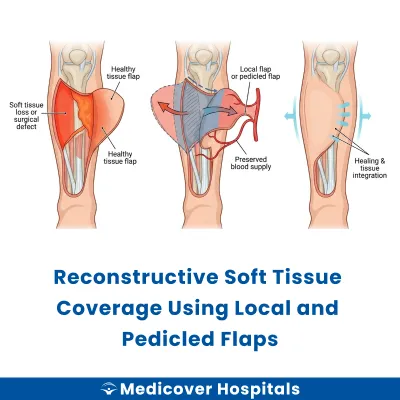
Reconstructive Soft Tissue Coverage Using Local and Pedicled Flaps involves using nearby tissue to cover wounds or defects. This procedure is often used for areas like the face, hands, or legs. Local flaps are tissues moved from an adjacent area, while pedicled flaps remain attached to their original blood supply. This ensures better healing and functionality.
This surgery is necessary for repairing tissue loss due to trauma, burns, or surgical removal of tumours. If left untreated, these conditions can lead to infection, impaired function, or cosmetic issues. Modern surgical approaches include microsurgery and advanced flap techniques. These methods help in achieving optimal coverage and healing of the affected area.
Reconstructive Soft Tissue Coverage Using Local and Pedicled Flaps Doctors Near You
Discover skilled plastic-surgeons for reconstructive soft tissue coverage using local and pedicled flaps at Medicover Hospitals across India. Choose your city and book a consultation today.
Why Choose Medicover Hospitals for Reconstructive Soft Tissue Coverage Using Local and Pedicled Flaps?
Get a second opinion from trusted experts and makeconfident, informed decisions.
 Get Second Opinion
Complete Guide To Reconstructive Soft Tissue Coverage Using Local And Pedicled Flaps
Everything you need to know about the procedure, preparation, and recovery
Reconstructive Soft Tissue Coverage Using Local and Pedicled Flaps Surgery Indications
Doctors recommend reconstructive soft tissue coverage using local and pedicled flaps when there is a need to repair or cover defects in the skin and underlying tissues. This procedure is often considered when other treatments are not sufficient to heal or restore function.
Traumatic Injuries
Patients with severe skin and tissue damage from accidents may experience pain, bleeding, and exposed underlying structures. Examination often reveals significant tissue loss. When wounds do not heal with basic wound care, surgery is advised.
Chronic Non-Healing Wounds
Chronic wounds, such as those from diabetes, may show persistent open sores and infection. Doctors find delayed healing despite proper wound management. Surgery is considered when these wounds fail to improve over time.
Post-Surgical Defects
After tumour removal or other surgeries, patients may have large defects with exposed tissues. Imaging and physical exams show insufficient skin coverage. When primary closure isn't possible, flap surgery is recommended.
Pressure Ulcers
Patients with limited mobility may develop painful ulcers over bony areas. Examination reveals deep tissue damage and necrosis. Surgery is needed when ulcers do not respond to repositioning and wound care.
Burns
Severe burns can cause extensive skin loss and scarring. Patients experience pain and restricted movement. When skin grafts are inadequate, flap surgery provides better coverage and function.
How to Prepare for Reconstructive Soft Tissue Coverage Using Local and Pedicled Flaps?
Proper preparation is crucial for a successful reconstructive soft tissue surgery. It helps minimise complications and ensures a smoother recovery process.
- Medication Review: Stop NSAIDs, anticoagulants, and herbal supplements at least a week before surgery.
- Fasting Guidelines: Fast for at least 8 hours before the procedure if general anaesthesia is used.
- Pre-Surgery Hygiene: Bathe with an antiseptic soap the night before and the morning of the surgery.
- Clothing: Wear loose, comfortable clothing on the day of the surgery for ease of dressing post-operation.
- Transportation: Arrange for someone to drive you home after the procedure as you may feel drowsy.
- Medication List: Bring a list of all medications with dosages to discuss with your healthcare provider.
- Smoking and Alcohol: Avoid smoking and alcohol for at least 48 hours before surgery to aid healing.
- Follow-Up Care: Plan for post-operative care and follow-up appointments as advised by your surgeon.
Reconstructive Soft Tissue Coverage Using Local and Pedicled Flaps Surgery (Step-by-Step)
Overview: This procedure is performed by plastic surgeons. It typically lasts between 2 to 4 hours and is done under general anaesthesia.
- Preparation: The patient is positioned comfortably. The surgical area is cleaned and sterilised. General anaesthesia is administered to ensure the patient is asleep and pain-free.
- Incision: A precise incision, usually 1-2 cm, is made around the donor site using a scalpel. The size and location depend on the defect and available tissue.
- Flap Design: The surgeon designs the flap, considering the blood supply. Instruments like a bipolar cautery may be used to minimise bleeding.
- Flap Elevation: The flap is carefully elevated using surgical scissors and forceps. The pedicle, which contains the blood supply, is preserved.
- Flap Transfer: The flap is moved to cover the defect. It is positioned and sutured into place. The harmonic scalpel may be used for precise cutting and coagulation.
- Closure: The donor site is closed with sutures. The surgical area is checked for bleeding and secured with dressings.
- Recovery: The patient is moved to recovery. Vital signs are monitored. Pain management is provided as needed.
Who Performs Reconstructive Soft Tissue Coverage Using Local and Pedicled Flaps Surgery?
This surgery is performed by plastic surgeons. They specialise in reconstructive procedures to restore form and function. Their expertise ensures the flap has adequate blood supply and integrates well with surrounding tissues.
Recovery After Reconstructive Soft Tissue Coverage Using Local and Pedicled Flaps Surgery
Recovery from reconstructive soft tissue coverage using local and pedicled flaps involves careful monitoring and adherence to medical advice. Patients can expect gradual improvement in mobility and comfort over time.
Day 1-3:
- Rest is crucial. Avoid any strenuous activity.
- Keep the surgical area clean and dry.
- Follow prescribed pain management and antibiotic regimen.
- Consume soft, easy-to-digest foods like khichdi, moong dal, and soups.
Day 4-7:
- Begin gentle movements as advised by your doctor.
- Continue with a balanced diet including curd and dal-rice.
- Attend follow-up appointments for wound assessment.
Day 8-14:
- Gradually increase activity levels, avoiding heavy lifting.
- Monitor the surgical site for any signs of infection.
- Return to work or school may be possible depending on individual recovery.
Phase 3-6 Weeks:
- Engage in light exercises as recommended.
- Continue a nutritious diet to support healing.
- Regular check-ups to ensure proper healing of the flap.
When to Seek Urgent Help:
- Increased redness, swelling, or warmth at the surgical site.
- Fever or chills indicating possible infection.
- Severe pain not relieved by medication.
- Any unusual discharge or bleeding from the wound.
Benefits of Reconstructive Soft Tissue Coverage Using Local and Pedicled Flaps Surgery
This procedure is designed to restore form and function by using the patient's own tissue.
- Natural Appearance: Utilises the patient's own tissue for a more natural look.
- Improved Healing: Enhances blood supply to the affected area, promoting better healing.
- Reduced Rejection Risk: Lower risk of rejection as the tissue is from the same body.
- Versatility: Can be adapted to cover various defect sizes and locations.
Risks and Complications of Reconstructive Soft Tissue Coverage Using Local and Pedicled Flaps Surgery
While generally safe, this surgery carries certain risks and complications.
- Common: Infection at the surgical site.
- Common: Scarring that may require further treatment.
- Rare: Flap necrosis due to inadequate blood supply.
- Rare: Nerve damage leading to sensation changes.
- Rare: Haematoma or fluid accumulation under the flap.
- Rare: Asymmetry or contour irregularities.
Cost of Reconstructive Soft Tissue Coverage Using Local and Pedicled Flaps Surgery
The cost for reconstructive soft tissue coverage using local and pedicled flaps surgery at Medicover Hospitals ranges from Rs. 28,500 to Rs. 71,500. Prices vary based on the ward category selected. We offer transparent pricing and support for insurance and TPA, including CGHS, ESI, and major TPAs. Cashless facility is available for your convenience. Please contact the hospital for the latest insurance panel details as these may change periodically.
Frequently Asked Questions
1. How much does Reconstructive Soft Tissue Coverage Using Local and Pedicled Flaps surgery cost at Medicover Hospitals?
The cost for this surgery ranges from Rs. 28,500 to Rs. 71,500 across Medicover Hospitals, depending on the type of room and care required.
2. Is Reconstructive Soft Tissue Coverage Using Local and Pedicled Flaps surgery covered under health insurance at Medicover?
This surgery may be covered under CGHS, ESI, and major TPAs with cashless options. Please contact the hospital for current panel details.
3. Will I have scarring after flap surgery?
Scarring is a common outcome of flap surgery, but it usually fades over time. Proper wound care can help minimize the appearance of scars.
4. Can I exercise after flap surgery?
Light activities can typically resume after a few weeks, but strenuous exercise should be avoided for at least 6 weeks. Always follow your doctor's advice.
5. Will I need physical therapy post-surgery?
Physical therapy may be recommended to regain full function and mobility. It helps in strengthening and improving the range of motion in the affected area.
6. What complications can occur with flap surgery?
Possible complications include infection, flap failure, and poor wound healing. Regular follow-ups with your doctor can help manage and prevent these issues.
7. Can I eat normally after flap surgery?
A balanced diet including curd, dal-rice, and khichdi is recommended post-surgery. Avoid spicy and oily foods to aid in recovery.


