 Call
Call Patient Reports
Best Hospital for Radiofrequency Ablation with Advanced Cardiology Care
Radiofrequency Ablation at Medicover Hospitals, performed by skilled cardiologists with DM and DNB qualifications, uses a minimally invasive approach to treat heart rhythm disorders. This procedure, often done endoscopically, results in smaller incisions and typically leads to a shorter hospital stay.
Expert Specialists
Yearly Treatments
Patient Satisfaction
What is Radiofrequency Ablation?
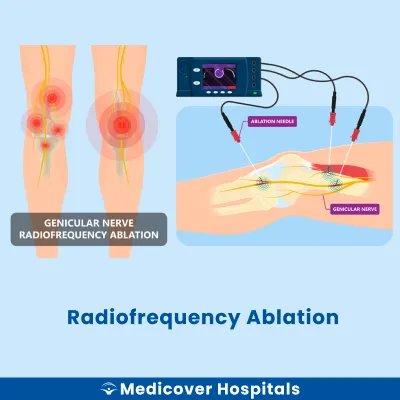
Radiofrequency Ablation (RFA) is a medical procedure used to treat certain conditions by using heat generated from radio waves. It targets specific nerves or tissues, often in the heart or spine. The heat destroys the problematic tissue, reducing pain or correcting irregular heart rhythms (arrhythmias). This minimally invasive technique is performed using a needle-like probe.
RFA is needed for conditions like chronic pain, certain types of cancer, or heart arrhythmias. If left untreated, these conditions can lead to severe pain, cancer progression, or life-threatening heart issues. Modern surgical approaches for RFA include catheter-based techniques and image-guided procedures. These methods ensure precise targeting of the affected area, enhancing the procedure's effectiveness.
Radiofrequency Ablation Doctors Near You
Discover skilled cardiologists for radiofrequency ablation at Medicover Hospitals across India. Choose your city and book a consultation to address your heart health needs effectively.
Why Choose Medicover Hospitals for Radiofrequency Ablation?
Get a second opinion from trusted experts and makeconfident, informed decisions.
 Get Second Opinion
Complete Guide To Radiofrequency Ablation
Everything you need to know about the procedure, preparation, and recovery
Radiofrequency Ablation Procedure Indications
Radiofrequency Ablation (RFA) is often recommended by cardiologists when certain heart rhythm disorders do not respond to medication or other treatments. It is a minimally invasive procedure used to treat abnormal heart rhythms, known as arrhythmias.
Atrial Fibrillation
Patients may experience palpitations, fatigue, or shortness of breath. Doctors often find irregular heart rhythms on an ECG. When medications fail to control the symptoms, RFA may be suggested.
Supraventricular Tachycardia (SVT)
Individuals may feel a rapid heartbeat, dizziness, or chest discomfort. An ECG can reveal a fast heart rate originating above the ventricles. If lifestyle changes and medications do not help, RFA becomes an option.
Ventricular Tachycardia
Symptoms include a fast, pounding heartbeat, fainting, or chest pain. ECG and Holter monitoring can show abnormal electrical activity in the ventricles. When antiarrhythmic drugs are ineffective, RFA is considered.
Wolff-Parkinson-White Syndrome
Patients might experience episodes of rapid heart rate, dizziness, or syncope. ECG findings show an extra electrical pathway. If symptoms persist despite medication, RFA is recommended.
Atrial Flutter
Individuals often feel a fluttering sensation in the chest, fatigue, or shortness of breath. ECG results show a characteristic sawtooth pattern. When medications do not alleviate symptoms, RFA is advised.
How to Prepare for Radiofrequency Ablation?
Proper preparation for radiofrequency ablation ensures a smoother procedure and recovery. It helps minimise risks and enhances the effectiveness of the treatment.
- Medication Review: Stop NSAIDs, anticoagulants, and herbal supplements at least a week before. Consult your doctor for specific guidance.
- Fasting Instructions: Fast for at least 6-8 hours before the procedure if general anaesthesia is used. Follow specific instructions from your healthcare provider.
- Clothing: Wear loose, comfortable clothing on the day of the procedure to ease movement and access to the treatment area.
- Transportation: Arrange for someone to drive you home after the procedure, as you may feel drowsy from the anaesthesia.
- Medication List: Bring a list of your current medications, including dosages, to share with the medical team.
- Health Conditions: Inform your doctor about any recent illnesses or changes in your health status.
- Pre-Procedure Instructions: Follow any specific instructions given by your doctor, such as avoiding certain foods or activities.
- Communication: Discuss any concerns or questions with your healthcare provider before the procedure to ensure clarity.
Radiofrequency Ablation Procedure (Step-by-Step)
Radiofrequency Ablation is performed by cardiologists. The procedure typically lasts 2-4 hours. It is usually done under local anaesthesia with sedation.
- Preparation: The patient is positioned on the procedure table. Local anaesthesia is administered to numb the area. Sedation is given to help the patient relax.
- Access Site Creation: A small incision, about 1-2 cm, is made in the groin area. A catheter is inserted through this incision to access the blood vessels.
- Catheter Insertion: Using a guide wire, the catheter is carefully advanced through the blood vessels to reach the heart. The patient may feel slight pressure but should not feel pain.
- Mapping: The cardiologist uses a special electrode catheter to map the electrical activity of the heart. This helps identify the abnormal tissue causing arrhythmias.
- Ablation: Once the target area is identified, radiofrequency energy is delivered through the catheter. This energy heats and destroys the problematic tissue. The patient may feel warmth in the chest.
- Monitoring: The heart's rhythm is monitored to ensure the arrhythmia is corrected. The catheter is then removed, and pressure is applied to the incision site to stop bleeding.
- Recovery: The patient is moved to a recovery area. They are monitored for a few hours before being discharged. Mild soreness at the incision site is common.
Who Performs Radiofrequency Ablation Procedure?
Radiofrequency Ablation is performed by cardiologists who specialise in electrophysiology. These specialists are trained to diagnose and treat heart rhythm disorders using minimally invasive techniques.
Recovery After Radiofrequency Ablation procedure
Recovery after a Radiofrequency Ablation (RFA) procedure is generally smooth, with most patients resuming normal activities within a few days. However, individual experiences may vary. It's important to follow your doctor's advice for a successful recovery.
Day 1-2:
- Rest is crucial. Avoid strenuous activities.
- You may experience mild discomfort or soreness at the procedure site.
- Stick to a light diet. Opt for easily digestible foods like curd, dal-rice, and soups.
Day 3-5:
- Gradually increase activity levels. Short walks are encouraged.
- Continue with a soft diet. Include khichdi and moong dal for nutrition.
- Monitor the procedure site for any unusual changes.
Day 6-7:
- Most can return to work or school, depending on the nature of the job.
- Avoid heavy lifting or intense exercise until cleared by your doctor.
- Maintain hydration and a balanced diet.
Phase 2 (Week 2-4):
- Resume normal activities gradually. Listen to your body.
- Continue eating a balanced diet. Include a variety of vegetables and fruits.
- Follow up with your doctor as scheduled.
When to Seek Urgent Help
- Severe pain or swelling at the procedure site.
- Fever or chills indicating possible infection.
- Uncontrolled bleeding or discharge from the site.
- Sudden shortness of breath or chest pain.
Benefits of Radiofrequency Ablation Procedure
Radiofrequency Ablation (RFA) is a minimally invasive procedure used to manage chronic pain and certain medical conditions.
- Pain Relief: RFA provides significant relief from chronic pain by disrupting nerve signals.
- Minimally Invasive: The procedure involves small incisions, reducing recovery time.
- Quick Recovery: Patients often return to normal activities shortly after the procedure.
- Reduced Medication Need: Effective pain relief may decrease the reliance on pain medications.
Risks and Complications of Radiofrequency Ablation procedure
While RFA is generally safe, it carries potential risks and complications. Patients should be informed and discuss concerns with their healthcare provider.
- Temporary pain or discomfort at the treatment site.
- Swelling or bruising around the insertion area.
- Infection at the site of the procedure.
- Nerve damage leading to numbness or weakness.
- Allergic reaction to medications or materials used during the procedure.
- Bleeding at the treatment site.
What is the Cost of Radiofrequency Ablation Procedure?
The cost of the Radiofrequency Ablation procedure at Medicover Hospitals ranges from Rs. 70,000 to Rs. 2,33,000. The price varies based on the ward category chosen, such as day care, general, private, or suite options. Medicover Hospitals offers transparent pricing and supports insurance and TPA services, including CGHS, ESI, and major TPAs. Cashless facilities are available for added convenience. Please contact the hospital for the latest insurance panel details as these may change periodically.
Frequently Asked Questions
1. How much does Radiofrequency Ablation cost?
The cost of Radiofrequency Ablation at Medicover Hospitals ranges from Rs. 70,000 to Rs. 2,33,000, depending on the room type and facility.
2. Is Radiofrequency Ablation covered by insurance?
Radiofrequency Ablation may be covered by CGHS, ESI, and major TPAs. Please contact the hospital for current panel details.
3. Will I feel pain during Radiofrequency Ablation?
Patients typically experience minimal discomfort during the procedure. Local anaesthesia is used to numb the area being treated.
4. Can I drive home after Radiofrequency Ablation?
It is advised not to drive immediately after the procedure. Arrange for someone to take you home for safety.
5. Will I need a special diet after the procedure?
No special diet is required after Radiofrequency Ablation. You can resume your regular diet, including curd, dal-rice, and khichdi.
6. How soon can I return to work post-procedure?
Most patients can return to work within a few days. However, it depends on your specific condition and doctor's advice.
7. Can Radiofrequency Ablation cause nerve damage?
Nerve damage is a rare complication of this procedure. Your doctor will take precautions to minimise any risks.


