 Call
Call Patient Reports
Best Radical Trachelectomy in Malignant Conditions Surgery Hospital
Radical trachelectomy, performed using laparoscopic techniques, is a surgical option for certain malignant conditions. At Medicover Hospitals, our team of oncologists, with qualifications like MS, DNB, and MCh, ensures precise care. This approach often results in smaller incisions and a shorter hospital stay.
Expert Surgeons
Yearly Surgeries
Patient Satisfaction
What is Radical Trachelectomy in Malignant Conditions?
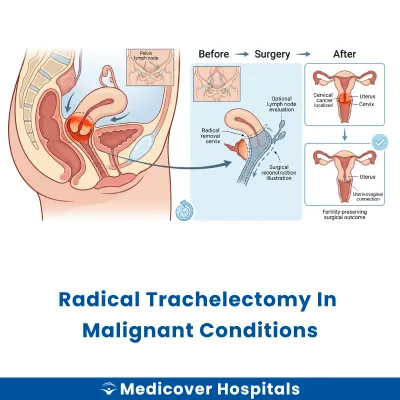
Radical trachelectomy is a surgical procedure involving the removal of the cervix (the lower part of the uterus), surrounding tissue, and sometimes nearby lymph nodes. It is primarily performed to treat early-stage cervical cancer. This surgery aims to preserve fertility by keeping the uterus intact, allowing for the possibility of future pregnancies.
This surgery is necessary for women with early-stage cervical cancer who wish to maintain their fertility. If left untreated, cervical cancer can progress, leading to more severe health issues and potentially life-threatening conditions. Modern surgical approaches for radical trachelectomy include minimally invasive techniques like laparoscopy and robotic-assisted surgery. These methods often result in quicker recovery and less postoperative discomfort.
Radical Trachelectomy in Malignant Conditions Doctors Near You
Discover skilled oncologists for radical trachelectomy at Medicover Hospitals across India. Choose your city and book a consultation to explore treatment options for malignant conditions.
Why Choose Medicover Hospitals for Radical Trachelectomy in Malignant Conditions?
Get a second opinion from trusted experts and makeconfident, informed decisions.
 Get Second Opinion
Complete Guide To Radical Trachelectomy In Malignant Conditions
Everything you need to know about the procedure, preparation, and recovery
Radical trachelectomy in malignant conditions Surgery Indications
Radical trachelectomy is recommended for certain patients with early-stage cervical cancer who wish to preserve fertility. Oncologists suggest this procedure when specific clinical criteria are met, ensuring the cancer is treatable through this approach.
Early-Stage Cervical Cancer
Patients may experience abnormal vaginal bleeding or pelvic pain. Doctors find a small tumour confined to the cervix through imaging or biopsy. Surgery is advised when the tumour is less than 2 cm and has not spread beyond the cervix.
Desire for Fertility Preservation
Women with early-stage cervical cancer who wish to maintain fertility may opt for this surgery. Oncologists assess tumour size and location, ensuring it is suitable for trachelectomy. Surgery is considered when fertility preservation is a priority and cancer is localised.
Stage IA2 Cervical Cancer
Patients might not show symptoms, but routine screenings reveal cancer. Doctors find microscopic cancer invasion of less than 5 mm. Surgery becomes necessary when conservative treatments are insufficient, and the patient desires fertility preservation.
Stage IB1 Cervical Cancer
Symptoms like unusual discharge or bleeding may occur. Imaging shows a tumour size of 2 cm or less. Radical trachelectomy is considered when the cancer is localised and fertility preservation is desired.
Favourable Histological Subtypes
Patients may have minimal symptoms, but biopsy reveals specific cancer subtypes. Doctors identify squamous cell carcinoma or adenocarcinoma. Surgery is recommended when these subtypes are present, and the tumour is small and localised.
How to Prepare for Radical trachelectomy in malignant conditions?
Proper preparation for radical trachelectomy is crucial to ensure a smooth surgical process and recovery. This surgery requires specific steps to minimize risks and enhance outcomes.
- Medication Review: Stop NSAIDs, anticoagulants, and herbal supplements as advised by your doctor to reduce bleeding risk.
- Fasting Guidelines: Do not eat or drink anything for at least 8 hours before the surgery to prepare for anaesthesia.
- Bowel Preparation: Follow any bowel prep instructions given by your healthcare provider to clear the intestines.
- Pelvic Floor Exercises: Practice exercises as recommended to strengthen muscles and aid recovery.
- Comfortable Clothing: Wear loose clothing on the day of surgery for comfort and ease of movement post-operation.
- Transport Arrangement: Arrange for someone to drive you home after the procedure as you will not be able to drive yourself.
- Medication List: Bring a list of current medications with dosages to share with your medical team.
- Pre-Surgery Consultation: Attend all pre-surgery appointments to discuss any concerns and finalize preparations.
Radical trachelectomy in malignant conditions Surgery (Step-by-Step)
This procedure is performed by oncologists to treat early-stage cervical cancer. It typically lasts 3-4 hours and is done under general anaesthesia.
- Preparation: The patient is positioned on the operating table. General anaesthesia is administered to ensure comfort and unconsciousness during the surgery.
- Incision: A small incision, about 1-2 cm, is made in the abdomen. This allows access to the pelvic area.
- Accessing the Cervix: A laparoscope is inserted through the incision. This instrument provides a clear view of the cervix and surrounding tissues.
- Removal of Cervix: The cervix is carefully separated from the uterus using a harmonic scalpel. This tool helps in precise cutting and reduces bleeding.
- Preservation of Uterus: The uterus is preserved to maintain fertility. The surgeon ensures that the surrounding tissues and lymph nodes are also examined.
- Reconstruction: The remaining part of the uterus is reattached to the vagina. This step is crucial for maintaining reproductive function.
- Closure: The incision is closed with sutures. The patient is then moved to the recovery room for monitoring.
Who Performs Radical trachelectomy in malignant conditions Surgery?
Radical trachelectomy is performed by surgical oncologists. These specialists are trained in managing and treating cancers surgically. They use advanced techniques and instruments to ensure the procedure is effective and safe.
Recovery After Radical Trachelectomy in Malignant Conditions Surgery
Recovery from a radical trachelectomy involves a gradual return to daily activities. Patients may experience some discomfort and will need to follow specific guidelines to ensure proper healing.
Day 1-3:
- Rest is crucial. Avoid strenuous activities.
- Hospital stay is expected. Pain management will be provided.
- Start with a liquid diet, gradually moving to soft foods like curd and soups.
Day 4-7:
- Begin gentle walking to improve circulation.
- Continue with a soft diet. Include dal-rice and moong dal for easy digestion.
- Monitor for any signs of infection at the surgical site.
Day 8-14:
- Increase activity gradually, but avoid heavy lifting.
- Introduce more solid foods like khichdi as tolerated.
- Follow-up appointment to assess healing progress.
Phase 3 (Week 3-6):
- Resume light activities and possibly return to work/school if approved by your doctor.
- Continue a balanced diet to support recovery.
- Engage in light exercises as advised by your healthcare provider.
When to Seek Urgent Help:
- Fever or chills indicating possible infection.
- Severe abdominal pain or unusual discharge from the surgical site.
- Heavy bleeding or difficulty urinating.
- Contact your healthcare provider immediately if you experience any of these symptoms.
Benefits of Radical trachelectomy in malignant conditions Surgery
Radical trachelectomy is a surgical option for certain cervical cancer patients, aiming to remove cancer while preserving fertility.
- Fertility Preservation: Offers the possibility of maintaining fertility by preserving the uterus.
- Effective Cancer Control: Targets and removes cancerous tissues effectively in early-stage cervical cancer.
- Less Invasive: Compared to radical hysterectomy procedure, it is less invasive, potentially leading to quicker recovery.
- Reduced Impact on Hormones: As the ovaries are preserved, hormonal balance is maintained.
Risks and Complications of Radical trachelectomy in malignant conditions Surgery
While radical trachelectomy can be beneficial, it carries certain risks and complications. Patients should be aware of these before proceeding.
- Common: Bleeding during or after surgery.
- Common: Infection at the surgical site.
- Rare: Cervical stenosis, which may affect future pregnancies.
- Rare: Injury to surrounding organs such as the bladder or bowel.
- Rare: Lymphatic complications, such as lymphedema.
- Rare: Recurrence of cancer, necessitating further treatment.
Cost of Radical trachelectomy in malignant conditions Surgery
The cost of Radical trachelectomy in malignant conditions surgery at Medicover Hospitals varies depending on the ward category chosen. The price range is from Rs. 98,000 to Rs. 310,000. The final cost will depend on the specific ward type and other factors.
We offer transparent pricing and support for insurance and TPA, including CGHS, ESI, and major TPAs. Cashless facilities are available for your convenience. Please contact the hospital for the latest insurance panel details as these may change periodically.
Frequently Asked Questions
1. How much does Radical trachelectomy in malignant conditions surgery cost at Medicover Hospitals?
The cost for Radical trachelectomy in malignant conditions surgery at Medicover Hospitals ranges from Rs. 98,000 to Rs. 310,000, depending on the room type and care level.
2. Is Radical trachelectomy in malignant conditions surgery covered under health insurance at Medicover?
Radical trachelectomy in malignant conditions surgery is often covered by CGHS, ESI, and major TPAs, offering cashless options. Please contact the hospital for current panel details.
3. Will my fertility be affected after Radical trachelectomy?
Radical trachelectomy aims to preserve fertility, but risks exist. Discuss fertility preservation options with your doctor before surgery.
4. Can I experience cervical stenosis post-surgery?
Cervical stenosis is a potential complication after Radical trachelectomy. Regular follow-ups are essential to monitor and manage any symptoms.
5. What lifestyle changes are needed after Radical trachelectomy?
Post-surgery, avoid heavy lifting and strenuous activities for a few weeks. Follow a balanced diet including curd, dal-rice, and khichdi for recovery.
6. Will I need a cervical cerclage during pregnancy?
After Radical trachelectomy, a cervical cerclage might be recommended to support pregnancy. Consult your doctor for personalized advice based on your condition.
7. How soon can I return to work after Radical trachelectomy?
Most patients can return to work within 4-6 weeks post-surgery, depending on recovery. Ensure to follow your doctor's advice on activity levels.
8. What is the difference between a trachelectomy and a radical trachelectomy?
A trachelectomy is the removal of the cervix while preserving the uterus, usually for early-stage disease or benign conditions. A radical trachelectomy removes the cervix along with surrounding tissues and part of the vagina, typically for early-stage cervical cancer to reduce the risk of spread.
9. What happens if you have cancerous cells on your cervix?
If cancerous cells are found, further evaluation is done to determine the stage and extent of cervical cancer. Treatment may include surgery, radiation, or chemotherapy depending on how advanced the disease is.


