 Call
Call Patient Reports
Radical Nephrectomy Surgery by Expert urologists
Radical Nephrectomy at Medicover Hospitals involves the surgical removal of a kidney using the open surgical approach. Our team of oncologists, with qualifications like MS, DNB, and MCh, ensures precise execution. This procedure often results in reduced blood loss, enhancing patient recovery.
Expert Surgeons
Yearly Surgeries
Patient Satisfaction
What is Radical Nephrectomy?
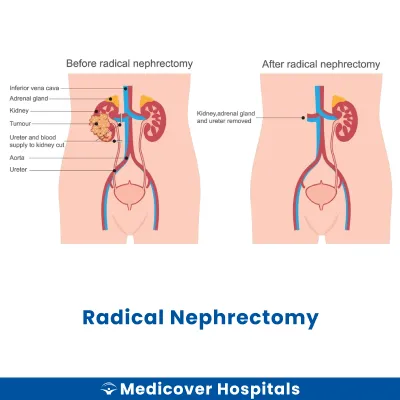
Radical Nephrectomy is a surgical procedure to remove a kidney (renal organ) entirely. This includes the kidney itself, surrounding fatty tissue, and sometimes nearby lymph nodes. It is often performed when a kidney is affected by a tumour or other serious conditions.
This surgery is necessary for treating kidney cancer, large kidney tumours, or severe trauma. If these conditions are left untreated, they can lead to serious health complications, including the spread of cancer. Modern surgical approaches for Radical Nephrectomy include laparoscopic (minimally invasive) and robotic-assisted techniques. These methods aim to reduce recovery time and minimise surgical risks.
Radical Nephrectomy Doctors Near You
Find skilled urologists for radical nephrectomy at Medicover Hospitals across India. Select your city and book a consultation to discuss your treatment options with our experienced specialists.
Why Choose Medicover Hospitals for Radical Nephrectomy?
Get a second opinion from trusted experts and makeconfident, informed decisions.
 Get Second Opinion
Complete Guide To Radical Nephrectomy
Everything you need to know about the procedure, preparation, and recovery
Radical Nephrectomy Surgery Indications
Doctors recommend radical nephrectomy when kidney conditions cannot be managed with less invasive treatments. This surgery is often advised for severe cases where the kidney is significantly affected.
Renal Cell Carcinoma
Patients may experience blood in urine or persistent flank pain. Imaging tests like CT scans or MRIs reveal a large or aggressive tumour in the kidney. When the tumour is not amenable to partial nephrectomy, radical nephrectomy is recommended.
Large Kidney Tumours
Symptoms include abdominal swelling or palpable mass. Ultrasound or CT scans show a tumour that occupies most of the kidney. Surgery is chosen when the tumour size makes other treatments ineffective.
Non-Functioning Kidney
Patients may have recurrent infections or high blood pressure. Tests like renal scans indicate poor kidney function. When medications and other interventions fail, removal of the kidney is advised.
Trauma-Induced Kidney Damage
Severe abdominal pain and internal bleeding may occur after an injury. Imaging reveals extensive kidney damage. Surgery is necessary when the kidney cannot be salvaged.
Polycystic Kidney Disease with Complications
Symptoms include pain, hypertension, and frequent infections. Ultrasound shows multiple large cysts. Radical nephrectomy is considered when complications are unmanageable with other treatments.
Please contact the hospital for current details as insurance panels may change.
How to Prepare for Radical Nephrectomy?
Proper preparation for a radical nephrectomy is crucial to ensure a smooth procedure and recovery. It helps minimise complications and aids in a quicker recovery process.
- Medication Review: Stop NSAIDs, anticoagulants, and herbal supplements as advised by your doctor.
- Fasting Guidelines: Do not eat or drink anything for at least 8 hours before the surgery.
- Pre-Surgery Tests: Complete all required blood tests, imaging, and other evaluations as scheduled.
- Personal Items: Wear loose clothing on the day of surgery for comfort and ease of movement.
- Transportation: Arrange for someone to drive you home post-surgery, as you will not be able to drive yourself.
- Medication List: Bring a list of your current medications, including dosages, to the hospital.
- Smoking and Alcohol: Avoid smoking and alcohol for at least 24 hours before the procedure.
- Pre-Op Instructions: Follow any specific instructions given by your healthcare team regarding bowel prep or other preparations.
Radical Nephrectomy Surgery (Step-by-Step)
Overview: Radical nephrectomy is performed by urologists. The surgery typically lasts 2-4 hours and is done under general anaesthesia.
- Preparation: The patient is positioned on the operating table. General anaesthesia is administered to ensure the patient is asleep and pain-free.
- Incision: A 1-2 cm incision is made for laparoscopic instruments. For open surgery, a larger incision is made on the side of the abdomen.
- Accessing the Kidney: A laparoscope is inserted through the incision. Additional small incisions may be made for other instruments like the harmonic scalpel and bipolar cautery.
- Detaching the Kidney: The surgeon carefully detaches the kidney from surrounding tissues. Blood vessels and the ureter are clipped and cut using instruments like the harmonic scalpel.
- Removing the Kidney: The kidney is placed in a retrieval bag and removed through the incision. In open surgery, the kidney is directly lifted out.
- Closure: The incisions are closed with sutures or staples. The patient is then moved to the recovery room.
- Recovery: The patient wakes up in the recovery area. Pain management and monitoring are provided as the anaesthesia wears off.
Who Performs Radical Nephrectomy Surgery?
Radical nephrectomy is performed by urologists or surgical oncologists. These specialists are trained in procedures involving the urinary system and related cancers. They use advanced techniques to ensure the procedure is effective and safe.
Recovery After Radical Nephrectomy Surgery
Recovering from a radical nephrectomy involves a gradual return to normal activities. It's important to follow your doctor's advice and give your body time to heal. Here's what you can expect during the recovery process.
Day 1-3:
- Hospital stay is common. Pain management and monitoring are priorities.
- Start with a liquid diet, gradually moving to soft foods like soups and curd.
- Limited movement. Short walks are encouraged to prevent blood clots.
Day 4-7:
- Discharge from the hospital is likely. Continue with soft, easy-to-digest foods like dal-rice and khichdi.
- Increase mobility gradually. Avoid lifting heavy objects.
- Monitor the incision site for signs of infection.
Week 2-4:
- Resume light activities. Avoid strenuous exercises.
- Introduce more solid foods, focusing on a balanced diet including moong dal and vegetables.
- Return to work or school may be possible, depending on the nature of your activities.
Month 1-3:
- Gradually return to normal activities, including exercise, as advised by your doctor.
- Maintain a healthy diet to support kidney function.
- Regular follow-up appointments to monitor recovery.
When to Seek Urgent Help:
- Fever or chills indicating possible infection.
- Severe pain unrelieved by medication.
- Persistent nausea or vomiting.
- Signs of infection at the incision site, such as redness or pus.
- Difficulty urinating or blood in urine.
Benefits of Radical Nephrectomy Surgery
Radical nephrectomy is a surgical procedure aimed at treating kidney cancer by removing the affected kidney. It offers several potential benefits:
- Effective Cancer Treatment: Removes the entire kidney and surrounding tissues, which may help eliminate cancer.
- Prevention of Spread: Reduces the risk of cancer spreading to other parts of the body.
- Symptom Relief: Alleviates symptoms such as pain or bleeding associated with kidney tumours.
- Improved Survival Rates: Offers a chance for longer survival in patients with localized kidney cancer.
Risks and Complications of Radical Nephrectomy Surgery
While radical nephrectomy can be beneficial, it carries certain risks and potential complications. Patients should be aware of these before undergoing the procedure:
- Common - Bleeding: There is a risk of significant blood loss during surgery.
- Common - Infection: Post-operative infections can occur, requiring medical attention.
- Common - Pain: Patients may experience pain at the surgical site.
- Rare - Injury to Nearby Organs: There is a small risk of damage to surrounding organs during surgery.
- Rare - Blood Clots: Formation of blood clots in the legs or lungs can occur post-surgery.
- Rare - Kidney Function Loss: The remaining kidney may not function optimally.
Cost of Radical Nephrectomy Surgery
The cost of Radical Nephrectomy Surgery across Medicover Hospitals ranges from Rs.98,000 to Rs.310,000, depending on the ward category chosen. Prices vary based on the type of accommodation, such as general, twin sharing, or private rooms.
We offer transparent pricing with support for insurance and TPA services, including CGHS, ESI, and major TPAs. Cashless facilities are available for a hassle-free experience. Please contact the hospital for the latest insurance panel details as these may change periodically.
Frequently Asked Questions
1. How much does Radical Nephrectomy surgery cost at Medicover Hospitals?
The cost of Radical Nephrectomy surgery at Medicover Hospitals ranges from Rs. 98,000 to Rs. 310,000, depending on the type of room and care.
2. Is Radical Nephrectomy surgery covered under health insurance at Medicover?
Radical Nephrectomy surgery is often covered by CGHS, ESI, and major TPAs with cashless options. Please contact the hospital for current panel details.
3. Will I need dialysis after Radical Nephrectomy?
Dialysis is usually not required if the remaining kidney functions well. Your doctor will assess kidney function before and after surgery.
4. Can I live a normal life with one kidney?
Yes, most people live normal lives with one kidney. It's important to maintain a healthy diet and regular check-ups to monitor kidney health.
5. What are the dietary restrictions post-surgery?
Post-surgery, a balanced diet including curd, dal-rice, and khichdi is recommended. Avoid high-sodium and high-protein foods to support kidney health.
6. How soon can I return to work after surgery?
Most patients can return to work within 4 to 6 weeks after Radical Nephrectomy. Recovery time may vary based on individual health and job type.
7. What are common complications after Radical Nephrectomy?
Common complications include infection and bleeding. Regular follow-ups are essential to monitor recovery and address any issues promptly.


