 Call
Call Patient Reports
Best Radical Mastoidectomy Surgery Hospital with Advanced Care
Radical Mastoidectomy at Medicover Hospitals is performed using the open surgical approach. Our team of skilled ENT specialists with qualifications like MS and DNB ensures precise treatment of chronic ear infections. This procedure can lead to reduced complications and improved recovery times for patients.
Expert Surgeons
Yearly Surgeries
Patient Satisfaction
What is Radical Mastoidectomy?
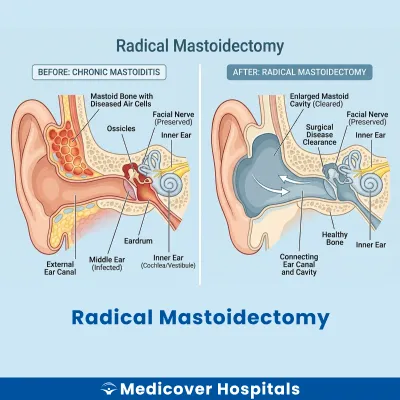
Radical Mastoidectomy is a surgical procedure involving the mastoid bone, located behind the ear. This surgery removes diseased mastoid air cells and parts of the middle ear structures. It aims to eliminate infection and prevent its spread. The procedure often involves creating a cavity in the mastoid area to ensure proper drainage and healing.
This surgery is necessary for chronic ear infections (chronic otitis media) that do not respond to other treatments. It is also used for cholesteatoma, a growth of skin cells in the middle ear. If untreated, these conditions can lead to hearing loss, dizziness, or brain infections. Modern approaches include canal wall down and canal wall up techniques, which are chosen based on the patient's specific condition.
Radical Mastoidectomy Doctors Near You
Find experienced ENT specialists for radical mastoidectomy at Medicover Hospitals across India. Choose your city and book a consultation to discuss your treatment options with our experts.
Why Choose Medicover Hospitals for Radical Mastoidectomy?
Get a second opinion from trusted experts and makeconfident, informed decisions.
 Get Second Opinion
Complete Guide To Radical Mastoidectomy
Everything you need to know about the procedure, preparation, and recovery
Radical Mastoidectomy Surgery Indications
Radical mastoidectomy is recommended when chronic ear conditions do not respond to conservative treatments. It is often considered when complications arise or when there is a risk of spreading infection.
Chronic Suppurative Otitis Media (CSOM)
Patients experience persistent ear discharge and hearing loss. Doctors find a perforated eardrum and infected mastoid bone on examination. Surgery is advised when antibiotics and ear cleaning fail to control the infection.
Cholesteatoma
Patients report foul-smelling ear discharge and hearing impairment. Imaging reveals an abnormal skin growth in the middle ear. Surgery is necessary when the growth causes bone erosion or threatens nearby structures.
Mastoid Abscess
Patients suffer from severe ear pain and swelling behind the ear. Doctors detect a collection of pus in the mastoid area through imaging. Surgery is required when antibiotics do not resolve the abscess.
Complications of Otitis Media
Patients may experience dizziness, facial nerve weakness, or severe headaches. Examination shows spread of infection beyond the middle ear. Surgery is indicated when these complications do not improve with medication.
Recurrent Ear Infections
Patients have frequent ear infections despite medical treatment. Examination reveals chronic inflammation and damage to ear structures. Surgery is considered when infections recur and affect quality of life.
How to Prepare for Radical Mastoidectomy?
Proper preparation for a Radical Mastoidectomy is crucial to ensure a smooth procedure and recovery. It helps minimise risks and enhances the effectiveness of the surgery.
- Medication Review: Stop NSAIDs, anticoagulants, and herbal supplements at least a week before surgery.
- Fasting Guidelines: Do not eat or drink anything for at least 8 hours before the procedure due to general anaesthesia.
- Pre-Surgery Tests: Complete any required blood tests or imaging studies as advised by your doctor.
- Ear Cleaning: Use prescribed ear drops to clean the ear canal as directed by your healthcare provider.
- Comfortable Clothing: Wear loose-fitting clothes on the day of the surgery for comfort and ease of changing.
- Transportation: Arrange for someone to drive you home post-surgery as you may feel drowsy from anaesthesia.
- Medication List: Bring a list of your current medications, including dosages, to the hospital.
- Personal Items: Pack essentials like identification and insurance documents. Please contact the hospital for current details as insurance panels may change.
Radical Mastoidectomy Surgery (Step-by-Step)
A radical mastoidectomy is performed by an ENT surgeon. It typically lasts 3-4 hours and is done under general anaesthesia.
- Preparation: The patient is placed under general anaesthesia. The surgical area is cleaned and sterilised.
- Incision: A postauricular incision, about 4-5 cm, is made behind the ear to access the mastoid bone.
- Bone Removal: Using a surgical drill, the surgeon removes diseased mastoid air cells. A curette may also be used for precision.
- Exposure: The surgeon carefully exposes the middle ear structures, ensuring the preservation of critical areas like the facial nerve.
- Cleaning: Diseased tissue and infection are removed. A harmonic scalpel may be used for effective tissue dissection.
- Reconstruction: The ear canal is reconstructed, and any necessary repairs to the eardrum or ossicles are performed.
- Closure: The incision is closed with sutures. A sterile dressing is applied to protect the area.
Who Performs Radical Mastoidectomy Surgery?
An ENT (Ear, Nose, and Throat) surgeon, also known as an otolaryngologist, performs radical mastoidectomy. These specialists are trained in managing ear disorders and performing intricate ear surgeries. They ensure the procedure is conducted safely, focusing on removing infection while preserving hearing and facial nerve function.
Recovery After Radical Mastoidectomy Surgery
Recovery from radical mastoidectomy surgery involves careful monitoring and adherence to post-operative instructions. Patients can expect some discomfort and adjustments in daily activities during the recovery period.
Day 1-3:
- Rest is crucial. Avoid any strenuous activities.
- Keep the head elevated to reduce swelling.
- Follow prescribed medication for pain management.
- Stick to a soft diet. Include foods like curd, dal-rice, and soups.
Day 4-7:
- Gradually resume light activities as tolerated.
- Continue with a soft diet. Add options like khichdi and moong dal.
- Avoid getting the ear wet. Follow doctor's advice on ear care.
Day 8-14:
- Most patients can return to work or school, depending on comfort.
- Continue avoiding heavy lifting or strenuous exercise.
- Maintain a balanced diet to support healing.
Phase 3 (Week 3-4):
- Gradual return to normal activities.
- Regular follow-up appointments to monitor healing.
- Continue ear care as instructed by the healthcare provider.
When to Seek Urgent Help:
- Severe or increasing pain not relieved by medication.
- Persistent fever or chills.
- Sudden hearing loss or dizziness.
- Any signs of infection, such as redness, swelling, or discharge from the ear.
Benefits of Radical Mastoidectomy Surgery
Radical mastoidectomy is a surgical procedure aimed at treating chronic ear infections and related complications. It offers several benefits for patients.
- Infection Control: Helps in eliminating persistent ear infections by removing infected tissues.
- Hearing Improvement: May improve hearing by removing obstructions and infections affecting the ear.
- Prevention of Complications: Reduces the risk of complications like brain abscesses or meningitis by addressing the root cause.
- Symptom Relief: Alleviates symptoms such as ear discharge and pain, enhancing quality of life.
Risks and Complications of Radical Mastoidectomy Surgery
While radical mastoidectomy can be beneficial, it is important to be aware of potential risks and complications associated with the procedure.
- Common: Temporary dizziness or imbalance post-surgery.
- Common: Hearing loss, which may be partial or complete, depending on the extent of the surgery.
- Rare: Facial nerve injury, leading to weakness or paralysis of facial muscles.
- Rare: Infection at the surgical site, requiring further treatment.
- Rare: Tinnitus, or ringing in the ears, which may persist after surgery.
- Rare: Cerebrospinal fluid leak, necessitating additional medical intervention.
Cost of Radical Mastoidectomy Surgery
The cost of Radical Mastoidectomy Surgery at Medicover Hospitals ranges from Rs. 87,000 to Rs. 140,000. The price varies based on the ward category chosen, such as day care, general, private, or suite options. We offer transparent pricing to ensure clarity for our patients.
Insurance and TPA support are available, with CGHS, ESI, and major TPAs accepted. A cashless facility is also offered for convenience. Please contact the hospital for the latest insurance panel details as these may change periodically.
Frequently Asked Questions
1. How much does Radical Mastoidectomy cost?
The cost of Radical Mastoidectomy surgery at Medicover Hospitals ranges from Rs. 87,000 to Rs. 140,000 depending on the type of accommodation.
2. Is Radical Mastoidectomy covered under insurance?
Radical Mastoidectomy may be covered by CGHS, ESI, and major TPAs. Please contact the hospital for current panel details.
3. What organ is affected in Radical Mastoidectomy?
Radical Mastoidectomy involves the removal of diseased tissue from the mastoid bone, which is part of the ear structure.
4. Will I experience hearing loss after surgery?
Some patients may experience temporary or permanent hearing loss after Radical Mastoidectomy due to the nature of the surgery.
5. Can I swim after Radical Mastoidectomy?
Swimming is generally not recommended for at least 6 weeks after surgery to prevent water from entering the ear and causing infection.
6. What complications can occur post-surgery?
Complications such as facial nerve damage or persistent ear discharge can occur after Radical Mastoidectomy.
7. What foods should I avoid post-surgery?
Avoid spicy and oily foods post-surgery. Opt for soft, easy-to-digest foods like dal-rice, khichdi, and curd for a smoother recovery.
8. What is the difference between mastoidectomy and modified radical mastoidectomy?
A Mastoidectomy involves removing infected air cells in the mastoid bone while preserving as much normal ear structure as possible. A Modified radical mastoidectomy is more extensive, removing disease while creating a cavity and preserving some hearing structures.
9. How serious is mastoidectomy surgery?
Mastoidectomy is considered a moderate to major surgery, depending on the extent of disease. It is generally safe but requires careful surgical expertise and follow-up.
10. Will I lose hearing after mastoidectomy?
Hearing loss after Mastoidectomy is possible but not always permanent. In many cases, hearing is preserved or even improved, though it depends on the severity of the condition and the type of surgery performed.


