 Call
Call Patient Reports
Best Hospital for Radical Hysterectomy Surgery: Expert Gynecologists
Radical Hysterectomy at Medicover Hospitals is performed using the open surgical approach. Our team, with qualifications like MS, DNB, and MCh, ensures precise treatment. This approach often results in shorter hospital stays and reduced blood loss, enhancing recovery for patients across India.
Expert Surgeons
Yearly Surgeries
Patient Satisfaction
What is Radical Hysterectomy?
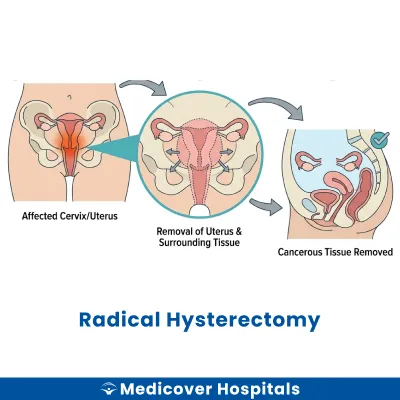
Radical hysterectomy is a surgical procedure to remove the uterus (womb), cervix, part of the vagina, and surrounding tissues. It may also involve the removal of nearby lymph nodes. This surgery is more extensive than a standard hysterectomy, which only removes the uterus and cervix.
This surgery is often needed for certain types of cancer, such as cervical or uterine cancer. If these conditions are left untreated, they can spread and become life-threatening. Modern surgical approaches for radical hysterectomy include open surgery, laparoscopic surgery, and robotic-assisted surgery. These methods aim to improve precision and recovery times. Always consult a healthcare professional for advice on the best approach for your condition.
Radical Hysterectomy Doctors Near You
Discover experienced gynecologists at Medicover Hospitals across India for radical hysterectomy. Choose your city and book a consultation to discuss your treatment options with our specialists.
Why Choose Medicover Hospitals for Radical Hysterectomy?
Get a second opinion from trusted experts and makeconfident, informed decisions.
 Get Second Opinion
Complete Guide To Radical Hysterectomy
Everything you need to know about the procedure, preparation, and recovery
Radical Hysterectomy Surgery Indications
Doctors recommend radical hysterectomy when conservative treatments are insufficient. This procedure is often considered for certain cancers or severe conditions affecting the uterus and surrounding tissues.
Cervical Cancer
Patients may experience abnormal vaginal bleeding or pelvic pain. Diagnostic tests like a Pap smear or biopsy reveal cancerous cells in the cervix. When cancer is invasive or advanced, surgery is necessary.
Endometrial Cancer
Symptoms include unusual bleeding or discharge. Ultrasound or biopsy confirms cancer in the uterine lining. If the cancer is aggressive or unresponsive to other treatments, surgery is advised.
Recurrent Pelvic Pain
Chronic pelvic pain that persists despite medication can be debilitating. Imaging may show uterine abnormalities. When pain is linked to severe conditions like adenomyosis, surgery may be the solution.
Severe Pelvic Inflammatory Disease
Patients suffer from persistent pelvic pain and fever. Lab tests and imaging reveal extensive infection or damage. When antibiotics fail to resolve the condition, surgery may be required.
Advanced Ovarian Cancer
Symptoms include bloating and abdominal pain. Imaging and blood tests show cancer spread to the uterus. When chemotherapy is insufficient, radical hysterectomy may be performed.
How to Prepare for Radical Hysterectomy?
Proper preparation for a radical hysterectomy can help ensure a smoother surgery and recovery. It involves both physical and logistical steps to enhance outcomes and comfort.
- Medication Review: Stop NSAIDs, anticoagulants, and herbal supplements as advised by your doctor.
- Fasting: Do not eat or drink anything for at least 8 hours before the surgery.
- Bowel Preparation: Follow any bowel prep instructions given by your healthcare provider.
- Pelvic Floor Exercises: Practice exercises if recommended to strengthen pelvic muscles.
- Clothing: Wear loose, comfortable clothing on the day of surgery for ease and comfort.
- Transport Arrangement: Arrange for someone to drive you home post-surgery as you will not be able to drive yourself.
- Medication List: Bring a list of all medications you take, including dosages, to the hospital.
- Pre-Surgery Instructions: Follow any additional instructions provided by your surgical team.
Radical Hysterectomy Surgery (Step-by-Step)
Radical hysterectomy is performed by obstetrician. It typically lasts 3-4 hours and is done under general anaesthesia.
- Preparation: The patient is given general anaesthesia to ensure they are asleep and pain-free. The surgical area is sterilised.
- Incision: A vertical or horizontal incision, about 10-15 cm, is made in the abdomen to access the pelvic area.
- Exploration: The surgeon uses a laparoscope to examine the pelvic organs. This helps in assessing the extent of the disease.
- Removal: The uterus, cervix, part of the vagina, and surrounding tissues are removed. Instruments like the harmonic scalpel and bipolar cautery are used to cut and seal tissues.
- Lymph Node Dissection: Nearby lymph nodes are removed for further examination. This helps in checking the spread of cancer.
- Closure: The incision is closed with sutures or staples. A drain may be placed to remove excess fluid.
- Recovery: The patient is moved to a recovery room. Vital signs are monitored as they wake up from anaesthesia.
Who Performs Radical Hysterectomy Surgery?
Radical hysterectomy is performed by gynaecologists. These specialists have expertise in treating cancers of the female reproductive system. They are skilled in using advanced surgical instruments and techniques to ensure effective treatment.
Recovery After Radical Hysterectomy Surgery
Recovering from a radical hysterectomy surgery involves physical and emotional adjustments. Understanding the recovery timeline can help manage expectations and ensure a smoother healing process.
Day 1-3:
- Initial recovery in the hospital. Pain management and monitoring for complications.
- Start with clear liquids and gradually introduce soft foods like curd and soups.
Day 4-7:
- Discharge from the hospital is common during this period.
- Continue with a light diet including dal-rice, khichdi, and moong dal.
- Avoid heavy lifting and strenuous activities.
Week 2-4:
- Gradual increase in physical activity, like short walks.
- Maintain a balanced diet with plenty of fluids and fibre to prevent constipation.
- Most can resume light work or school activities by the end of this phase.
Week 5-8:
- Return to normal activities, but avoid heavy exercise until cleared by a doctor.
- Continue healthy eating habits to support recovery.
When to Seek Urgent Help
- High fever or chills.
- Severe abdominal pain or swelling.
- Heavy vaginal bleeding or unusual discharge.
- Signs of infection at the incision site, such as redness or pus.
Always follow your doctor's advice and attend follow-up appointments for a safe recovery.
Benefits of Radical Hysterectomy Surgery
Radical hysterectomy is a surgical procedure often used to treat certain types of cancer. It can offer several benefits for patients.
- Effective Cancer Treatment: Removes cancerous tissues from the uterus and surrounding areas.
- Prevention of Cancer Spread: Helps prevent the spread of cancer to other parts of the body.
- Improved Survival Rates: Can improve long-term survival chances in certain cancer cases.
- Symptom Relief: Alleviates symptoms such as pain and bleeding associated with cancer.
Risks and Complications of Radical Hysterectomy Surgery
Like any major surgery, radical hysterectomy carries potential risks and complications. It is important to be aware of these before proceeding.
- Common: Infection at the surgical site.
- Common: Bleeding during or after the procedure.
- Rare: Damage to surrounding organs such as the bladder or intestines.
- Rare: Blood clots in the legs or lungs.
- Rare: Long-term urinary problems.
- Rare: Lymphoedema, or swelling due to lymph node removal.
Cost of Radical Hysterectomy Surgery
The cost of Radical hysterectomy Surgery at Medicover Hospitals ranges from Rs. 53,000 to Rs. 2,16,000. The price varies based on the ward category chosen, such as day care, general, private, or suite options. We offer transparent pricing and support for insurance and TPA, including CGHS, ESI, and major TPAs. A cashless facility is also available for your convenience. Please contact the hospital for the latest insurance panel details as these may change periodically.
Frequently Asked Questions
1. How much does Radical Hysterectomy surgery cost at Medicover Hospitals?
The cost of Radical Hysterectomy surgery at Medicover Hospitals ranges from Rs. 53,000 to Rs. 2,16,000, depending on the type of room chosen.
2. Is Radical Hysterectomy surgery covered under health insurance at Medicover?
Yes, Radical Hysterectomy surgery is covered under CGHS, ESI, and major TPAs offering cashless options. Please contact the hospital for current panel details.
3. Will I experience hormonal changes after the surgery?
Yes, hormonal changes may occur if the ovaries are removed during the procedure. Discuss hormone replacement therapy with your doctor if needed.
4. How long before I can return to normal activities?
Most patients can resume normal activities within 6 to 8 weeks after surgery. Follow your doctor's advice for a safe recovery.
5. Can I still get pregnant after Radical Hysterectomy?
No, pregnancy is not possible after a Radical Hysterectomy as the uterus is removed. Consider discussing fertility options with your healthcare provider.
6. What dietary changes should I follow post-surgery?
Post-surgery, consume light meals like dal-rice and khichdi. Avoid spicy and heavy foods for the first few weeks to aid recovery.
7. Will I need a catheter after the surgery?
Yes, a catheter may be required temporarily after the surgery to assist with urination. Your doctor will advise when it can be removed.
8. What is left after a radical hysterectomy?
A Radical hysterectomy removes the uterus, cervix, upper vagina, and surrounding tissues. In many cases, the ovaries may be preserved. The lower vagina and external genital organs remain intact.
9. Do you still have periods after a hysterectomy?
No, you will not have periods after a Hysterectomy because the uterus is removed, which is where menstrual bleeding occurs.
10. How long does it take to recover from a radical hysterectomy?
Recovery typically takes about 6-8 weeks, depending on overall health and the type of surgery performed.


