 Call
Call Patient Reports
Radical Cystectomy with Urinary Diversion Surgery Hospital with Expert Care
Radical cystectomy with urinary diversion at Medicover Hospitals is performed using advanced robotic and laparoscopic techniques. Our team of MS, DNB, and MCh qualified urologists ensures precise surgical intervention. This approach often results in smaller incisions and reduced blood loss during the procedure.
Expert Surgeons
Yearly Surgeries
Patient Satisfaction
What is Radical Cystectomy With Urinary Diversion?
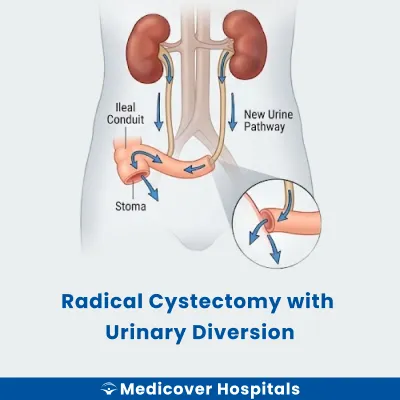
Radical Cystectomy with Urinary Diversion is a surgical procedure involving the removal of the bladder (cystectomy) and creating a new way for urine to exit the body (urinary diversion). The bladder is an organ that stores urine. This surgery is often necessary when the bladder is affected by cancer or other severe conditions.
This surgery is typically needed for bladder cancer or other serious bladder diseases. If left untreated, these conditions can lead to significant health issues, including the spread of cancer. Modern surgical approaches for this procedure include open surgery, laparoscopic surgery, and robotic-assisted surgery. These methods aim to effectively remove the affected tissue and provide a new pathway for urine elimination.
Radical Cystectomy With Urinary Diversion Doctors Near You
Discover skilled urologists for radical cystectomy with urinary diversion at Medicover Hospitals across India. Choose your city and book a consultation to discuss your treatment options today.
Why Choose Medicover Hospitals for Radical Cystectomy With Urinary Diversion?
Get a second opinion from trusted experts and makeconfident, informed decisions.
 Get Second Opinion
Complete Guide To Radical Cystectomy With Urinary Diversion
Everything you need to know about the procedure, preparation, and recovery
Radical Cystectomy with Urinary Diversion Surgery Indications
Doctors recommend radical cystectomy with urinary diversion when bladder cancer or other severe bladder conditions cannot be managed with less invasive treatments. This procedure is considered when the disease significantly affects the patient's quality of life or poses a serious health risk.
Muscle-Invasive Bladder Cancer
Patients may experience blood in urine, frequent urination, or pelvic pain. Imaging and biopsy reveal cancer that has penetrated the bladder muscle. When chemotherapy or radiation fails to control the cancer, surgery is necessary.
Recurrent High-Grade Non-Muscle Invasive Bladder Cancer
Symptoms include blood in urine and frequent urinary tract infections. Cystoscopy and pathology reports show persistent high-grade cancer despite intravesical therapy. Surgery is advised when cancer recurs after multiple treatments.
Bladder Dysfunction from Radiation Therapy
Patients suffer from severe urinary frequency, urgency, and pain. Imaging and urodynamic studies indicate significant bladder damage. When medications and conservative measures do not relieve symptoms, surgery is considered.
Severe Interstitial Cystitis
Chronic pelvic pain and frequent urination disrupt daily life. Cystoscopy and biopsy confirm interstitial cystitis with bladder wall damage. Surgery is an option when other treatments fail to provide relief.
Bladder Trauma
Patients experience severe abdominal pain and blood in urine following an injury. Imaging shows extensive bladder damage. Surgery is required when repair is not possible through less invasive methods.
How to Prepare for Radical Cystectomy with Urinary Diversion?
Preparation is crucial for a successful radical cystectomy with urinary diversion. It helps minimise risks and ensures a smoother recovery.
- Medication Review: Stop NSAIDs, anticoagulants, and herbal supplements as advised by your doctor.
- Fasting Guidelines: Fast for at least 8 hours before the surgery to prepare for anaesthesia.
- Bowel Preparation: Follow any bowel prep instructions given by your healthcare team to clear the intestines.
- Clothing: Wear loose, comfortable clothing on the day of surgery for ease and comfort.
- Transport Arrangement: Arrange for someone to drive you home after discharge from the hospital.
- Medication List: Bring a list of your current medications, including dosages, to the hospital.
- Pre-Surgery Exercises: Perform any recommended pelvic floor exercises to strengthen muscles before surgery.
- Hospital Contact: Confirm your insurance coverage. Contact the hospital for current details as insurance panels may change.
Radical Cystectomy with Urinary Diversion Surgery (Step-by-Step)
This procedure is performed by urinary tract specialists. It typically lasts 4-6 hours and is done under general anaesthesia.
- Preparation: The patient is positioned on the operating table. General anaesthesia is administered to ensure the patient is asleep and pain-free.
- Incision: A midline incision, usually 15-20 cm, is made on the abdomen. This provides access to the bladder and surrounding organs.
- Bladder Removal: The urologist uses instruments like a harmonic scalpel and bipolar cautery to carefully remove the bladder. Nearby lymph nodes may also be excised.
- Urinary Diversion: A section of the intestine is used to create a new pathway for urine. This may involve forming a stoma on the abdomen or constructing a new bladder (neobladder).
- Reconstruction: The urologist connects the ureters to the new urinary diversion. This ensures urine can exit the body or be stored as needed.
- Closure: The incision is closed with sutures or staples. A sterile dressing is applied to protect the site.
- Recovery: The patient is moved to the recovery room. They are monitored as they wake from anaesthesia, experiencing some discomfort managed with medication.
Who Performs Radical Cystectomy with Urinary Diversion Surgery?
This surgery is performed by urologists. They are specialists in the urinary tract and male reproductive organs. Their expertise ensures the procedure is conducted with precision and care.
Recovery After Radical Cystectomy with Urinary Diversion Surgery
Recovery from radical cystectomy with urinary diversion surgery involves several stages. Patients can expect to stay in the hospital for a few days post-surgery. Full recovery may take several weeks, with gradual improvements in strength and mobility.
Day 1-3:
- Hospital stay is necessary for monitoring.
- Pain management and IV fluids will be provided.
- Begin with a liquid diet, gradually introducing soft foods like curd and soups.
Day 4-7:
- Transition to a light diet including dal-rice and khichdi.
- Encouraged to walk short distances to improve circulation.
- Stoma care education if applicable.
Week 2-4:
- Continue with a balanced diet, incorporating moong dal and other easily digestible foods.
- Increase activity gradually; avoid heavy lifting.
- Resume light activities and possibly return to work or school, depending on recovery.
Week 5-8:
- Most patients can return to normal activities, but strenuous exercise should be avoided.
- Regular follow-up appointments to monitor recovery progress.
- Focus on hydration and a fibre-rich diet to aid digestion.
When to Seek Urgent Help:
- Fever or signs of infection.
- Severe abdominal pain or swelling.
- Unusual changes in stoma output or urine colour.
- Persistent nausea or vomiting.
Benefits of Radical Cystectomy with Urinary Diversion Surgery
Radical cystectomy with urinary diversion is a procedure aimed at treating bladder cancer by removing the bladder and creating a new way for urine to exit the body.
- Effective Cancer Control: Helps in removing cancerous tissues, reducing the risk of cancer spread.
- Improved Quality of Life: Alleviates symptoms like frequent urination and blood in urine.
- Potential for Complete Removal: Offers a chance for complete removal of the tumour.
- Customised Urinary Diversion: Provides options for urinary diversion tailored to patient needs.
Risks and Complications of Radical Cystectomy with Urinary Diversion Surgery
While the surgery can be beneficial, it does come with certain risks and complications that patients should be aware of.
- Infection at the surgical site or urinary tract.
- Bleeding during or after the procedure.
- Bowel obstruction due to changes in the abdominal area.
- Blood clots that may travel to the lungs.
- Electrolyte imbalances due to changes in urinary function.
- Kidney function impairment over time.
Cost of Radical Cystectomy with Urinary Diversion Surgery
The cost of Radical Cystectomy with Urinary Diversion Surgery at Medicover Hospitals ranges from Rs. 2,20,000 to Rs. 3,50,000. The price varies depending on the ward category chosen, such as general, twin sharing, or private rooms. We offer transparent pricing and support for insurance and TPA, including CGHS, ESI, and major TPAs. A cashless facility is also available for your convenience. Please contact the hospital for the latest insurance panel details as these may change periodically.
Frequently Asked Questions
1. How much does Radical Cystectomy with Urinary Diversion surgery cost at Medicover Hospitals?
The cost ranges from Rs. 2,20,000 to Rs. 3,50,000 across Medicover Hospitals. Prices vary based on room type and care level.
2. Is Radical Cystectomy with Urinary Diversion surgery covered under health insurance at Medicover?
This surgery is often covered by CGHS, ESI, and major TPAs, with cashless options. Please contact the hospital for current panel details.
3. Will I need a urinary bag after cystectomy?
Yes, a urinary diversion often requires a bag to collect urine. This change is necessary as the bladder is removed.
4. Can I eat spicy food after cystectomy?
Initially, avoid spicy foods and opt for soft, bland options like curd and khichdi. Gradually reintroduce spices as advised by your doctor.
5. Will I experience changes in urination post-surgery?
Yes, urination will change as the bladder is removed. You may need to adapt to a new urinary system.
6. What is the recovery time for bladder removal?
Recovery from radical cystectomy can take several weeks. Full recovery and adaptation to lifestyle changes may take longer.
7. Are there risks of infection after urinary diversion?
Yes, there is a risk of infection at the surgical site or in the urinary tract. Regular follow-ups help manage and prevent complications.


