 Call
Call Patient Reports
Radial Head Arthroplasty Surgery by Expert Orthopedics
Radial Head Arthroplasty at Medicover Hospitals involves an open surgical approach performed by experienced orthopaedic surgeons with qualifications like MS and DNB. This procedure helps restore elbow function and stability. Patients often experience shorter hospital stays and improved recovery outcomes.
Expert Surgeons
Yearly Surgeries
Patient Satisfaction
What is Radial Head Arthroplasty?
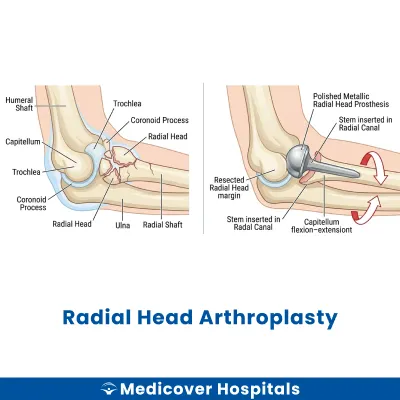
Radial Head Arthroplasty is a surgical procedure involving the elbow joint. It focuses on replacing the radial head, which is the top part of the radius bone in the forearm. This procedure is often necessary when the radial head is fractured or damaged beyond repair. The surgery aims to restore normal function and movement to the elbow.
This surgery is needed for conditions like severe fractures, arthritis, or chronic instability of the elbow. If left untreated, these conditions can lead to pain, limited motion, and joint dysfunction. Modern surgical approaches for Radial Head Arthroplasty include minimally invasive techniques and the use of prosthetic implants. These methods help in quicker recovery and better outcomes.
Radial Head Arthroplasty Doctors Near You
Discover expert orthopedics for radial head arthroplasty at Medicover Hospitals across India. Choose your city and book a consultation to explore your treatment options with our specialists.
Why Choose Medicover Hospitals for Radial Head Arthroplasty?
Get a second opinion from trusted experts and makeconfident, informed decisions.
 Get Second Opinion
Complete Guide To Radial Head Arthroplasty
Everything you need to know about the procedure, preparation, and recovery
Radial Head Arthroplasty Surgery Indications
Doctors recommend radial head arthroplasty when the radial head of the elbow is damaged beyond repair. This procedure is often considered after other treatments fail to relieve symptoms or restore function.
Severe Elbow Fractures
Patients may experience intense pain and swelling in the elbow after a fall or trauma. X-rays or CT scans reveal complex fractures of the radial head. When conservative treatments like casting or splinting do not suffice, surgery is advised.
Chronic Instability
Some patients suffer from recurrent elbow dislocations, leading to instability. Physical examination shows abnormal movement, and imaging confirms ligament damage. When physical therapy and bracing fail, surgical intervention becomes necessary.
Post-Traumatic Arthritis
Patients with a history of elbow injury may develop persistent pain and stiffness. X-rays show joint degeneration. When medications and physiotherapy do not alleviate symptoms, surgery is considered.
Non-Union of Fractures
After a fracture, some patients experience ongoing pain and limited motion. Imaging shows that the bone has not healed properly. When bone grafting or other methods do not work, surgery is the next step.
Failed Previous Surgery
Some patients have persistent pain and dysfunction after previous elbow surgeries. Clinical evaluation and imaging reveal unresolved issues. When revision surgery is needed, radial head arthroplasty is an option.
How to Prepare for Radial Head Arthroplasty?
Proper preparation for Radial Head Arthroplasty ensures a smoother surgery and recovery. It helps in reducing complications and enhances the healing process.
- Medication Review: Stop NSAIDs, anticoagulants, and herbal supplements as advised by your doctor.
- Fasting Guidelines: Fast for at least 8 hours before the surgery if general anaesthesia is used.
- Medical History: Share your complete medical history and current medications with your healthcare team.
- Clothing: Wear loose, comfortable clothing on the day of the surgery for easy access to the surgical site.
- Transportation: Arrange for someone to drive you home post-surgery as you may feel drowsy.
- Medication List: Bring a list of your medications with dosages for hospital records.
- Pre-Surgery Instructions: Follow any specific instructions provided by your surgeon regarding skin preparation or hygiene.
- Support at Home: Prepare your home for easy access and comfort during recovery, such as setting up a resting area.
Radial Head Arthroplasty Surgery (Step-by-Step)
Radial head arthroplasty is performed by orthopaedic surgeons. The procedure typically lasts 1-2 hours. It is usually done under general anaesthesia, but regional anaesthesia may also be used.
- Preparation: The patient is positioned on the operating table. Anaesthesia is administered to ensure comfort and pain-free surgery.
- Incision: A 5-7 cm incision is made on the lateral side of the elbow. This provides access to the radial head.
- Exposure: Soft tissues are carefully retracted. Instruments like retractors are used to expose the joint and the damaged radial head.
- Removal: The damaged radial head is removed using a curette. Care is taken to preserve surrounding structures.
- Implantation: A prosthetic radial head is selected and fitted. The implant is secured in place, ensuring proper alignment and function.
- Closure: The incision is closed with sutures or staples. A sterile dressing is applied to protect the wound.
- Recovery: The patient is moved to the recovery room. They are monitored as the anaesthesia wears off, and pain management is provided.
Who Performs Radial Head Arthroplasty Surgery?
Radial head arthroplasty is performed by orthopaedic surgeons. These specialists are trained in diagnosing and treating conditions of the musculoskeletal system. They have expertise in surgical procedures involving bones, joints, and soft tissues.
Recovery After Radial Head Arthroplasty Surgery
Recovery from radial head arthroplasty surgery involves gradual healing and rehabilitation. Patients can expect to regain mobility and strength over time with proper care and guidance.
Day 1-3:
- Rest is crucial. Keep the arm elevated to reduce swelling.
- Ice packs may be applied to manage pain and swelling.
- Start with a soft diet. Include curd, dal-rice, and soups.
Day 4-7:
- Begin gentle finger and wrist movements as advised by your doctor.
- Continue with light, nutritious meals like khichdi and moong dal.
- Avoid lifting heavy objects or putting strain on the arm.
Week 2-4:
- Physical therapy may start to improve range of motion.
- Gradually introduce more solid foods, maintaining a balanced diet.
- Return to light activities; avoid strenuous tasks.
Month 1-3:
- Strengthening exercises are introduced to build muscle.
- Normal diet can be resumed, ensuring adequate protein intake for healing.
- Most patients can return to work or school, depending on the nature of their activities.
When to Seek Urgent Help
- Severe pain not relieved by medication.
- Signs of infection like redness, warmth, or discharge from the incision site.
- Numbness or tingling in the fingers.
- Fever or chills.
Benefits of Radial Head Arthroplasty Surgery
Radial Head Arthroplasty can restore function and alleviate pain in the elbow joint.
- Pain Relief: Helps reduce chronic pain associated with radial head fractures.
- Improved Mobility: Enhances range of motion in the elbow.
- Stability Restoration: Provides stability to the elbow joint, aiding in daily activities.
- Quick Recovery: Often allows for faster rehabilitation compared to other surgical options.
Risks and Complications of Radial Head Arthroplasty Surgery
While generally safe, radial head arthroplasty carries certain risks and complications.
- Infection (Common): Risk of infection at the surgical site.
- Nerve Damage (Rare): Potential for nerve injury leading to numbness or weakness.
- Implant Loosening (Common): The implant may become loose over time.
- Allergic Reaction (Rare): Reaction to the materials used in the implant.
- Joint Stiffness (Common): Possibility of reduced flexibility post-surgery.
- Fracture (Rare): Risk of fracture around the implant.
Cost of Radial Head Arthroplasty Surgery
The cost of Radial Head Arthroplasty Surgery at Medicover Hospitals ranges from Rs. 150,000 to Rs. 240,000. The price varies based on the ward category chosen, from general to suite options. We offer transparent pricing to ensure clarity for our patients.
Insurance and TPA support are available, with acceptance of CGHS, ESI, and major TPAs. A cashless facility is also provided for convenience. Please contact the hospital for the latest insurance panel details as these may change periodically.
Frequently Asked Questions
1. How much does Radial Head Arthroplasty cost?
The cost of Radial Head Arthroplasty at Medicover Hospitals ranges from Rs. 150000 to Rs. 240000, depending on the type of room and care.
2. Is Radial Head Arthroplasty covered by insurance?
Radial Head Arthroplasty may be covered by CGHS, ESI, and major TPAs under cashless schemes. Please contact the hospital for current panel details.
3. Will I regain full elbow movement post-surgery?
Full elbow movement can be regained with proper physiotherapy after Radial Head Arthroplasty. Recovery varies, but most patients see improvement within a few months.
4. Can I lift weights after Radial Head Arthroplasty?
Lifting heavy weights should be avoided for at least 6-8 weeks post-surgery. Consult your doctor for a personalised recovery plan.
5. Is there a risk of implant loosening?
Implant loosening is a potential complication of Radial Head Arthroplasty. Regular follow-ups and imaging can help monitor and address any issues early.
6. Will I need physiotherapy after the surgery?
Physiotherapy is crucial for regaining strength and mobility after Radial Head Arthroplasty. A tailored exercise plan will be provided by your healthcare team.
7. What foods aid recovery post-surgery?
A balanced diet with foods like curd, dal-rice, and khichdi supports recovery. These foods provide essential nutrients and are easy to digest.


