 Call
Call Patient Reports
Best Pyloromyotomy Surgery Hospital with Advanced Care
At Medicover Hospitals, our pediatric surgeons, with qualifications like MD, DNB, and DM, perform laparoscopic pyloromyotomy to treat pyloric stenosis in infants. This minimally invasive approach involves smaller incisions and typically results in a shorter hospital stay for newborns.
Expert Surgeons
Yearly Surgeries
Patient Satisfaction
What is Pyloromyotomy?
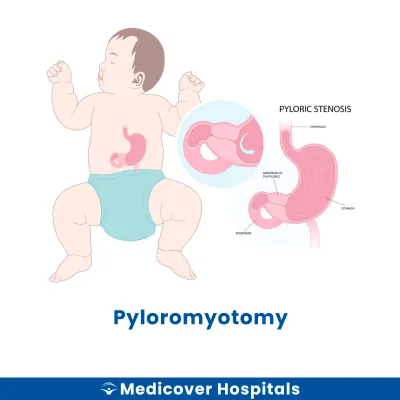
Pyloromyotomy is a surgical procedure involving the pylorus, which is the opening between the stomach and the small intestine. This operation involves cutting the muscle of the pylorus to relieve obstruction. The pylorus muscle is thickened in certain conditions, causing a blockage that prevents food from passing into the small intestine.
This surgery is typically needed for infants with hypertrophic pyloric stenosis. In this condition, the pylorus muscle becomes abnormally thick, leading to severe vomiting and dehydration. If left untreated, it can cause serious complications like malnutrition and electrolyte imbalances. Modern surgical approaches for pyloromyotomy include open surgery and minimally invasive techniques such as laparoscopic pyloromyotomy, which involves smaller incisions and potentially quicker recovery.
Pyloromyotomy Doctors Near You
Find skilled pediatric surgeons for pyloromyotomy at Medicover Hospitals across India. Choose your city and book a consultation for expert care tailored to your newborn's needs.
Why Choose Medicover Hospitals for Pyloromyotomy?
Get a second opinion from trusted experts and makeconfident, informed decisions.
 Get Second Opinion
Complete Guide To Pyloromyotomy
Everything you need to know about the procedure, preparation, and recovery
Pyloromyotomy Surgery Indications
Pyloromyotomy is recommended for infants experiencing severe feeding difficulties due to pyloric stenosis. This procedure helps relieve symptoms and improve feeding.
Projectile Vomiting
Infants with pyloric stenosis often have projectile vomiting after feeding. This symptom is a key indicator for pyloromyotomy. If vomiting persists despite dietary changes, surgery may be necessary.
Dehydration
Frequent vomiting can lead to dehydration in infants. Signs include dry mouth and decreased urination. If rehydration efforts fail, pyloromyotomy may be advised to address the underlying stenosis.
Failure to Thrive
Infants may not gain weight as expected due to feeding issues. Poor weight gain despite nutritional support can prompt doctors to consider pyloromyotomy.
Palpable Olive-like Mass
During examination, doctors may feel a firm, olive-like mass in the abdomen. This mass is the hypertrophied pylorus. Its presence often confirms the need for surgical intervention.
Abnormal Ultrasound Findings
Ultrasound may show thickened pyloric muscle. This diagnostic finding supports the decision for pyloromyotomy when symptoms are present.
Persistent Gastric Outlet Obstruction
Infants may show signs of gastric outlet obstruction, such as persistent hunger and irritability. When medical management fails, surgery becomes the treatment of choice.
How to Prepare for Pyloromyotomy?
Proper preparation for pyloromyotomy is crucial to ensure a smooth procedure and recovery. It helps in reducing complications and aids in a quicker recovery.
- Medication Review: Stop NSAIDs, anticoagulants, and herbal supplements as advised by your doctor.
- Fasting Guidelines: Follow the fasting instructions given by your doctor, typically 6-8 hours before surgery.
- Hydration: Stay hydrated up until the fasting period begins to maintain fluid balance.
- Clothing: Wear loose, comfortable clothing on the day of surgery for ease and comfort.
- Transportation: Arrange for someone to drive you home post-surgery, as you may feel drowsy.
- Medication List: Bring a list of current medications with dosages for the medical team.
- Pre-Surgery Instructions: Follow any specific instructions given by your healthcare provider.
- Communication: Discuss any allergies or previous reactions to anaesthesia with your doctor.
Pyloromyotomy Surgery (Step-by-Step)
Pyloromyotomy is performed by paediatric surgeons. The procedure typically lasts about 30 to 60 minutes. It is done under general anaesthesia, ensuring the infant is asleep and pain-free.
- Preparation: The infant is placed under general anaesthesia. Vital signs are monitored closely. The abdomen is cleaned with an antiseptic solution.
- Incision: A small incision, about 1-2 cm, is made in the upper abdomen. In laparoscopic procedures, several tiny incisions are made for the laparoscope and instruments.
- Accessing the Pylorus: The surgeon uses a laparoscope to view the pylorus. A trocar is inserted to allow access for surgical instruments.
- Cutting the Muscle: The surgeon uses a scalpel or a harmonic scalpel to carefully cut the thickened muscle of the pylorus. This relieves the obstruction without cutting the inner lining.
- Inspecting the Area: The surgeon inspects the area to ensure the pylorus is adequately opened. Bipolar cautery may be used to control any bleeding.
- Closing the Incision: The incisions are closed with sutures or surgical glue. Dressings are applied to protect the site.
- Recovery: The infant is moved to a recovery area. Nurses monitor vital signs as the anaesthesia wears off. Feeding can usually resume within a few hours.
Who Performs Pyloromyotomy Surgery?
Pyloromyotomy is performed by paediatric surgeons who specialise in surgical procedures for infants and children. They have the expertise to handle the delicate tissues and structures involved in this surgery.
Recovery After Pyloromyotomy Surgery
Recovery from pyloromyotomy surgery is generally smooth, with most infants showing improvement in feeding and comfort soon after the procedure. Parents can expect a gradual return to normal feeding and activity levels.
Day 1-2:
- Infants may be kept under observation in the hospital.
- Feeding typically starts with small amounts of clear liquids.
- Monitor for any signs of discomfort or vomiting.
Day 3-5:
- Gradual introduction of breast milk or formula.
- Feeding volumes may increase as tolerated.
- Parents should ensure the incision site is clean and dry.
Day 6-7:
- Most infants can return home if recovery is smooth.
- Continue with regular feeding schedules.
- Introduce soft foods like curd, dal-rice, or moong dal soup if advised by the doctor.
Week 2:
- Infants generally resume normal feeding patterns.
- Monitor for any signs of infection at the incision site.
- Parents can start gentle play activities.
When to Seek Urgent Help:
- Persistent vomiting or inability to keep down fluids.
- Signs of infection such as redness, swelling, or discharge at the incision site.
- Fever or unusual irritability.
For any concerns or unusual symptoms, contact your healthcare provider promptly. Always follow the specific dietary and activity recommendations provided by your doctor.
Benefits of Pyloromyotomy Surgery
Pyloromyotomy is a surgical procedure aimed at treating pyloric stenosis, a condition that affects infants. It offers several benefits for affected children.
- Improved Feeding: Allows infants to feed without vomiting.
- Rapid Recovery: Most infants recover quickly and can resume normal feeding within a day.
- Minimally Invasive: Often performed laparoscopically, leading to smaller incisions and less scarring.
- High Success Rate: Effectively resolves symptoms in the majority of cases.
Risks and Complications of Pyloromyotomy Surgery
While pyloromyotomy is generally safe, like any surgery, it carries potential risks and complications.
- Common: Infection at the incision site.
- Common: Bleeding during or after the procedure.
- Rare: Injury to surrounding organs or tissues.
- Rare: Incomplete pyloromyotomy, requiring further intervention.
- Rare: Anaesthesia-related complications.
- Rare: Hernia at the incision site.
Cost of Pyloromyotomy Surgery
The cost of Pyloromyotomy Surgery Rs. 15000 to Rs. 25000 can vary based on several factors such as the surgical approach, duration of hospital stay, room category, required diagnostics, and post-operative care.
At Medicover Hospitals, we ensure transparent pricing for all procedures. We offer support for insurance and TPA, including CGHS, ESI, and major TPAs, with cashless facility available. Please contact the hospital for the latest insurance panel details as these may change periodically.
Frequently Asked Questions
1. How much does Pyloromyotomy surgery cost at Medicover Hospitals?
The cost of Pyloromyotomy surgery Rs. 15000 to Rs. 25000 varies. Please contact Medicover Hospitals for detailed pricing information.
2. Is Pyloromyotomy surgery covered under health insurance at Medicover?
Pyloromyotomy may be covered by CGHS, ESI, and major TPAs. Please contact the hospital for current panel details.
3. Can my baby eat normally after Pyloromyotomy?
Your baby can start feeding slowly after surgery. Full feeding usually resumes within a few days.
4. What organ is affected in Pyloromyotomy?
Pyloromyotomy involves the pylorus, a part of the stomach. It helps in relieving obstruction for better digestion.
5. Is vomiting common after Pyloromyotomy?
Mild vomiting can occur after surgery but usually resolves quickly. Persistent vomiting should be reported to your doctor.
6. Will my baby gain weight after Pyloromyotomy?
Weight gain is expected as feeding improves post-surgery. Regular follow-ups will ensure your baby is gaining weight appropriately.
7. Are there any long-term complications after Pyloromyotomy?
Long-term complications are rare but can include scarring. Regular check-ups help monitor your child's recovery.
8. How long does pyloromyotomy surgery take?
Pyloromyotomy usually takes about 30 minutes to 1 hour. It is a relatively quick procedure, especially when done laparoscopically.
9. Is pyloromyotomy an open surgery?
Pyloromyotomy can be done as either open surgery or laparoscopic (minimally invasive) surgery. Nowadays, the laparoscopic approach is more commonly preferred.
10. What are the risks of pyloromyotomy?
Risks of Pyloromyotomy are uncommon but may include bleeding, infection, mucosal perforation, or incomplete muscle division. Most babies recover well with proper care and monitoring.
11. What instrument is used for pyloromyotomy?
In Pyloromyotomy, surgeons commonly use a pyloric spreader (Ramstedt pyloromyotomy instrument) along with a scalpel or laparoscopic instruments to cut and separate the muscle.
12. Is pyloromyotomy laparoscopic?
Yes, Pyloromyotomy is often performed using a laparoscopic (minimally invasive) approach, though it can also be done as open surgery.
13. Is pyloromyotomy laparoscopic?
Yes, Pyloromyotomy is often performed using a laparoscopic (minimally invasive) approach, though it can also be done as open surgery.


