 Call
Call Patient Reports
Best Pterygium Removal With Autograft Surgery Hospital with Advanced Care
Pterygium removal with autograft at Medicover Hospitals is performed using an open surgical approach by experienced ophthalmologists with qualifications like MS and DNB. This procedure helps in reducing recurrence rates and ensures a shorter recovery period for patients across India.
Expert Surgeons
Yearly Surgeries
Patient Satisfaction
What is Pterygium Removal With Autograft?
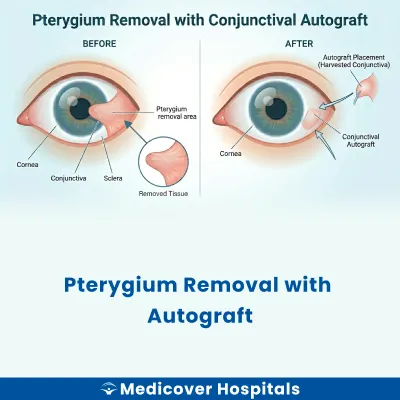
Pterygium removal with autograft is a surgical procedure involving the eye. It targets the pterygium, a benign growth on the conjunctiva (the clear tissue covering the white part of the eye). During the procedure, the pterygium is excised, and a graft from the patient's own conjunctiva is used to cover the area. This helps prevent recurrence and promotes healing.
This surgery is needed when the pterygium causes discomfort, vision problems, or cosmetic concerns. If left untreated, it can lead to vision impairment or astigmatism. Modern surgical approaches include the use of fibrin glue or sutures to secure the graft. These techniques aim to reduce recovery time and minimise complications.
Pterygium Removal With Autograft Doctors Near You
Discover skilled ophthalmologists for pterygium removal with autograft at Medicover Hospitals across India. Choose your city and book a consultation today for expert care and guidance.
Why Choose Medicover Hospitals for Pterygium Removal With Autograft?
Get a second opinion from trusted experts and makeconfident, informed decisions.
 Get Second Opinion
Complete Guide To Pterygium Removal With Autograft
Everything you need to know about the procedure, preparation, and recovery
Pterygium removal with autograft surgery Indications
Pterygium removal with autograft surgery is recommended when a pterygium causes significant discomfort or visual impairment. This procedure is considered when conservative treatments do not provide relief.
Visual Disturbance
Patients may experience blurred vision or astigmatism due to the pterygium encroaching on the cornea. Ophthalmologists recommend surgery when vision is significantly affected and glasses or contact lenses do not help.
Persistent Irritation
Chronic redness, irritation, or a gritty feeling in the eye can occur. When these symptoms persist despite lubricating eye drops or anti-inflammatory medications, surgery may be advised.
Cosmetic Concerns
A noticeable growth on the eye can cause self-consciousness. If the pterygium is large or unsightly and affects the patient's confidence, surgical removal may be considered.
Recurrent Inflammation
Frequent episodes of inflammation can lead to discomfort and redness. If anti-inflammatory treatments fail to prevent recurrence, surgery may be necessary.
Restriction of Eye Movement
In some cases, a large pterygium can limit eye movement. When this occurs, and affects daily activities, surgical intervention is recommended.
Corneal Scarring
Advanced pterygium can cause corneal scarring, leading to permanent vision changes. Surgery is advised when scarring is detected and threatens vision quality.
How to Prepare for Pterygium removal with autograft?
Proper preparation for pterygium removal with autograft is crucial to ensure a smooth procedure and recovery. It helps minimise complications and enhances the healing process.
- Medication Adjustment: Stop NSAIDs, anticoagulants, and herbal supplements at least a week before surgery. Consult your doctor for specific guidance.
- Fasting: If general anaesthesia is used, fast for at least 6-8 hours before the procedure. Follow specific instructions from your healthcare provider.
- Eye Care: Avoid wearing contact lenses for at least a week before surgery to reduce the risk of infection.
- Hygiene: Clean your face and eyes thoroughly on the day of the surgery. Avoid makeup and lotions.
- Clothing: Wear loose, comfortable clothing on the day of the procedure. This ensures ease of movement and comfort.
- Transportation: Arrange for someone to drive you home after the surgery. You may feel drowsy from the anaesthesia.
- Medication List: Bring a list of your current medications, including dosages, to the hospital.
- Rest: Ensure you get a good night's sleep before the surgery to help your body prepare for recovery.
Pterygium removal with autograft surgery (Step-by-Step)
This procedure is performed by ophthalmology specialists. It typically lasts 30 to 45 minutes and is usually done under local anaesthesia.
- Preparation: The patient is positioned comfortably. Local anaesthesia is administered to numb the eye area.
- Incision: A small incision, about 1-2 cm, is made on the conjunctiva using a surgical blade to access the pterygium.
- Pterygium Removal: The pterygium is carefully excised using a surgical instrument like a curette. The surgeon ensures all affected tissue is removed.
- Graft Harvesting: A thin piece of healthy conjunctival tissue is taken from an unaffected area of the eye. This is done using fine scissors.
- Graft Placement: The harvested graft is placed over the area where the pterygium was removed. It is secured with sutures or tissue adhesive.
- Final Check: The surgeon inspects the graft to ensure it is properly positioned. Any excess fluid is gently removed.
- Post-Procedure Care: The eye is covered with a protective patch. The patient receives instructions on eye care and medications.
Who Performs Pterygium removal with autograft surgery?
This surgery is performed by ophthalmologists who specialise in eye surgeries. They have the expertise to manage conditions affecting the eye's surface, ensuring precise removal and grafting.
Recovery After Pterygium Removal with Autograft Surgery
Recovery from pterygium removal with autograft surgery is generally smooth, but it requires careful attention to ensure optimal healing. Patients can expect some discomfort and redness initially, which gradually subsides.
Day 1-3:
- Expect mild pain and irritation. Use prescribed eye drops to reduce inflammation and prevent infection.
- Keep the eye protected with a patch as advised by your doctor.
- Rest is crucial. Avoid strenuous activities and screen time.
Day 4-7:
- Redness and discomfort should start to decrease. Continue using eye drops as directed.
- Introduce light activities but avoid direct sunlight and dust exposure.
- Consume a soft diet like curd, dal-rice, and khichdi to maintain overall health.
Day 8-14:
- Most patients can resume work or school, depending on comfort levels and doctor's advice.
- Wear sunglasses outdoors to protect the eye from UV rays.
- Include nourishing foods like moong dal and soups to support recovery.
Phase 3 (Week 3-4):
- Full recovery is expected. Regular follow-up appointments are essential to monitor healing.
- Gradually return to normal activities, but continue to protect the eye from irritants.
When to Seek Urgent Help:
- Severe pain or sudden vision changes.
- Persistent redness or swelling.
- Discharge from the eye or signs of infection.
Benefits of Pterygium removal with autograft surgery
Pterygium removal with autograft surgery is a common procedure to treat the growth of tissue on the eye. It offers several benefits.
- Reduced Recurrence: The use of autograft significantly lowers the chances of the pterygium returning.
- Improved Vision: Removing the pterygium can enhance vision clarity if it was obstructing the cornea.
- Cosmetic Improvement: The procedure can improve the appearance of the eye by removing the growth.
- Minimal Discomfort: The surgery is generally well-tolerated with manageable post-operative discomfort.
Risks and Complications of Pterygium removal with autograft surgery
While pterygium removal with autograft is generally safe, it carries some risks and potential complications.
- Common: Redness and irritation in the eye may occur post-surgery.
- Common: Temporary blurred vision can happen as the eye heals.
- Rare: Infection is a possibility, though uncommon with proper care.
- Rare: Graft displacement may occur, requiring additional intervention.
- Rare: Scarring could develop, potentially affecting vision.
- Rare: Excessive tearing or dryness might be experienced.
Cost of Pterygium removal with autograft surgery
The cost of Pterygium removal with autograft surgery at Medicover Hospitals ranges from Rs. 35,000 to Rs. 70,000. The price varies depending on the ward category chosen, such as outpatient, day care, or private rooms. We offer transparent pricing and support for insurance and TPA, including CGHS, ESI, and major TPAs. A cashless facility is also available for your convenience. Please contact the hospital for the latest insurance panel details as these may change periodically.
Frequently Asked Questions
1. How much does Pterygium removal with autograft surgery cost at Medicover Hospitals?
The cost for Pterygium removal with autograft surgery ranges from Rs. 35,000 to Rs. 70,000 across Medicover Hospitals.
2. Is Pterygium removal with autograft surgery covered under health insurance at Medicover?
Coverage may be available under CGHS, ESI, and major TPAs with cashless options. Please contact the hospital for current panel details.
3. Will my vision improve immediately after surgery?
Vision improvement may take a few weeks post-surgery. Initial blurriness is common as the eye heals.
4. Can I drive after Pterygium removal surgery?
Driving is not recommended immediately after surgery. Wait for your doctor's approval, usually after a few weeks.
5. Are there any dietary restrictions post-surgery?
No specific dietary restrictions, but a healthy diet including curd, dal-rice, and khichdi can aid recovery.
6. Will the Pterygium grow back after removal?
Recurrence is possible but less likely with the autograft technique. Regular follow-ups help monitor and manage any regrowth.
7. Can I wear contact lenses after the surgery?
Avoid contact lenses for several weeks post-surgery. Consult your doctor for guidance on when to resume wearing them.
8. Can I walk after pterygium surgery?
Yes, you can walk after Pterygium Surgery, usually on the same day. Light activities are allowed, but avoid dust, sunlight exposure, and strenuous activity for a few days.
9. Can I wash my hair after pterygium surgery?
You can wash your hair after 2–3 days, but be careful to avoid getting water, soap, or shampoo into the operated eye. Always follow your doctor’s advice for safe eye care during recovery.
10. How painful is pterygium surgery?
Pterygium Surgery is usually not painful during the procedure because local anesthesia is used. After surgery, you may feel mild discomfort, irritation, or a gritty sensation for a few days, which improves with medications.
11. Can pterygium lead to blindness?
Pterygium rarely causes blindness, but if left untreated, it can grow over the cornea and affect vision. Early treatment helps prevent complications and preserves clear eyesight.


