 Call
Call Patient Reports
Best Proximal Femoral Nailing for Intertrochanteric Fracture Hospital With Expert Orthopedics care
At Medicover Hospitals, Proximal Femoral Nailing for Intertrochanteric Fracture is performed using an open surgical approach by skilled orthopaedic surgeons with qualifications like MS and DNB. This technique often results in reduced blood loss, aiding in quicker recovery for patients across India.
Expert Surgeons
Yearly Surgeries
Patient Satisfaction
What is Proximal Femoral Nailing for Intertrochanteric Fracture?
Proximal Femoral Nailing is a surgical procedure used to treat intertrochanteric fractures. These fractures occur in the upper part of the femur (thigh bone) near the hip joint. The procedure involves the insertion of a metal rod (nail) into the femur to stabilize the broken bone fragments. This helps in proper alignment and healing of the fracture.
This surgery is needed when the femur is fractured due to falls or accidents, especially in older adults with weaker bones. If left untreated, the fracture can lead to severe pain, immobility, and complications like blood clots. Modern surgical approaches include minimally invasive techniques that reduce recovery time and improve outcomes. Proximal Femoral Nailing is a preferred method for stabilizing such fractures.
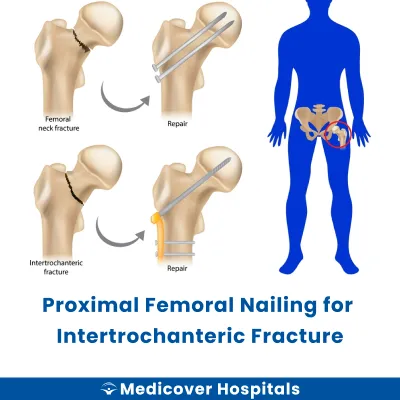
Proximal Femoral Nailing for Intertrochanteric Fracture Doctors Near You
Discover skilled orthopedics for proximal femoral nailing at Medicover Hospitals across India. Choose your city and book a consultation to address intertrochanteric fractures with expert care.
Why Choose Medicover Hospitals for Proximal Femoral Nailing for Intertrochanteric Fracture?
Get a second opinion from trusted experts and makeconfident, informed decisions.
 Get Second Opinion
Complete Guide To Proximal Femoral Nailing For Intertrochanteric Fracture
Everything you need to know about the procedure, preparation, and recovery
Proximal Femoral Nailing for Intertrochanteric Fracture Surgery Indications
Doctors recommend proximal femoral nailing when intertrochanteric fractures occur in the hip region. This procedure is often advised when non-surgical methods are insufficient for healing or when quick recovery is needed.
Severe Pain and Immobility
Patients often experience intense pain in the hip area, making movement difficult. On examination, doctors may find significant swelling and bruising. When pain management and physical therapy do not improve mobility, surgery is considered.
Displaced Fracture
Imaging tests like X-rays reveal that the bone fragments are misaligned. This displacement can cause sharp pain and inability to bear weight. If realignment through conservative methods fails, surgical intervention is needed.
Unstable Fracture Patterns
Complex fracture patterns, seen in imaging, indicate instability. Patients may report grinding sensations or an inability to stand. When such fractures do not stabilize with bracing, surgery becomes necessary.
Failure of Conservative Treatment
Initial treatments like bed rest and pain relief may not lead to healing. Persistent pain and lack of bone healing on follow-up X-rays suggest the need for surgical repair.
High Risk of Complications
In cases where non-surgical treatment poses risks like non-union or avascular necrosis, doctors may opt for surgery. This is often determined through imaging and patient history.
How to Prepare for Proximal Femoral Nailing for Intertrochanteric Fracture?
Proper preparation is crucial for a smooth surgical experience and recovery. It helps reduce complications and ensures optimal outcomes.
- Medication Review: Stop NSAIDs, anticoagulants, and herbal supplements as advised by your doctor to reduce bleeding risk.
- Fasting Instructions: Fast for at least 8 hours before the surgery if general anaesthesia is planned.
- Medical History: Bring a list of your current medications, including dosages, to the hospital.
- Comfortable Clothing: Wear loose, comfortable clothing on the day of surgery for easy dressing post-operation.
- Transport Arrangements: Arrange for someone to drive you home after discharge, as you will not be able to drive.
- Pre-Surgery Tests: Complete any required blood tests or imaging studies as instructed by your healthcare provider.
- Home Preparation: Prepare your home for easy mobility post-surgery, such as removing tripping hazards.
- Support System: Inform family or friends about your surgery so they can assist during your recovery.
Proximal Femoral Nailing for Intertrochanteric Fracture Surgery (Step-by-Step)
Overview: This procedure is performed by orthopedic surgeons. It typically lasts 1-2 hours and is done under general or regional anaesthesia.
- Preparation: The patient is positioned on the operating table. Anaesthesia is administered to ensure comfort and pain relief.
- Incision: A small incision of about 2-3 cm is made near the hip area to access the femur.
- Guide Wire Insertion: A guide wire is inserted through the incision to align the fractured bone segments.
- Reaming: A reamer is used to prepare the femur canal for nail insertion. This step ensures proper fit and stability.
- Nail Insertion: The proximal femoral nail is inserted over the guide wire into the femur. It stabilizes the fracture.
- Fixation: Screws are inserted through the nail to secure it in place. This ensures the bone fragments remain aligned.
- Closure: The incision is closed using sutures or staples. A dressing is applied to protect the wound.
Who Performs Proximal Femoral Nailing for Intertrochanteric Fracture Surgery?
An orthopaedic surgeon performs this surgery. They specialise in treating bone and joint conditions. Their expertise ensures precise alignment and fixation of fractures.
Recovery After Proximal Femoral Nailing for Intertrochanteric Fracture Surgery
Recovering from proximal femoral nailing involves gradual healing and rehabilitation. Patients can expect a structured recovery plan focusing on mobility, diet, and overall well-being.
Day 1-3:
- Hospital stay for monitoring and pain management.
- Begin with light physiotherapy exercises as advised by the doctor.
- Diet: Start with soft foods like curd, dal-rice, and soups to ensure easy digestion.
Day 4-7:
- Continue physiotherapy to improve mobility.
- Gradually increase activity levels with assistance.
- Include protein-rich foods like moong dal and khichdi in the diet to aid recovery.
Day 8-14:
- Transition to partial weight-bearing activities as advised.
- Focus on balanced meals with adequate calcium and vitamin D.
- Monitor for any signs of infection or complications.
Phase 3 (Week 3-6):
- Increase physiotherapy intensity to regain strength.
- Gradual return to daily activities; avoid strenuous tasks.
- Consult the doctor about resuming work or school, typically around 4-6 weeks.
When to Seek Urgent Help:
- Fever or chills indicating possible infection.
- Severe pain or swelling in the operated leg.
- Numbness or inability to move the leg.
- Signs of blood clots, such as chest pain or difficulty breathing.
Benefits of Proximal Femoral Nailing for Intertrochanteric Fracture Surgery
Proximal femoral nailing is a widely used procedure for stabilising intertrochanteric fractures. It offers several advantages for patients.
- Minimally Invasive: This procedure involves smaller incisions, leading to reduced tissue damage.
- Early Mobilisation: Patients can often begin weight-bearing activities sooner, aiding in quicker recovery.
- Stable Fixation: Provides strong support to the fractured bone, promoting effective healing.
- Reduced Hospital Stay: Patients may experience shorter hospitalisation periods, enhancing comfort and convenience.
Risks and Complications of Proximal Femoral Nailing for Intertrochanteric Fracture Surgery
While proximal femoral nailing is generally safe, there are potential risks and complications associated with the procedure.
- Common: Infection at the surgical site can occur, requiring medical attention.
- Common: Blood clots may develop, necessitating preventive measures.
- Rare: Nerve or blood vessel damage might happen during surgery.
- Rare: Implant failure or breakage could occur, leading to additional interventions.
- Rare: Non-union or delayed healing of the fracture may be experienced.
Cost of Proximal Femoral Nailing for Intertrochanteric Fracture Surgery
The cost of Proximal Femoral Nailing for Intertrochanteric Fracture Surgery at Medicover Hospitals ranges from Rs. 90,000 to Rs. 144,000. The price varies depending on the ward category chosen, such as general, twin sharing, private, or deluxe options.
We offer transparent pricing and support for insurance and TPA, including CGHS, ESI, and major TPAs. A cashless facility is also available for your convenience. Please contact the hospital for the latest insurance panel details as these may change periodically.
Frequently Asked Questions
1. How much does Proximal Femoral Nailing for Intertrochanteric Fracture surgery cost at Medicover Hospitals?
The cost for Proximal Femoral Nailing surgery at Medicover Hospitals ranges from Rs. 90,000 to Rs. 144,
2. Prices vary based on room type and care level. 2. Is Proximal Femoral Nailing for Intertrochanteric Fracture surgery covered under health insurance at Medicover?
Yes, this surgery is often covered under CGHS, ESI, and major TPAs with cashless options. Please contact the Medicover hospital for current panel details.
3. Will I need physiotherapy after femoral nailing?
Yes, physiotherapy is essential to regain mobility and strength in the hip. It usually begins a few days post-surgery.
4. Can I walk immediately after femoral nailing?
Walking is generally encouraged with support within a few days after surgery. Full weight-bearing might take a few weeks, depending on recovery.
5. What are common complications after femoral nailing?
Possible complications include infection, implant failure, or non-union of the fracture. Regular follow-ups help in early detection and management.
6. Will I need a special diet after femoral nailing?
A balanced diet with high protein foods like dal-rice, curd, and green vegetables aids recovery. Adequate hydration is also important.
7. How long before I can drive after femoral nailing?
Driving is usually not recommended for at least 6 weeks post-surgery. Consult your doctor for a personalised timeline based on your recovery.


