 Call
Call Patient Reports
Pilonidal Cyst Excision with Flap Closure Surgery by Expert General Surgeons
At Medicover Hospitals, our general surgeons, with qualifications such as MS, DNB, and FMAS, perform open Pilonidal Cyst Excision with Flap Closure. This approach helps in effective removal and reconstruction, leading to shorter hospital stays and reduced recovery time for patients.
Expert Surgeons
Yearly Surgeries
Patient Satisfaction
What is Pilonidal Cyst Excision With Flap Closure?
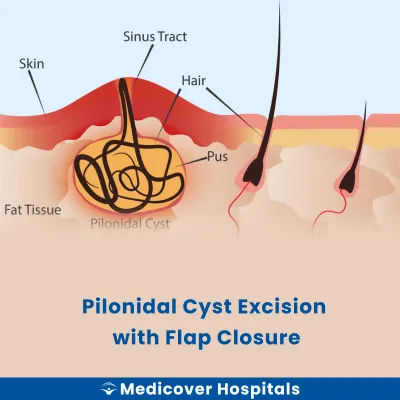
Pilonidal Cyst Excision with Flap Closure is a surgical procedure to remove a pilonidal cyst. This cyst typically forms near the tailbone (coccyx) at the top of the buttocks. The surgery involves excising the cyst and surrounding tissue. A flap closure technique is used to cover the area, promoting better healing and reducing recurrence.
This surgery is needed when a pilonidal cyst becomes infected or causes discomfort. Conditions like poor hygiene, prolonged sitting, or excessive hair growth can lead to cyst formation. If untreated, it may lead to chronic infection or abscess. Modern surgical approaches include the Bascom cleft lift and the Karydakis flap technique. These methods aim to minimise recovery time and recurrence.
Pilonidal Cyst Excision With Flap Closure Doctors Near You
Find experienced general-surgeons for pilonidal cyst excision with flap closure at Medicover Hospitals across India. Choose your city and book a consultation for expert care and treatment.
Why Choose Medicover Hospitals for Pilonidal Cyst Excision With Flap Closure?
Get a second opinion from trusted experts and makeconfident, informed decisions.
 Get Second Opinion
Complete Guide To Pilonidal Cyst Excision With Flap Closure
Everything you need to know about the procedure, preparation, and recovery
Pilonidal Cyst Excision with Flap Closure Surgery Indications
Doctors recommend pilonidal cyst excision with flap closure when conservative treatments fail to resolve symptoms. This procedure is often necessary for recurrent or complicated cases.
Recurrent Pilonidal Cysts
Patients experience repeated episodes of pain, swelling, and drainage from the cyst area. Doctors find persistent cysts despite previous treatments. Surgery is advised when these cysts recur frequently, causing discomfort and infection.
Chronic Infection
Patients report ongoing pain, redness, and pus discharge, indicating infection. Examination reveals inflamed tissue and abscess formation. When antibiotics and drainage do not clear the infection, surgery is needed.
Large or Complex Cysts
Patients feel a noticeable mass and discomfort in the sacrococcygeal region. Imaging shows large or multiple interconnected cysts. Surgery is recommended when the cyst size or complexity prevents healing with non-surgical methods.
Non-Healing Wounds
Patients have wounds that do not heal despite proper wound care. Doctors observe persistent open areas with granulation tissue. Surgery is considered when these wounds fail to close over time.
Severe Pain and Discomfort
Patients experience significant pain affecting daily activities. Examination indicates tenderness and swelling in the affected area. When pain management and other treatments do not alleviate symptoms, surgery is suggested.
How to Prepare for Pilonidal Cyst Excision with Flap Closure?
Proper preparation is crucial for a smooth surgery and recovery. It helps reduce risks and ensures a successful outcome.
- Medication Review: Stop NSAIDs, anticoagulants, and herbal supplements 7 days before surgery.
- Fasting Guidelines: Fast for at least 8 hours before the procedure due to general anaesthesia.
- Hygiene: Clean the area thoroughly as instructed by your doctor to prevent infection.
- Clothing: Wear loose, comfortable clothing on the day of the surgery for ease and comfort.
- Transportation: Arrange for someone to drive you home post-surgery as you may feel drowsy.
- Medication List: Bring a list of all medications with dosages for the healthcare team.
- Smoking and Alcohol: Avoid smoking and alcohol for at least 24 hours before the procedure.
- Pre-Surgery Instructions: Follow any additional instructions given by your surgeon or healthcare team.
Pilonidal Cyst Excision with Flap Closure Surgery (Step-by-Step)
Overview: This procedure is performed by general surgeons. It typically lasts 1-2 hours and is done under general anaesthesia.
- Preparation: The patient is positioned comfortably on the operating table. Anaesthesia is administered to ensure they are asleep and pain-free.
- Incision: A 1-2 cm incision is made near the pilonidal cyst using a scalpel. This allows access to the cyst and surrounding tissue.
- Excision: The surgeon uses a curette to remove the cyst and any infected tissue. Care is taken to ensure all affected areas are excised.
- Flap Creation: A flap of healthy skin is created to cover the excised area. This involves carefully cutting and positioning the skin for optimal healing.
- Flap Closure: The flap is secured over the excised area using sutures. This helps in reducing tension and promoting better healing.
- Hemostasis: Bipolar cautery is used to control bleeding and ensure the surgical site is dry.
- Final Inspection and Dressing: The surgeon inspects the area to ensure proper closure. A sterile dressing is applied to protect the wound.
Who Performs Pilonidal Cyst Excision with Flap Closure Surgery?
This surgery is performed by general surgeons who specialise in treating conditions like pilonidal cysts. They have the expertise to manage the excision and flap closure effectively.
Recovery After Pilonidal Cyst Excision with Flap Closure Surgery
Recovery from pilonidal cyst excision with flap closure surgery involves careful attention to wound care and gradual return to normal activities. Expect some discomfort initially, but it should improve over time.
Day 1-3:
- Rest is crucial. Avoid sitting for long periods.
- Keep the surgical area clean and dry.
- Consume light meals like curd, dal-rice, and soups to aid digestion.
- Take prescribed pain medication as directed.
Day 4-7:
- Gradually increase light activities like walking.
- Continue with a soft diet, including khichdi and moong dal.
- Avoid strenuous activities and heavy lifting.
- Attend follow-up appointments for wound assessment.
Day 8-14:
- Most patients can resume work or school, depending on comfort and job nature.
- Maintain a balanced diet to support healing.
- Continue to avoid sitting for prolonged periods.
- Monitor the wound for any signs of infection.
Phase 3 (Week 3-4):
- Engage in regular activities with caution.
- Gradually reintroduce more varied foods.
- Continue to follow any specific instructions from your healthcare provider.
When to Seek Urgent Help:
- Fever or chills indicating possible infection.
- Severe pain not relieved by medication.
- Excessive redness, swelling, or discharge from the wound.
- Difficulty in bowel movements or urination.
Benefits of Pilonidal Cyst Excision with Flap Closure Surgery
Pilonidal cyst excision with flap closure is a surgical procedure aimed at removing cysts and reducing recurrence.
- Reduced Recurrence: The flap closure technique helps lower the chances of cysts returning.
- Faster Healing: This method promotes quicker recovery compared to traditional excision.
- Less Discomfort: Patients often experience reduced postoperative pain with flap closure.
- Improved Aesthetic Outcome: The flap technique can result in a more cosmetically pleasing scar.
Risks and Complications of Pilonidal Cyst Excision with Flap Closure Surgery
While the surgery is generally safe, it carries some risks and potential complications.
Common Risks
- Infection: There's a risk of infection at the surgical site.
- Bleeding: Some bleeding may occur during or after the procedure.
- Seroma Formation: Fluid accumulation under the skin may happen post-surgery.
Rare Risks
- Wound Dehiscence: The surgical wound may reopen, requiring further treatment.
- Nerve Damage: There's a small risk of nerve injury leading to numbness.
- Allergic Reaction: Some patients may react to anaesthesia or other medications.
Cost of Pilonidal Cyst Excision with Flap Closure Surgery
The cost of Pilonidal Cyst Excision with Flap Closure Surgery across Medicover Hospitals varies depending on the ward category chosen. Prices range from ₹40,000 and ₹2,00,000. The final cost is influenced by the type of accommodation and other factors.
We offer transparent pricing and support for insurance and TPA, including CGHS, ESI, and major TPAs. A cashless facility is also available for your convenience. Please contact the hospital for the latest insurance panel details as these may change periodically.
Frequently Asked Questions
1. How much does Pilonidal Cyst Excision with Flap Closure surgery cost at Medicover Hospitals?
The cost for Pilonidal Cyst Excision with Flap Closure surgery at Medicover Hospitals ranges from ₹40,000 and ₹2,00,000, depending on the specific requirements.
2. Is Pilonidal Cyst Excision with Flap Closure surgery covered under health insurance at Medicover?
Yes, this surgery is typically covered by CGHS, ESI, and major TPAs. Please contact the hospital for current panel details.
3. Will I have difficulty sitting after pilonidal cyst surgery?
Yes, some discomfort while sitting is common after surgery. It usually improves within a few weeks as healing progresses.
4. Can pilonidal cysts recur after surgery?
There is a possibility of recurrence even after surgery. Proper wound care and hygiene can help reduce this risk.
5. How should I care for the wound after pilonidal cyst surgery?
Keep the area clean and dry, and follow your doctor's instructions. Regular dressing changes and avoiding pressure on the site are crucial.
6. When can I resume normal activities after pilonidal cyst surgery?
Most patients can slowly resume normal activities within 2-4 weeks. Avoid strenuous activities until your doctor advises otherwise.
7. What diet should I follow after pilonidal cyst surgery?
Consume a balanced diet with plenty of fluids, curd, and dal-rice. Avoid spicy foods to promote healing and prevent discomfort.


