 Call
Call Patient Reports
Best Pharyngoplasty Surgery Hospital by Expert ENT Specialists
Pharyngoplasty at Medicover Hospitals is performed using advanced coblation techniques by our skilled ENT specialists with qualifications like MS and DNB. This procedure helps address issues related to the throat, offering benefits such as reduced blood loss and shorter hospital stays for patients across India.
Expert Surgeons
Yearly Surgeries
Patient Satisfaction
What is Pharyngoplasty?
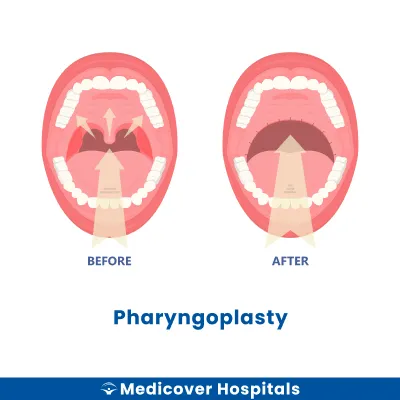
Pharyngoplasty is a surgical procedure involving the pharynx (throat). It aims to reconstruct or modify the structure of the pharynx to improve its function. This surgery is often performed to address issues related to speech or breathing. The procedure can involve repositioning tissues or altering the shape of the pharyngeal walls.
Pharyngoplasty is needed for conditions like obstructive sleep apnea or velopharyngeal insufficiency, where the throat does not close properly during speech. If untreated, these conditions can lead to breathing difficulties or speech problems. Modern surgical approaches for pharyngoplasty include lateral pharyngoplasty and expansion sphincter pharyngoplasty. These techniques aim to enhance airway patency and improve speech outcomes.
Pharyngoplasty Doctors Near You
Discover skilled ENT specialists for pharyngoplasty at Medicover Hospitals across India. Choose your city and book a consultation to explore effective treatment options tailored to your needs.
Why Choose Medicover Hospitals for Pharyngoplasty?
Get a second opinion from trusted experts and makeconfident, informed decisions.
 Get Second Opinion
Complete Guide To Pharyngoplasty
Everything you need to know about the procedure, preparation, and recovery
Pharyngoplasty Surgery Indications
Doctors recommend pharyngoplasty when conservative treatments for certain throat conditions do not provide relief. This surgery is often considered to improve airway function and alleviate symptoms affecting quality of life.
Obstructive Sleep Apnea (OSA)
Patients with OSA experience loud snoring and interrupted breathing during sleep. Examination may reveal enlarged tissues in the throat. When CPAP therapy and lifestyle changes fail, pharyngoplasty may be advised to open the airway.
Velopharyngeal Insufficiency (VPI)
Individuals with VPI often have nasal-sounding speech and difficulty pronouncing certain sounds. A speech evaluation and nasoendoscopy can show improper closure of the soft palate. Surgery is considered when speech therapy does not improve symptoms.
Chronic Snoring
Persistent snoring can disrupt sleep for patients and their partners. Examination might show excess tissue in the throat. If lifestyle modifications and oral appliances do not help, pharyngoplasty may be recommended.
Swallowing Difficulties
Some patients experience choking or difficulty swallowing. Imaging may reveal structural abnormalities in the throat. When dietary changes and exercises are ineffective, surgery might be necessary to improve swallowing function.
Speech Disorders
Patients with speech disorders may struggle with articulation. Diagnostic tests can show structural issues affecting speech. When speech therapy alone is insufficient, pharyngoplasty could be an option to enhance speech clarity.
How to Prepare for Pharyngoplasty?
Proper preparation for pharyngoplasty is crucial to ensure a smooth surgical process and recovery. It helps minimise risks and enhances the effectiveness of the procedure.
- Medication Review: Stop NSAIDs, anticoagulants, and herbal supplements 1-2 weeks before surgery.
- Fasting Guidelines: Fast for at least 8 hours before the procedure to prepare for general anaesthesia.
- Medical History: Provide a complete list of medications and dosages to your doctor.
- Pre-Surgery Tests: Complete any required blood tests or imaging studies as advised by your doctor.
- Clothing: Wear loose, comfortable clothing on the day of the surgery.
- Transportation: Arrange for someone to drive you home post-surgery.
- Smoking and Alcohol: Avoid smoking and alcohol for at least 48 hours before surgery.
- Post-Surgery Care: Prepare a comfortable recovery area at home with necessary supplies.
Pharyngoplasty Surgery (Step-by-Step)
Overview: Pharyngoplasty is performed by ENT specialists. The procedure typically lasts 1-2 hours and is done under general anaesthesia.
- Preparation: The patient is given general anaesthesia to ensure they are asleep and pain-free during the surgery. The surgical area is sterilised.
- Incision: A small incision, usually about 1-2 cm, is made inside the mouth to access the pharyngeal tissues. This helps in reducing visible scarring.
- Tissue Reshaping: The surgeon uses instruments like a harmonic scalpel or coblation wand to reshape and reposition the pharyngeal tissues. This helps improve airway function.
- Muscle Adjustment: Muscles in the throat are adjusted to enhance the structural support of the airway. This step is crucial for improving breathing and speech.
- Closure: The incision is closed with absorbable sutures. These sutures dissolve on their own, eliminating the need for removal.
- Recovery: The patient is moved to a recovery room. As the anaesthesia wears off, they may experience mild discomfort or a sore throat.
- Post-Operative Care: Instructions are given for diet and activity restrictions. Follow-up appointments are scheduled to monitor healing.
Who Performs Pharyngoplasty Surgery?
Pharyngoplasty is performed by ENT (Ear, Nose, and Throat) specialists. These surgeons are trained in procedures involving the throat and airway. They have expertise in managing conditions that affect breathing and speech.
Recovery After Pharyngoplasty Surgery
Recovery from pharyngoplasty surgery involves gradual healing and adjustment. Patients can expect some discomfort and swelling initially, but these usually subside with time. Following the doctor's instructions is crucial for a smooth recovery.
Day 1-3:
- Rest is essential. Avoid talking too much to reduce strain on the throat.
- Consume soft foods like curd, dal-rice, and khichdi. Stay hydrated with plenty of fluids.
- Pain and swelling are common. Follow prescribed medication schedules.
Day 4-7:
- Continue with a soft diet. Include moong dal and soups for nutrition.
- Gradually increase activity levels but avoid strenuous activities.
- Monitor for any signs of infection or unusual discomfort.
Week 2-4:
- Most patients can resume work or school after two weeks, depending on recovery progress.
- Introduce more variety into the diet, but avoid spicy or hard foods.
- Regular follow-up appointments are important to monitor healing.
When to Seek Urgent Help:
- Severe pain not relieved by medication.
- Excessive bleeding or swelling.
- Difficulty breathing or swallowing.
- High fever or signs of infection.
Benefits of Pharyngoplasty Surgery
Pharyngoplasty is a surgical procedure aimed at improving airway function and speech quality. It offers several benefits for patients experiencing related issues.
- Improved Breathing: Enhances airflow by modifying the structure of the throat.
- Better Speech Clarity: Helps in reducing speech impediments caused by structural abnormalities.
- Reduced Snoring: Alleviates snoring by addressing airway obstructions.
- Enhanced Sleep Quality: Contributes to better sleep by improving breathing patterns.
Risks and Complications of Pharyngoplasty Surgery
While pharyngoplasty can be beneficial, it is important to be aware of potential risks and complications. These are generally rare but should be considered.
- Common: Swelling and discomfort in the throat area post-surgery.
- Common: Temporary difficulty in swallowing.
- Rare: Infection at the surgical site.
- Rare: Bleeding during or after the procedure.
- Rare: Changes in voice quality.
- Rare: Need for additional surgeries if initial results are not satisfactory.
Cost of Pharyngoplasty Surgery
The cost of pharyngoplasty surgery at Medicover Hospitals ranges from Rs. 112500 to Rs. 304000. The price varies depending on the ward category chosen, such as outpatient, day care, general, and deluxe options. We offer transparent pricing to ensure clarity for our patients.
Insurance and TPA support is available, with acceptance of CGHS, ESI, and major TPAs. We also provide a cashless facility for added convenience. Please contact the hospital for the latest insurance panel details as these may change periodically.
Frequently Asked Questions
1. How much does pharyngoplasty surgery cost at Medicover Hospitals?
The cost of pharyngoplasty surgery at Medicover Hospitals ranges from Rs. 112500 to Rs. 304000, depending on the type of room and care required.
2. Is pharyngoplasty surgery covered under health insurance at Medicover?
Pharyngoplasty surgery is often covered by CGHS, ESI, and major TPAs, with cashless options available. Please contact the hospital for current panel details.
3. Will my voice change after pharyngoplasty?
Temporary voice changes may occur after pharyngoplasty due to swelling. Most patients notice improvement within a few weeks post-surgery.
4. Can I snore less after pharyngoplasty?
Pharyngoplasty aims to reduce snoring by altering the throat structure. Many patients experience a significant decrease in snoring post-procedure.
5. What foods can I eat after pharyngoplasty?
Soft foods like curd, dal-rice, and khichdi are recommended post-pharyngoplasty. Avoid spicy and hard foods for at least two weeks.
6. Is sleep apnea resolved after pharyngoplasty?
Pharyngoplasty can help reduce symptoms of sleep apnea by widening the airway. However, results vary, and some patients may need additional treatments.
7. Can I experience throat pain after pharyngoplasty?
Throat pain is common after pharyngoplasty due to surgical manipulation. Pain typically subsides within a week with prescribed medications.


