 Call
Call Patient Reports
Phacoemulsification with Foldable PCIOL and Intravitreal Anti VEGF Therapy Surgery by Expert Ophthalmologists
At Medicover Hospitals, our team of ophthalmologists, with qualifications like MS and DNB, specialise in Phacoemulsification with Foldable PCIOL and Intravitreal Anti VEGF Therapy. This advanced surgical approach ensures smaller incisions and quicker recovery, enhancing patient experience across India.
Expert Surgeons
Yearly Surgeries
Patient Satisfaction
What is Phacoemulsification With Foldable Pciol and Intravitreal Anti Vegf Therapy?
Phacoemulsification with Foldable PCIOL (Posterior Chamber Intraocular Lens) and Intravitreal Anti VEGF (Vascular Endothelial Growth Factor) Therapy is a modern eye surgery. It involves removing a cloudy lens (cataract) and replacing it with a foldable artificial lens. The procedure also includes an injection into the eye to reduce abnormal blood vessel growth. This is crucial for maintaining vision and preventing further damage.
This surgery is needed for conditions like cataracts and age-related macular degeneration. These conditions can lead to vision loss if untreated. Phacoemulsification helps restore clear vision, while Anti VEGF therapy controls blood vessel growth. Modern techniques include micro-incision surgery and advanced lens implants. These approaches improve recovery and visual outcomes.
Phacoemulsification With Foldable Pciol and Intravitreal Anti Vegf Therapy Doctors Near You
Discover skilled ophthalmologists for phacoemulsification with foldable PCIOL and intravitreal anti-VEGF therapy at Medicover Hospitals. Choose your city and book a consultation today for expert eye care.
Why Choose Medicover Hospitals for Phacoemulsification With Foldable Pciol and Intravitreal Anti Vegf Therapy?
Get a second opinion from trusted experts and makeconfident, informed decisions.
 Get Second Opinion
Complete Guide To Phacoemulsification With Foldable Pciol And Intravitreal Anti Vegf Therapy
Everything you need to know about the procedure, preparation, and recovery
Phacoemulsification with Foldable PCIOL and Intravitreal Anti VEGF Therapy Surgery Indications
Doctors recommend this procedure for patients with cataracts and certain retinal conditions. It is often advised when vision impairment affects daily activities and conservative treatments are insufficient.
Advanced Cataracts
Patients experience blurred vision, glare, and difficulty seeing in low light. Examination reveals lens opacity. Surgery is advised when glasses or other non-surgical options no longer improve vision.
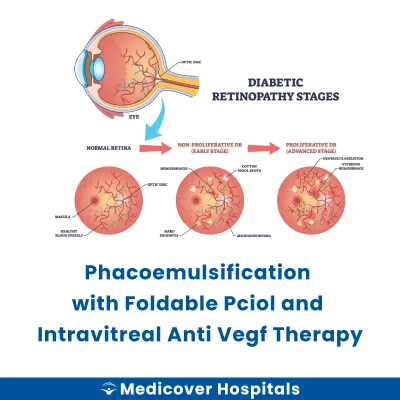
Diabetic Retinopathy
Symptoms include floaters, blurred vision, and dark areas in vision. Retinal examination shows abnormal blood vessels. When laser treatment or medication fails, surgery is considered.
Age-related Macular Degeneration (AMD)
Patients report central vision loss and difficulty recognizing faces. Imaging shows fluid or blood under the retina. Surgery is recommended when injections alone do not control the condition.
Retinal Vein Occlusion
Symptoms include sudden vision loss or blurring. Tests reveal blocked retinal veins and swelling. Surgery is suggested when medical management does not resolve the swelling or improve vision.
Persistent Macular Edema
Patients notice distorted vision and difficulty reading. Examination shows retinal swelling. Surgery is considered when anti-inflammatory treatments do not reduce the edema effectively.
How to Prepare for Phacoemulsification with Foldable PCIOL and Intravitreal Anti VEGF Therapy?
Proper preparation is crucial for the success of Phacoemulsification with Foldable PCIOL and Intravitreal Anti VEGF Therapy. It ensures a smooth procedure and aids in recovery.
- Medication Review: Discuss all medications with your doctor. Stop NSAIDs, anticoagulants, and herbal supplements as advised.
- Fasting Guidelines: Follow a fasting period of at least 6 hours before the procedure if general anaesthesia is used.
- Eye Drops: Use prescribed antibiotic and anti-inflammatory eye drops as instructed before the surgery.
- Clothing: Wear loose, comfortable clothing on the day of the procedure for ease and comfort.
- Transportation: Arrange for someone to drive you home post-procedure, as you may not be able to drive.
- Medication List: Bring a list of all medications you are taking, including dosages, for reference.
- Rest and Relaxation: Ensure you get a good night's sleep before the surgery to help your body prepare.
- Contact Lenses: Avoid wearing contact lenses for a few days before the procedure, as advised by your doctor.
Phacoemulsification with Foldable PCIOL and Intravitreal Anti VEGF Therapy Surgery (Step-by-Step)
Overview: This procedure is performed by ophthalmologists. It typically lasts 30 to 60 minutes. Local anaesthesia is commonly used.
- Preparation: The patient receives local anaesthesia to numb the eye area. The eye is cleaned and draped to maintain a sterile environment.
- Incision: A small incision, about 2-3 mm, is made on the cornea using a microkeratome. This allows access to the lens.
- Phacoemulsification: An ultrasonic handpiece is inserted through the incision. It uses ultrasonic waves to break up the cloudy lens into tiny fragments.
- Lens Removal: A suction device removes the fragmented lens pieces from the eye.
- Foldable PCIOL Insertion: A foldable intraocular lens (PCIOL) is inserted through the same incision. It unfolds and is positioned in place of the natural lens.
- Intravitreal Anti VEGF Injection: A fine needle injects the Anti VEGF medication into the vitreous cavity. This helps reduce abnormal blood vessel growth and leakage.
- Closure and Recovery: The incision is self-sealing and usually does not require stitches. The patient may feel mild discomfort or blurred vision temporarily.
Who Performs Phacoemulsification with Foldable PCIOL and Intravitreal Anti VEGF Therapy Surgery?
This surgery is performed by ophthalmology doctors who specialise in eye surgeries. They have expertise in using advanced instruments like the microkeratome and ultrasonic handpiece for precise procedures.
Recovery After Phacoemulsification with Foldable PCIOL and Intravitreal Anti VEGF Therapy Surgery
Recovery from this surgery involves careful attention to eye care and gradual resumption of daily activities. Most patients experience improved vision within a few days, but complete healing may take a few weeks.
Day 1-3:
- Rest your eyes and avoid strenuous activities.
- Use prescribed eye drops to prevent infection and inflammation.
- Consume light meals like curd, dal-rice, or moong dal to avoid strain.
Day 4-7:
- Continue using eye drops as instructed.
- Gradually resume light activities but avoid bending or lifting heavy objects.
- Include soft foods like khichdi and soups in your diet.
Day 8-14:
- Most patients can return to work or school, depending on comfort and doctor's advice.
- Avoid swimming and dusty environments.
- Maintain a balanced diet with plenty of fluids.
Phase 3 (Week 3-4):
- Resume normal activities gradually, but continue to protect your eyes from bright light and dust.
- Follow up with your doctor for a check-up to ensure proper healing.
When to Seek Urgent Help:
- Sudden vision loss or severe pain in the eye.
- Persistent redness or swelling around the eye.
- Flashes of light or new floaters in your vision.
Benefits of Phacoemulsification with Foldable PCIOL and Intravitreal Anti VEGF Therapy Surgery
This combined procedure offers significant improvements in vision and eye health.
- Improved Vision: Phacoemulsification with foldable PCIOL can restore clear vision by removing cataracts.
- Quick Recovery: The minimally invasive nature of the procedure allows for faster recovery times.
- Reduced Inflammation: Intravitreal Anti VEGF therapy helps in reducing inflammation related to retinal conditions.
- Prevents Vision Loss: Anti VEGF therapy is effective in managing conditions like age-related macular degeneration, preventing further vision loss.
Risks and Complications of Phacoemulsification with Foldable PCIOL and Intravitreal Anti VEGF Therapy Surgery
While generally safe, there are potential risks associated with this procedure.
Common Risks
- Mild discomfort or irritation in the eye post-surgery.
- Temporary blurred vision as the eye heals.
Rare Risks
- Infection inside the eye, which requires prompt treatment.
- Retinal detachment, which may need additional surgical intervention.
- Increased intraocular pressure, potentially leading to glaucoma.
- Allergic reaction to the medication used in Anti VEGF therapy.
Cost of Phacoemulsification with Foldable PCIOL and Intravitreal Anti VEGF Therapy Surgery
The cost for Phacoemulsification with Foldable PCIOL and Intravitreal Anti VEGF Therapy Surgery ranges from ₹35,000 to over ₹70,000 per eye across Medicover Hospitals. The price varies depending on the ward category chosen, such as outpatient, day care, or private rooms.
We offer transparent pricing and support for insurance and TPA, including CGHS, ESI, and major TPAs. Cashless facilities are also available. Please contact the hospital for the latest insurance panel details as these may change periodically.
Frequently Asked Questions
1. How much does Phacoemulsification with Foldable PCIOL and Intravitreal Anti VEGF Therapy surgery cost at Medicover Hospitals?
The cost ranges from ₹35,000 to over ₹70,000 per eye across Medicover Hospitals, depending on the lens type and room category.
2. Is Phacoemulsification with Foldable PCIOL and Intravitreal Anti VEGF Therapy surgery covered under health insurance at Medicover?
Phacoemulsification with Foldable PCIOL and Intravitreal Anti VEGF Therapy surgery may be covered by CGHS, ESI, and major TPAs. Please contact the hospital for current panel details.
3. Will I need glasses after Phacoemulsification?
You may still need glasses for reading or distance vision, depending on the lens type used. Discuss options with your ophthalmologist.
4. Can I drive after Phacoemulsification surgery?
Driving is generally not recommended for at least a week after surgery. Your vision needs time to stabilize post-procedure.
5. What foods aid recovery after eye surgery?
Include foods like curd, dal-rice, and khichdi to support recovery. These are easy to digest and promote healing.
6. Is there pain after Intravitreal Anti VEGF Therapy?
Mild discomfort or irritation is common post-therapy. Use prescribed eye drops to alleviate symptoms and consult your doctor if pain persists.
7. Can I watch TV after eye surgery?
Limit screen time for the first week post-surgery to reduce eye strain. Follow your doctor's advice for a safe recovery.


