 Call
Call Patient Reports
Best Hospital for Peroral Endoscopic Myotomy Procedure: Safe & Faster Recovery
Peroral Endoscopic Myotomy (POEM) at Medicover Hospitals is performed using an endoscopic approach by skilled gastroenterologists with qualifications such as DM and DNB. This minimally invasive technique offers benefits like shorter hospital stays and smaller incisions, enhancing patient recovery and comfort.
Expert Procedures
Yearly Procedures
Patient Satisfaction
What is Peroral Endoscopic Myotomy?
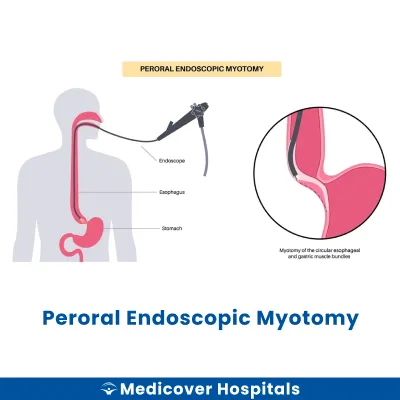
Peroral Endoscopic Myotomy (POEM) is a minimally invasive procedure used to treat swallowing disorders. It involves the oesophagus, the tube that carries food from the mouth to the stomach. During POEM, an endoscope (a flexible tube with a camera) is inserted through the mouth to cut the muscles at the lower end of the oesophagus. This helps in relaxing the muscles and improving the passage of food.
This surgery is primarily needed for achalasia, a condition where the oesophagus fails to move food into the stomach. If left untreated, achalasia can lead to severe swallowing difficulties and malnutrition. POEM is a modern approach that offers a less invasive alternative to traditional surgery. It provides effective relief from symptoms and improves quality of life. Please contact the hospital for current details as insurance panels may change.
Peroral Endoscopic Myotomy Doctors Near You
Discover skilled gastroenterologists-medical for Peroral Endoscopic Myotomy at Medicover Hospitals across India. Choose your city and book a consultation to address your gastrointestinal health needs today.
Why Choose Medicover Hospitals for Peroral Endoscopic Myotomy?
Get a second opinion from trusted experts and makeconfident, informed decisions.
 Get Second Opinion
Complete Guide To Peroral Endoscopic Myotomy
Everything you need to know about the procedure, preparation, and recovery
Peroral Endoscopic Myotomy procedure Indications
Doctors recommend Peroral Endoscopic Myotomy (POEM) when patients experience severe swallowing difficulties due to muscle dysfunction in the oesophagus. This minimally invasive procedure is often considered when other treatments have not provided relief.
Achalasia
Patients with achalasia often struggle with swallowing, experience chest pain, and have regurgitation of undigested food. Diagnostic tests like an oesophageal manometry may show a lack of peristalsis and increased lower oesophageal sphincter pressure. When medications and balloon dilation fail to alleviate symptoms, POEM is considered.
Diffuse Oesophageal Spasm
This condition causes intermittent chest pain and difficulty swallowing. Barium swallow tests may reveal a 'corkscrew' oesophagus. When dietary changes and medications do not control symptoms, POEM may be recommended.
Jackhammer Oesophagus
Patients experience intense chest pain and difficulty swallowing due to high-pressure contractions. Manometry shows hypercontractile oesophageal activity. If lifestyle modifications and medications are ineffective, POEM can be an option.
Nutcracker Oesophagus
Characterised by painful swallowing and chest pain, this condition shows high-amplitude contractions on manometry. When conservative treatments do not provide relief, POEM may be advised.
Failed Heller Myotomy
Some patients continue to experience symptoms after a Heller myotomy. Imaging may show persistent obstruction. In such cases, POEM can be a secondary treatment option.
How to Prepare for Peroral Endoscopic Myotomy?
Proper preparation is crucial for a successful Peroral Endoscopic Myotomy (POEM) as it ensures safety and effectiveness. Following the guidelines helps minimize risks and complications.
- Medication Review: Stop NSAIDs, anticoagulants, and herbal supplements at least a week prior. Consult your doctor for specific instructions.
- Fasting: Fast for at least 8 hours before the procedure. This is essential for anaesthesia safety.
- Hydration: Drink clear fluids until 2 hours before the procedure, unless advised otherwise by your doctor.
- Medication List: Bring a list of all medications with dosages. This helps the medical team manage your care effectively.
- Clothing: Wear loose, comfortable clothing on the day of the procedure. It makes changing easier and provides comfort.
- Transportation: Arrange for someone to drive you home post-procedure. Anaesthesia effects may impair your ability to drive.
- Personal Items: Leave valuables at home. Bring only essentials to the hospital.
- Pre-Procedure Instructions: Follow any additional instructions given by your healthcare provider. This may include specific dietary restrictions or bowel preparation.
Peroral Endoscopic Myotomy procedure (Step-by-Step)
This procedure typically lasts 1-2 hours. It requires general anaesthesia to ensure the patient is comfortable and pain-free.
- Preparation: The patient is given general anaesthesia. A flexible endoscope is inserted through the mouth to reach the oesophagus.
- Incision: A small incision, about 1-2 cm, is made in the inner lining of the oesophagus using an endoscopic knife. This allows access to the muscle layer.
- Submucosal Tunneling: The endoscope creates a tunnel in the submucosal layer. This step involves careful navigation to reach the lower oesophageal sphincter.
- Myotomy: The targeted muscle fibres of the oesophagus are cut using an endoscopic knife or harmonic scalpel. This relieves the tightness causing swallowing difficulties.
- Closure: The incision in the oesophageal lining is closed using endoscopic clips. This ensures the mucosal layer is sealed properly.
- Recovery: The patient is monitored as they wake up from anaesthesia. They may experience mild throat discomfort, which usually subsides quickly.
Who Performs Peroral Endoscopic Myotomy procedure?
The procedure is performed by experienced gastroenterologists with expertise in endoscopic techniques. These specialists are trained to handle the delicate instruments and navigate the oesophagus safely. They ensure the procedure is conducted with precision to improve the patient's swallowing function.
Recovery After Peroral Endoscopic Myotomy procedure
After undergoing a Peroral Endoscopic Myotomy (POEM) procedure, patients can expect a gradual recovery process. The initial days require careful attention to diet and activity levels to ensure proper healing.
Day 1-3:
- Hospital stay is common for monitoring.
- Start with a liquid diet. Options include clear soups and coconut water.
- Avoid strenuous activities. Rest is crucial.
Day 4-7:
- Transition to a soft diet. Include foods like curd, dal-rice, and moong dal.
- Continue avoiding heavy lifting and intense physical activities.
- Gradually increase walking and light activities as tolerated.
Week 2:
- Introduce semi-solid foods such as khichdi and soft idlis.
- Most patients can resume work or school, depending on their comfort and recovery progress.
- Avoid spicy and acidic foods to prevent irritation.
Phase 3-4 Weeks:
- Gradually return to a normal diet, incorporating a variety of foods.
- Continue to avoid very spicy or hard-to-digest foods.
- Resume normal activities, but listen to your body and avoid overexertion.
When to Seek Urgent Help
- Severe chest pain or difficulty swallowing.
- Fever or signs of infection.
- Persistent vomiting or inability to keep food down.
- Any unusual symptoms or concerns should prompt immediate medical attention.
Benefits of Peroral Endoscopic Myotomy procedure
Peroral Endoscopic Myotomy (POEM) is a minimally invasive procedure used to treat swallowing disorders like achalasia.
- Minimally Invasive: POEM involves no external incisions, reducing recovery time.
- Effective Symptom Relief: Many patients experience significant improvement in swallowing difficulties.
- Short Hospital Stay: Patients often have a shorter hospital stay compared to traditional surgery.
- Quick Recovery: Most individuals can resume normal activities within a few days.
Risks and Complications of Peroral Endoscopic Myotomy procedure
While POEM is generally safe, it carries some risks and potential complications.
- Common: Mild chest pain or discomfort may occur post-procedure.
- Common: Temporary sore throat or hoarseness is possible.
- Rare: Risk of infection at the site of the procedure.
- Rare: Bleeding during or after the procedure may occur.
- Rare: Perforation in the oesophagus is a potential risk.
- Rare: Gastroesophageal reflux disease (GERD) may develop post-procedure.
Cost of Peroral Endoscopic Myotomy procedure
The cost of a Peroral Endoscopic Myotomy procedure typically ranges from ₹66,000 to ₹2,58,000, depending on factors such as the surgical approach, duration of hospital stay, room category, required diagnostics, and post-operative care.
At Medicover Hospitals, we offer transparent pricing and support for insurance and TPA, including CGHS, ESI, and major TPAs. A cashless facility is also available for your convenience. Please contact the hospital for the latest insurance panel details, as these may change periodically.
Frequently Asked Questions
1. How much does Peroral Endoscopic Myotomy cost?
The cost of Peroral Endoscopic Myotomy varies from ₹66,000 to ₹2,58,
2. Please contact Medicover Hospitals for detailed pricing information. 2. Is Peroral Endoscopic Myotomy covered by insurance?
Many insurance plans, including CGHS, ESI, and major TPAs, may cover this procedure. Please contact the hospital for current panel details.
3. What organ does Peroral Endoscopic Myotomy involve?
Peroral Endoscopic Myotomy involves the esophagus. It helps in treating swallowing difficulties due to achalasia.
4. Can I eat solid food after Peroral Endoscopic Myotomy?
You will need to follow a liquid diet initially, then soft foods like khichdi. Solid foods are usually reintroduced gradually over weeks.
5. Will I experience chest pain post-myotomy?
Some patients may experience mild chest discomfort after the procedure. This usually subsides within a few days.
6. Are there lifestyle changes after Peroral Endoscopic Myotomy?
Yes, you may need to adjust your eating habits. Smaller, more frequent meals are often recommended to aid digestion.
7. Is acid reflux a complication of this procedure?
Acid reflux can occur after Peroral Endoscopic Myotomy. Medications and dietary adjustments may help manage this condition.
8. What is the success rate of peroral endoscopic myotomy?
Peroral endoscopic myotomy (POEM) has a high success rate, around 85% to 95%, especially in treating conditions like achalasia, with significant improvement in swallowing symptoms.
9. What is the recovery time for peroral endoscopic myotomy?
Recovery is usually quick, with most patients resuming normal activities within 1 to 2 weeks. Hospital stay is typically short (1-3 days), and a gradual return to diet is advised.
10. Is myotomy a major surgery?
POEM is considered a minimally invasive procedure, not a traditional major surgery, as it is performed endoscopically through the mouth without external incisions.


