 Call
Call Patient Reports
Permanent Tunneled Cuffed Catheter Placement Procedure at Medicover Hospitals
At Medicover Hospitals, our team of DM-qualified nephrologists performs Permanent Tunneled Cuffed Catheter Placement using the open surgical approach. This procedure is crucial for patients requiring long-term dialysis access. The open approach allows for precise catheter placement, contributing to shorter hospital stays.
Expert Specialists
Yearly Procedures
Patient Satisfaction
What is Permanent Tunneled Cuffed Catheter Placement?
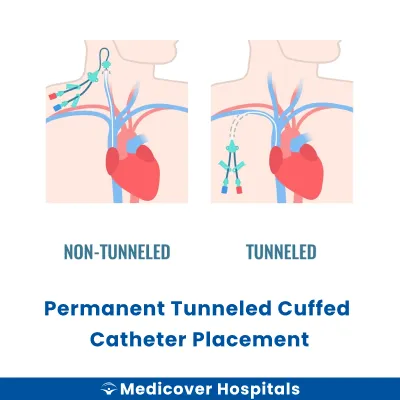
Permanent Tunneled Cuffed Catheter Placement is a medical procedure involving the insertion of a catheter into a large vein, typically in the chest. This catheter is tunneled under the skin and has a cuff that helps secure it in place. It is used for long-term access to the bloodstream for treatments like dialysis or chemotherapy. The cuff reduces the risk of infection by allowing tissue to grow around it.
This procedure is necessary for patients requiring frequent or prolonged intravenous treatments. Conditions like kidney failure or cancer often lead to the need for this catheter. Without it, patients may face complications from untreated conditions. Modern surgical approaches include image-guided techniques and minimally invasive methods, which enhance precision and reduce recovery time.
Permanent Tunneled Cuffed Catheter Placement Doctors Near You
Find expert nephrologists for permanent tunneled cuffed catheter placement at Medicover Hospitals across India. Choose your city and book a consultation to discuss your treatment options today.
Why Choose Medicover Hospitals for Permanent Tunneled Cuffed Catheter Placement?
Get a second opinion from trusted experts and makeconfident, informed decisions.
 Get Second Opinion
Complete Guide To Permanent Tunneled Cuffed Catheter Placement
Everything you need to know about the procedure, preparation, and recovery
Permanent Tunneled Cuffed Catheter Placement procedure Indications
Doctors recommend Permanent Tunneled Cuffed Catheter Placement when long-term vascular access is needed. This procedure is often chosen when other access options are unsuitable or have failed.
Chronic Kidney Disease
Patients with chronic kidney disease may experience fatigue, swelling, and changes in urine output. Lab tests often show declining kidney function. When dialysis becomes necessary and other vascular access methods are not feasible, this catheter placement is recommended.
Frequent Dialysis
Individuals requiring frequent dialysis sessions may experience difficulty with other access points. Repeated needle insertions can cause pain and damage. When traditional access sites are exhausted, a tunneled catheter offers a reliable alternative.
Failed Arteriovenous Fistula or Graft
Patients with a failed arteriovenous fistula or graft may notice swelling, pain, or decreased blood flow. Imaging or ultrasound confirms the failure. When these access points are no longer viable, a tunneled catheter is considered.
Central Venous Obstruction
Symptoms like swelling of the arm or neck, and difficulty breathing may indicate central venous obstruction. Imaging studies reveal blocked veins. If other access methods are not possible, a tunneled catheter is used.
Need for Long-Term Medication Administration
Some patients require prolonged intravenous medication, leading to vein irritation or damage. Blood tests and imaging may show vein inflammation. When peripheral veins are unsuitable, a tunneled catheter provides a stable solution.
How to Prepare for Permanent Tunneled Cuffed Catheter Placement?
Proper preparation is crucial for a smooth procedure and recovery. It helps minimise risks and ensures the best outcome for your health.
- Medication Review: Stop NSAIDs, anticoagulants, and herbal supplements 5-7 days before the procedure.
- Fasting Guidelines: Do not eat or drink anything for at least 6 hours before the procedure to ensure safety during anaesthesia.
- Clothing: Wear loose, comfortable clothing to the hospital for ease before and after the procedure.
- Transportation: Arrange for someone to drive you home post-procedure, as you may feel drowsy from the anaesthesia.
- Medication List: Bring a list of all medications you are currently taking, including dosages, for the medical team.
- Hydration: Drink plenty of water the day before the procedure unless otherwise instructed by your doctor.
- Consent Form: Ensure you understand the procedure and sign the consent form after discussing any concerns with your doctor.
- Personal Items: Leave valuables at home and bring only essentials to the hospital.
Permanent Tunneled Cuffed Catheter Placement procedure (Step-by-Step)
Overview: This procedure is performed by nephrologists. It typically takes about 1 to 2 hours. Local anaesthesia is commonly used, sometimes with sedation.
- Preparation: The patient is positioned comfortably. The skin is cleaned with antiseptic. Local anaesthesia is administered to numb the area.
- Incision and Access: A small incision (about 1-2 cm) is made near the collarbone. A trocar is used to create a pathway for the catheter.
- Tunneling: A tunneling device is used to create a subcutaneous tunnel from the incision site to the exit site, usually on the chest.
- Catheter Insertion: The catheter is inserted through the tunnel. The cuff is positioned under the skin to hold it in place and reduce infection risk.
- Positioning and Securing: The catheter is guided into a central vein using fluoroscopy for precise placement. The incision is closed with sutures or adhesive strips.
- Flushing and Dressing: The catheter is flushed with saline to ensure patency. A sterile dressing is applied to protect the site.
- Post-Procedure Care: The patient is monitored for a short period. They may feel slight discomfort, which usually subsides quickly.
Who Performs Permanent Tunneled Cuffed Catheter Placement procedure?
This procedure is typically performed by nephrologists or interventional radiologists. These specialists are trained in vascular access techniques and use imaging guidance to ensure accurate catheter placement.
Recovery After Permanent Tunneled Cuffed Catheter Placement procedure
After the placement of a permanent tunneled cuffed catheter, recovery is crucial for ensuring proper healing and function. Patients can expect some discomfort and need to follow specific care instructions to prevent complications.
Day 1-3:
- Rest is essential. Avoid strenuous activities.
- Keep the catheter site clean and dry.
- Consume a light diet. Opt for easily digestible foods like curd, dal-rice, and soups.
Day 4-7:
- Gradually resume light activities. Avoid lifting heavy objects.
- Continue with a balanced diet. Include khichdi and moong dal for protein.
- Monitor the catheter site for any signs of infection.
Day 8-14:
- Most can return to work or school, depending on the nature of their activities.
- Maintain good hygiene around the catheter area.
- Regular follow-up with the healthcare provider is advised.
Phase: Long-term Care
- Engage in regular activities but avoid contact sports.
- Continue a nutritious diet to support overall health.
- Regularly check the catheter for any signs of malfunction or infection.
When to Seek Urgent Help:
- Fever or chills, which may indicate an infection.
- Redness, swelling, or discharge at the catheter site.
- Difficulty in flushing the catheter or unusual pain.
Benefits of Permanent Tunneled Cuffed Catheter Placement procedure
This procedure is often used for long-term access in patients requiring frequent medical treatments.
- Long-term Access: Provides reliable access for treatments like dialysis or chemotherapy.
- Reduced Infection Risk: The cuff helps prevent infections by anchoring the catheter under the skin.
- Patient Comfort: Designed to be more comfortable for long-term use compared to temporary catheters.
- Minimally Invasive: The procedure is less invasive than surgical alternatives, promoting quicker recovery.
Risks and Complications of Permanent Tunneled Cuffed Catheter Placement procedure
While generally safe, there are potential risks associated with this procedure.
- Common: Infection at the insertion site, which may require treatment.
- Common: Bleeding during or after the procedure.
- Rare: Catheter malfunction, necessitating replacement or adjustment.
- Rare: Blood clots forming in the catheter, which can disrupt treatment.
- Rare: Damage to nearby blood vessels or organs during insertion.
Cost of Permanent Tunneled Cuffed Catheter Placement procedure
The cost for Permanent Tunneled Cuffed Catheter Placement at Medicover Hospitals ranges from Rs. 600 to Rs. 25,600, depending on the ward category. Prices vary based on the type of accommodation chosen, such as general, private, or deluxe options.
Medicover Hospitals offers transparent pricing, with support for insurance and TPA services, including CGHS, ESI, and major TPAs. Cashless facilities are available to ease the financial process. Please contact the hospital for the latest insurance panel details as these may change periodically.
Frequently Asked Questions
1. How much does Permanent Tunneled Cuffed Catheter Placement procedure cost at Medicover Hospitals?
The cost for Permanent Tunneled Cuffed Catheter Placement ranges from Rs. 600 to Rs. 25,600 across Medicover Hospitals, depending on the type of service.
2. Is Permanent Tunneled Cuffed Catheter Placement procedure covered under health insurance at Medicover?
Yes, it is often covered by CGHS, ESI, and major TPAs. Please contact the hospital for current panel details.
3. Can I shower with a tunneled catheter?
Yes, but you need to cover the catheter site to keep it dry. Use a waterproof dressing or plastic wrap during showers.
4. Will I need dialysis after catheter placement?
A tunneled catheter is often used for dialysis access. Your doctor will advise if dialysis is necessary based on your condition.
5. What activities should I avoid with a catheter?
Avoid heavy lifting and strenuous activities to prevent catheter displacement. Consult your doctor for specific activity restrictions.
6. Is there a risk of infection with a tunneled catheter?
Yes, infection is a potential complication. Keep the catheter site clean and report any redness or swelling to your doctor immediately.
7. How is the catheter cared for at home?
Regular flushing and dressing changes are needed to prevent blockages and infections. Follow your doctor's instructions for home care.


