 Call
Call Patient Reports
Best Hospital for Peritonsillar Abscess Drainage Procedure with Advanced ENT Care
At Medicover Hospitals, our team of ENT specialists,, with qualifications like MS, DM, and DNB, perform open peritonsillar abscess drainage. This approach effectively addresses the infection, often resulting in a shorter hospital stay for patients. Our expertise ensures precise and efficient care across India.
Expert Specialists
Yearly Procedures
Patient Satisfaction
What is Peritonsillar Abscess Drainage?
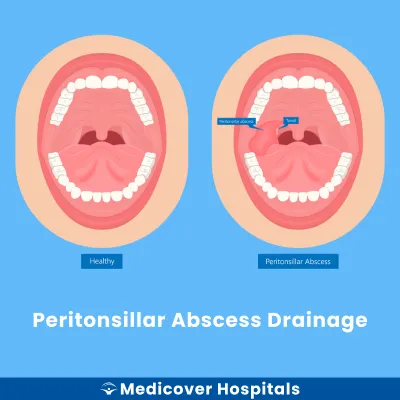
Peritonsillar abscess drainage is a medical procedure to remove pus from an abscess near the tonsils. The tonsils are two lymph nodes located at the back of the throat. An abscess is a pocket of pus that forms due to infection. This procedure helps relieve pain and prevent further complications.
This surgery is needed when an infection around the tonsils becomes severe. Conditions like untreated tonsillitis can lead to a peritonsillar abscess. If left untreated, it can cause difficulty in swallowing, breathing, and may spread the infection. Modern surgical approaches include needle aspiration and incision and drainage. These methods effectively remove the pus and reduce symptoms. Prompt treatment is essential to avoid serious health issues.
Best Peritonsillar Abscess Drainage Doctors Near You
Find experienced ENT doctors, for peritonsillar abscess drainage at Medicover Hospitals across India. Choose your city and book a consultation today for expert care and guidance.
Why Choose Medicover Hospitals for Peritonsillar Abscess Drainage Procedure?
Get a second opinion from trusted experts and makeconfident, informed decisions.
 Get Second Opinion
Complete Guide To Peritonsillar Abscess Drainage
Everything you need to know about the procedure, preparation, and recovery
Peritonsillar abscess drainage procedure Indications
Doctors recommend peritonsillar abscess drainage when an infection around the tonsils leads to a collection of pus, causing severe symptoms. This procedure is considered when conservative treatments like antibiotics fail to resolve the abscess.
Severe Throat Pain
Patients often experience intense throat pain that worsens over time. On examination, doctors may find swelling and redness around the tonsils. When pain persists despite medication, drainage is necessary.
Difficulty Swallowing
Patients report trouble swallowing, even liquids. This symptom, coupled with a visibly swollen tonsil, suggests an abscess. If swallowing difficulties do not improve with antibiotics, drainage is advised.
Trismus (Jaw Stiffness)
Jaw stiffness or inability to open the mouth fully is a common symptom. Doctors observe limited mouth opening during examination. When trismus persists, drainage becomes essential.
Voice Changes
A "hot potato" voice or muffled speech can occur. This change in voice, along with other symptoms, indicates a significant abscess. Persistent voice changes necessitate drainage.
Fever and Malaise
High fever and a general feeling of unwellness are common. If these symptoms continue despite antibiotics, and imaging confirms an abscess, drainage is required.
Unilateral Tonsillar Swelling
One-sided tonsillar swelling is a key sign. Doctors may notice this during a throat exam. When swelling does not reduce with medication, drainage is recommended.
Airway Obstruction
Difficulty breathing due to swelling is a serious concern. Immediate drainage is needed if the airway is compromised, as observed during examination.
How to Prepare for Peritonsillar Abscess Drainage?
Preparation is crucial for a smooth peritonsillar abscess drainage procedure. It helps minimise risks and ensures a quicker recovery.
- Medication Review: Stop NSAIDs, anticoagulants, and herbal supplements as advised by your doctor to reduce bleeding risks.
- Fasting: Do not eat or drink anything for at least 6 hours before the procedure if general anaesthesia is used.
- Hydration: Drink plenty of water the day before the procedure to stay hydrated.
- Clothing: Wear loose, comfortable clothing on the day of the procedure for ease of movement.
- Transport: Arrange for someone to drive you home post-procedure as you may feel drowsy from anaesthesia.
- Medication List: Bring a list of all medications you are taking, including dosages, for the medical team.
- Pre-Procedure Instructions: Follow any specific instructions given by your healthcare provider, such as using antiseptic mouthwash.
- Rest: Ensure you get a good night's sleep before the procedure to help your body recover faster.
Peritonsillar abscess drainage procedure (Step-by-Step)
This procedure typically lasts 30-45 minutes. It is usually done under local anaesthesia.
- Preparation: The patient is seated comfortably. Local anaesthesia is applied to numb the throat area, minimising discomfort.
- Incision: A small incision of about 1-2 cm is made in the abscess using a scalpel. This allows for drainage of the pus.
- Drainage: A suction device or a curette is used to remove the pus from the abscess. The patient may feel pressure but should not experience pain.
- Irrigation: The area is flushed with a saline solution to ensure thorough cleaning and to prevent infection.
- Observation: The patient is monitored for a short period to ensure there are no immediate complications. Vital signs are checked.
- Post-procedure Care: Instructions are given on oral hygiene and medication. Pain relief and antibiotics may be prescribed.
Who Performs Peritonsillar abscess drainage procedure?
This procedure is performed by ENT (Ear, Nose, and Throat) specialists. They are trained to handle conditions related to the throat and are skilled in managing infections and abscesses. Their expertise ensures that the procedure is done safely and effectively.
Recovery After Peritonsillar Abscess Drainage Procedure
After a peritonsillar abscess drainage procedure, recovery typically involves managing pain, preventing infection, and gradually returning to normal activities. It's important to follow your doctor's instructions for a smooth recovery.
Day 1-3:
- Expect some pain and swelling. Pain relief medications will be prescribed.
- Stick to a soft diet. Opt for curd, dal-rice, khichdi, and soups to avoid irritation.
- Rest at home and avoid strenuous activities.
Day 4-7:
- Pain and swelling should start to decrease.
- Continue with soft foods like moong dal and mashed potatoes. Gradually introduce more variety as tolerated.
- Maintain good oral hygiene but avoid gargling vigorously.
- Most can resume light activities but avoid heavy lifting.
Day 8-14:
- Significant improvement in symptoms is expected.
- Return to a normal diet, but avoid spicy or very hot foods.
- Resume work or school if feeling well, but listen to your body.
When to Seek Urgent Help:
- Fever that persists or returns.
- Increased pain or swelling.
- Difficulty breathing or swallowing.
- Bleeding from the throat.
Benefits of the Peritonsillar Abscess Drainage Procedure
Peritonsillar abscess drainage is a procedure aimed at relieving symptoms and preventing complications associated with abscess formation near the tonsils.
- Rapid Symptom Relief: Quickly alleviates pain and swelling in the throat.
- Improved Swallowing: Eases difficulty in swallowing by reducing pressure on the throat.
- Prevention of Spread: Helps prevent the infection from spreading to nearby tissues.
- Reduced Recurrence: Lowers the chance of the abscess returning with proper treatment.
Risks and Complications of Peritonsillar abscess drainage procedure
While generally safe, peritonsillar abscess drainage carries some risks and potential complications.
- Common: Bleeding at the site of drainage.
- Common: Pain or discomfort during and after the procedure.
- Rare: Infection at the drainage site.
- Rare: Damage to surrounding tissues or structures.
- Rare: Allergic reaction to local anaesthesia.
- Rare: Aspiration of pus into the airway.
Cost of Peritonsillar Abscess Drainage Procedure
The cost of peritonsillar abscess drainage in India typically ranges from ₹8,000 to ₹55,000+, depending on the surgical approach, length of hospital stay, room category, required diagnostics, and postoperative care.
At Medicover Hospitals, we offer transparent pricing to ensure clarity for our patients. We support insurance and TPA services, including CGHS, ESI, and major TPAs, with cashless facility options available. Please contact the hospital for the latest insurance panel details, as these may change periodically.
Frequently Asked Questions
1. How much does Peritonsillar abscess drainage cost?
The cost of peritonsillar abscess drainage in India typically ranges between ₹8,000 and ₹55,000+, depending on the severity of the condition, hospital stay, diagnostic tests, and post-procedure care. Please contact Medicover Hospitals for detailed pricing information.
2. Is Peritonsillar abscess drainage covered by insurance?
Peritonsillar abscess drainage is often covered by CGHS, ESI, and major TPAs. Please contact the hospital for current panel details.
3. Can I speak immediately after drainage?
You may experience some discomfort while speaking initially. It usually improves within a few days post-procedure.
4. Will I need antibiotics after drainage?
Antibiotics are typically prescribed to prevent infection. Follow your doctor's instructions for the complete course.
5. Can a peritonsillar abscess heal itself?
A peritonsillar abscess usually does not heal on its own and requires medical treatment. Antibiotics and drainage are typically needed to fully resolve the infection and prevent complications.
6. Will the abscess recur after drainage?
There is a small chance of recurrence if the infection persists. Regular follow-ups can help monitor and prevent this.
7. Is there a risk of throat infection post-drainage?
There is a risk of infection, but antibiotics help reduce it. Maintain good oral hygiene to further prevent complications.
8. Where can I get my peritonsillar abscess drained?
You can get a peritonsillar abscess drained at Medicover Hospitals, where ENT specialists provide prompt diagnosis and safe drainage procedures along with antibiotic treatment and post-procedure care.
9. How painful is draining a peritonsillar abscess?
The procedure can be uncomfortable, but it is usually done under local anesthesia to reduce pain. Patients may feel pressure during drainage, followed by noticeable relief once the pus is removed. Mild soreness may continue for a few days.
10. How long do you stay in the hospital after abscess drainage?
Most patients require 0-1 day hospital stay. In uncomplicated cases, it is often performed as a day-care procedure, though longer observation may be needed if symptoms are severe.
11. What are the red flags for peritonsillar abscess?
Red flags include severe one-sided throat pain, difficulty swallowing, fever, muffled voice, drooling, swelling in the throat, and difficulty opening the mouth. These symptoms need urgent medical attention.


